What to know
- Ours frontman Jimmy Gnecco is celebrating 25 years of the band’s debut album, Distorted Lullabies.
- The band is playing Toronto’s Rivoli on Nov. 17, marking the anniversary with a set featuring songs from the album.
- Gnecco reflects on his career, including collaborations with Queen’s Brian May, Lana Del Rey and producer Rick Rubin.
- The singer discusses the challenges of the music industry, his evolving relationship with performing and Ours’ newest album, BlackLight Arena.
For more than 25 years, Ours frontman Jimmy Gnecco has impressed everyone from Queen’s Brian May, with whom he recorded “Someone to Die For” for the Spider-Man 2 soundtrack, to Lana Del Rey, who wrote the song “Jimmy Gnecco,” thanks to his extraordinary multi-octave vocal range.
Canadians might also remember his work with Daniel Victor of Neverending White Lights, contributing vocals to “Our Final Hymn” on the project’s 2005 debut album, Act 1: Goodbye Friends of the Heavenly Bodies.
Posts on Ours’ YouTube page range from “I will never understand why this band never got bigger” to calling its Steve Lillywhite-produced 2001 debut album, Distorted Lullabies, the “Most underrated album of all time,” and its single, “Sometimes,” a “masterpiece.”
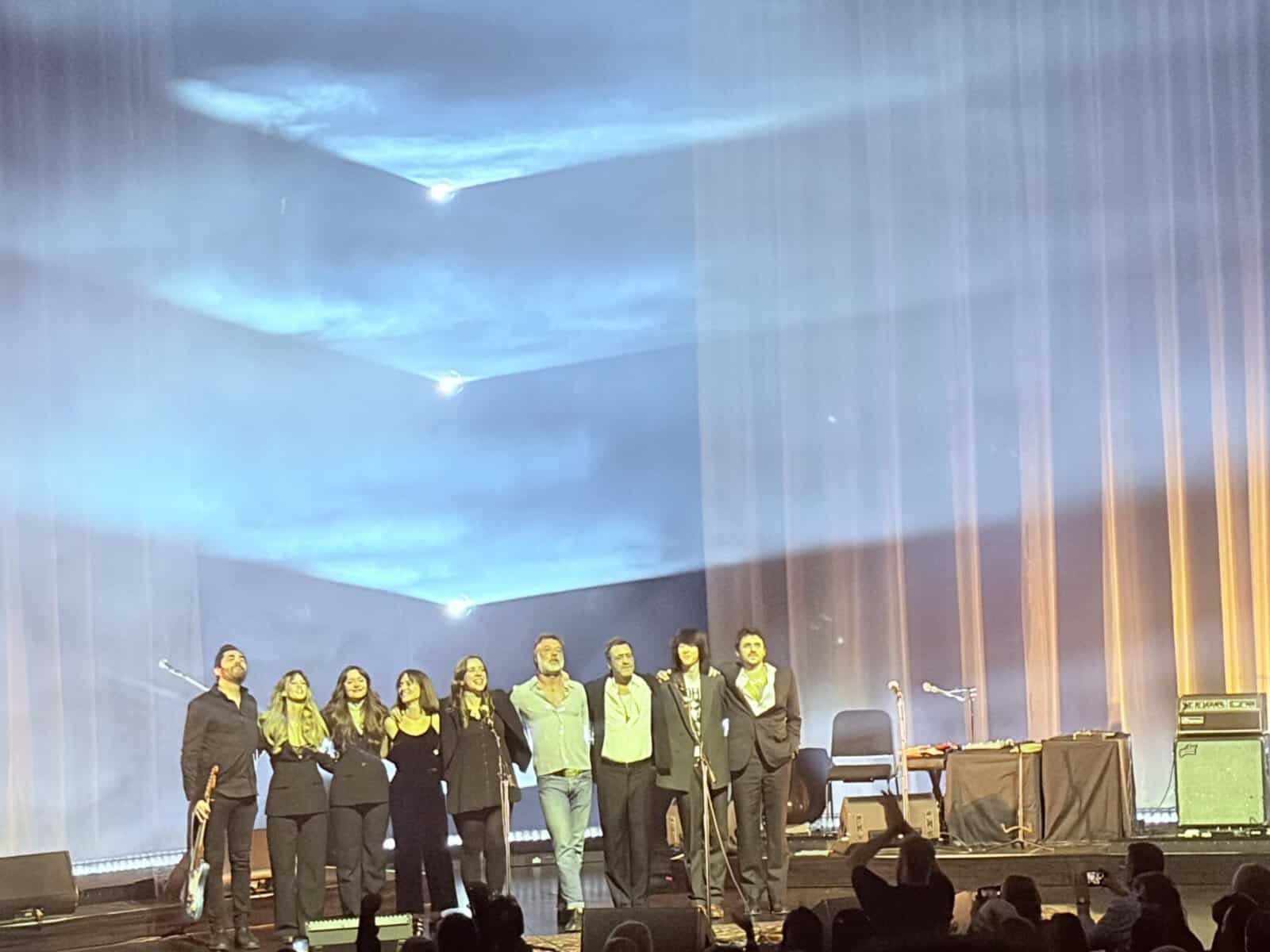
Tomorrow (Nov. 17), Ours plays the Rivoli for “Ours Celebrating 25 Years of Distorted Lullabies.” Tickets are available here.
Gnecco himself is low-key. You’ll never hear him brag. You’ll never hear him bemoan why Ours wasn’t as big as his fans think they should have been. He always puts it on himself. The band, which has long been synonymous with him, has released a string of albums, including 2008’s Rick Rubin-produced Mercy (Dancing for the Death of an Imaginary Enemy) and the brand new BlackLight Arena.
When he first emerged with Ours in 1997, A&R whipped into a frenzy. Jeff Buckley had just died and Gnecco’s range and delivery invited comparisons, albeit with a darker, harder rock edge. Ours signed with DreamWorks, released Distorted Lullabies in 2001, and followed it up in 2002 with Precious, before the label was acquired by Universal Music Group, and the band was caught in the changes, bounced from label to label. Mercy came out six years after Precious.
Gnecco has spent the latter part of his career working independently, never abandoning the extraordinary gift he has as a singer, however frustrating it sometimes got. Most recently, he fronted UK band Humanist, which played Toronto’s History a year ago, opening for Black Rebel Motorcycle Club. The band also toured with Depeche Mode and Jane’s Addiction.
Ahead of Tuesday evening’s Rivoli show, where Brian Byrne, former frontman of I Mother Earth, will open, Gnecco spoke with Now Toronto.
You have a special relationship with Toronto and a core group of us who support you and have never missed a show, including myself. Tell us about that.
I’m not too far from there. I always loved the city. Right after I signed, we made a break for Toronto. It was one of the first places we went to and did a handful of shows up there. I’ve always loved the spirit there. I can’t explain why. I just felt it was a little more open-minded and loving at times than here in the States, and real music lovers. I think that’s what it is. I was inspired by the people’s appetite for music. I’ve always wanted to tap into that with people.
I was at one of your showcases in New York before you were signed. An A&R guy at Atlantic told me to go see you and you haven’t been able to get rid of me since. What do you remember about that time when Ours was the buzz band all the A&R people were after? Were they courting you with expensive dinners and other crazy things?
It was a feast or famine situation because it was nothing for forever and then all at once, in a way, it kind of happened. People did some pretty extreme things in that time. Once they found out where I lived, the A&R guys just started to show up uninvited, from Rick Rubin to Tommy Mottola. They just started to show up where I was. I was just trying to stay grounded through it because I needed to try to make a decision that was going to affect me for a long time.
This tour is billed as “Ours Celebrating 25 Years of Distorted Lullabies.” I imagine you are playing it front to back?
We haven’t played it front to back. On the 20th anniversary, we went around to a few places and we did that, but this is more the celebration that they [Interscope] finally did vinyl for the first time. There’s a remaster of it. So, it finally sounds how I wanted it to sound. We do a chunk of songs from it, but we won’t be playing the album from top to bottom. I know it’s been a little confusing on that because we’re celebrating the album.
We announced that we’re celebrating the album all year long with different events. I went out and did some acoustic solo gigs, but just playing some songs that we normally do in the set because these days we don’t play a lot of songs from Distorted Lullabies anymore, just four or five of them at this point, “Here is the Light,” “I’m a Monster,” “Bleed,” “Sometimes.” I think this one [the Rivoli], we’re adding some that we don’t normally do. Just figuring out how to use those songs in the setlist to achieve what I’m trying to achieve currently.
Your career has had ups and downs, but it seems that things have been going really well for you over the past five years. You have been steadily going back to the UK and Europe, solo/Ours and fronting Humanist. How are you feeling about how things are going?
I feel good about it ‘cause the thing was, I spent so much time getting used to waiting for ‘the machine,’ and that can really just like stunt your growth. I just reached a certain point where I felt I don’t have any more time to wait for anything. I have to just start doing what I hoped would have happened in the first place. So, for me in a sense, it feels like the next day because I’m finally on track from where we started, where things didn’t really go in the direction that we had hoped that they would. We had a lot of support and everything, so there’s no complaints about it. It’s just more about the idea that we didn’t figure it out. So, I think the big difference is that I made a decision a good chunk of years ago that I just needed to stay in as much as I could, while I can.
And so with that, all kinds of things have come up, different collaborations and different tours, even if it wasn’t with Ours and with Humanist. That [Humanist] took us all over the world, with Depeche Mode, Jane’s Addiction and Black Rebel. I’m just enjoying that I have my voice because I beat it up so badly early on, the kind of reckless abandonment, where I’m not really thinking about if I’ll be able to sing tomorrow when I’m singing tonight. So, the last bunch of years, I’ve been given a really special opportunity that my voice works. I’m trying to be grateful for that and just go out and sing.
So, you stopped waiting for “the machine” to kick in and started enjoying it more.
There’s a lot going on in the world, obviously, but I’m trying to not get hung up on those kinds of aspects, but more so just out there singing to try to connect with people, make people feel better about what’s happening, not so much just complain about it. The last bunch of years, it’s been a great run. I think for that reason, because I’m really enjoying it, whether I’m playing on my own or Europe or with a group, I have a newfound constitution that I get myself ready for each night before I go out, where I’m not going to let any of the bad things affect me. On my second record [2002’s Precious], I became a bit reactionary to our struggle with the record business and all that and I think that that’s quite boring. To tell you the truth, I think that I was a fool for doing that.
You are very humble. You say, “I’m glad my voice works,” but you do have one of the best voices in rock. The fact that you worked with Brian May, and Lana Del Rey wrote a song about you. When those things happen, which are big things, does that make you realize how talented you are?
No. [We both laugh.] I’m just grateful for all the experiences, but with each one comes a certain kind of pressure that I put on myself too.
Why are you so hard on yourself?
I don’t know. I think it probably goes way back. If we’re going to analyze, I think it was way back to parental stuff, just competing as a kid and BMX racing. We don’t make excuses and you just keep trying and keep trying and you might win today, but you could lose tomorrow. I’ve never felt quite comfortable resting on anything. I’m hoping to be able to enjoy some of the stuff that I’ve done now that I’ve put out a ton of music. I still have hundreds of songs written, but haven’t recorded, but I’m starting to catch up. That part feels good to where I exhale a little bit at least because there’s such an odd perception of me, and what Ido with Ours for so long because there wasn’t a lot out, but I knew in my heart and my brain, all the songs that I still had and what I wanted to do. I knew that there was a lot more. And so, when you’re sitting around and you don’t have much to show for it, that’s really all that people can understand about you because that’s what’s out there. I think I’m loosening up and giving myself a little bit of a break because, yeah, I’m feeling more, not accomplished, but I’m just feeling like I got it out.
On the YouTube Ours page, there are some incredible comments under the videos of songs from Distorted Lullabies. Under “Sometimes,” one person called it “the most underrated album of all time.” How do you feel about it after 25 years?
It was tricky for me on Distorted Lullabies because I didn’t love the process. It was tough. And I didn’t love the album at the end of the day. I felt like there was something missing from it, not parts or anything like that, but just a spirit that I felt like I captured on my home recordings, just singing onto a cassette, there was a rawness. And so, sometimes when you’re going to record this big version of it, sometimes a little bit of that initial thing can get lost. So, I’m just trying to keep an eye on that the whole time. I’ll always be at the security gate of what to do because I’m just searching for that thing always. If we got it once or twice, then that’s great. I’m happy if anybody thinks that I have, but for me, I’m still always chasing it. So, I think that’s probably what I’m hard on myself about.
While the show is billed as a celebration of Distorted Lullabies, you have just released a new studio album, BlackLight Arena.
It came out on Halloween. We play a good amount of that as well. That’s part of the tour. The songs work well together. I’ve been trying to build a live show that feels like we really touched on everything. Each record, you get a couple more here and there to add to that spirit. So we play a few of them from the new album.
Do you mean they work well sound-wise or topically?
Everything, the scope of them, sonically, the grooves. I felt during the first tour, we didn’t have the songs to go into the kind of live show that I wanted to do. That’s just what I felt. So, I’ve spent a lifetime trying to find those pieces. So, with each of these last few Ours that we put out, we get a few more in there that work. That’s important to the trajectory of what we’re trying to build.
Why is it that you’ve kept Ours as your band name, even though players have come and gone and you also do solo shows? People do identify Ours as you.
It’s a tricky one specifically because of the actual name. If it was Nine Inch Nails, it wouldn’t be so confusing because it’s synonymous with Trent [Reznor], isn’t it? But because technically that word, Ours, is a certain idea that was always about my relationship with the audience. I realized early on that writing songs, I was communicating with people about their stories, and I put it into a song. I started to feel like this isn’t my story; it’s our stories. This is Ours. And that’s where it originated. And, so, seeing myself out there under my name wasn’t something that I ever aspired to do.