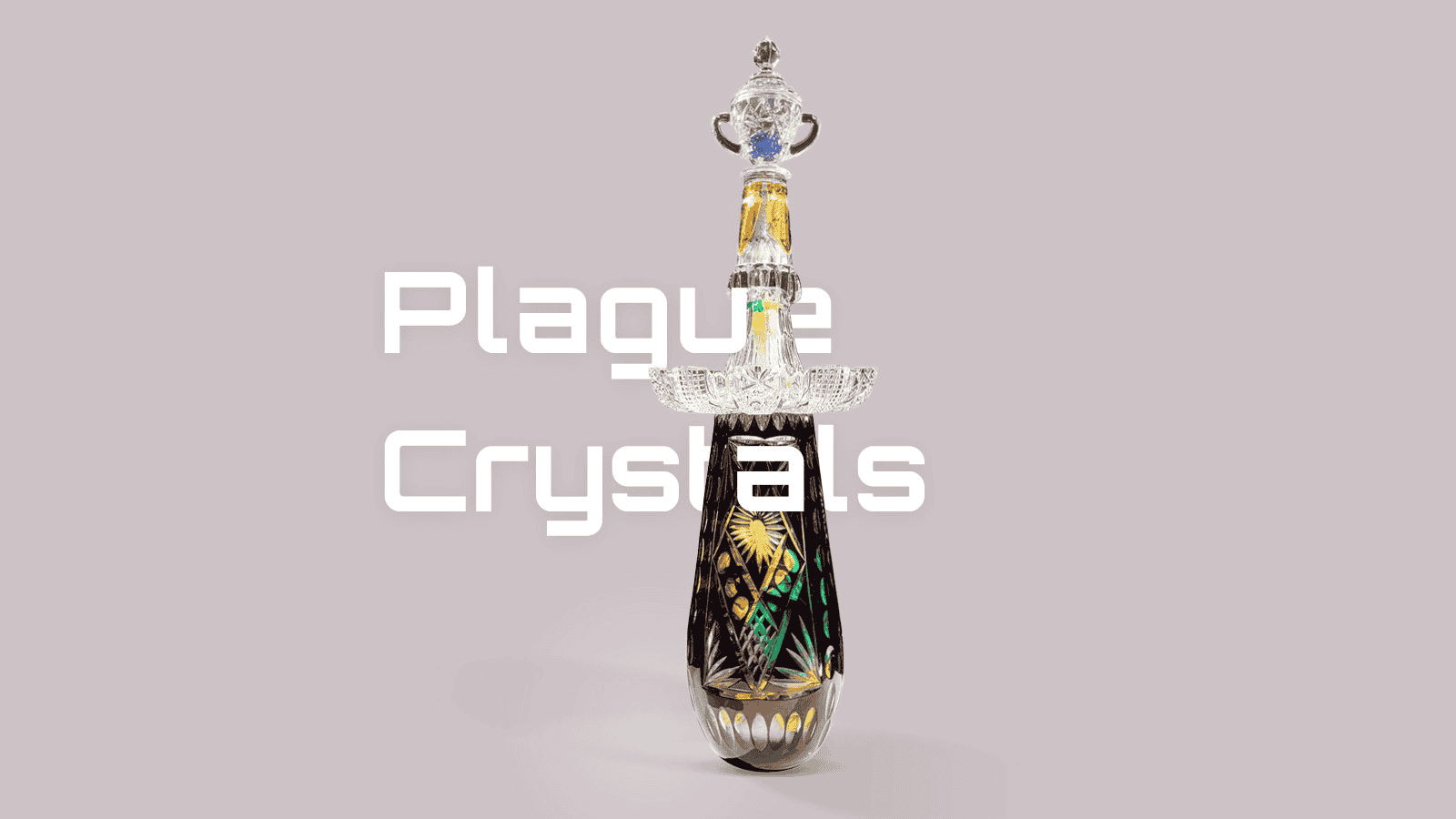
This June, we will welcome Polish artist, architect, and researcher Natalia Romik to Koffler Arts to present her exhibition Plague Crystals .
Plague Crystals is the newest chapter in Dr. Romik’s travelling project exploring sources of anxiety in a world threatened by multiple crises. Before Koffler Arts, previous iterations were presented in Passau and Berlin in Germany, and Będzin in Poland.
Drawing on the biblical story in the Book of Exodus, Romik identifies and symbolically contains material embodiments of contemporary plagues: climate catastrophe, social injustice, political malaise, and other forms of collective vulnerability. Some objects will be selected by the artist; others will be nominated by the communities with whom she will collaborate.
The artist encloses these symbolic representations within exquisite crystal vessels. Together, the Plague Crystals form a growing archive of lived vulnerability across places and generations. By giving a physical form to contemporary perils, the project asks how they might be confronted and contained.
Despite its sombre theme, the installation is not governed by despair. The crystal vessels sparkle with optimistic hope rooted in the continuous efforts of people working together to contain these threats. Echoing the Lurianic Kabbalistic image of shattered vessels tentatively rejoined, these semi-transparent structures are symbolic architectures of care and persistence: small gestures of communal repair.
At Koffler Arts, Plague Crystals brings this existing constellation together for the first time, expanded through collaboration with participants in Toronto who will nominate objects to enclose within newly assembled crystalline structures: fragile, translucent, and unexpectedly resilient.
–
Dr. Natalia Romik is a public historian, architect, and artist. Her work focuses on Jewish memory and Holocaust commemoration in Eastern Europe, particularly Poland and Ukraine. She has collaborated as a curator and exhibition designer at POLIN Museum of the History of Polish Jews. She is a winner of the 2022 Dan David Prize, the largest prize in the field of history in the world.