What to know
- Loblaw, Walmart and Pattison Food Group were each fined $10,000 by the Canadian Food Inspection Agency for maplewashing.
- Loblaw has run into several other food-labeling penalties in 2026, including two $10,000 fines and warnings for locations in Atlantic Canada.
- Canadian consumers are encouraged to look for labels like “Product of Canada,” “Made in Canada” and “100% Canadian,” but anti-monopoly expert Keldon Bester said it shouldn’t be their responsibility to investigate where products come from.
- Bester says the $10,000 fines aren’t enough to deter grocery giants and recommends removing misleading products from store shelves as a harsher penalty.
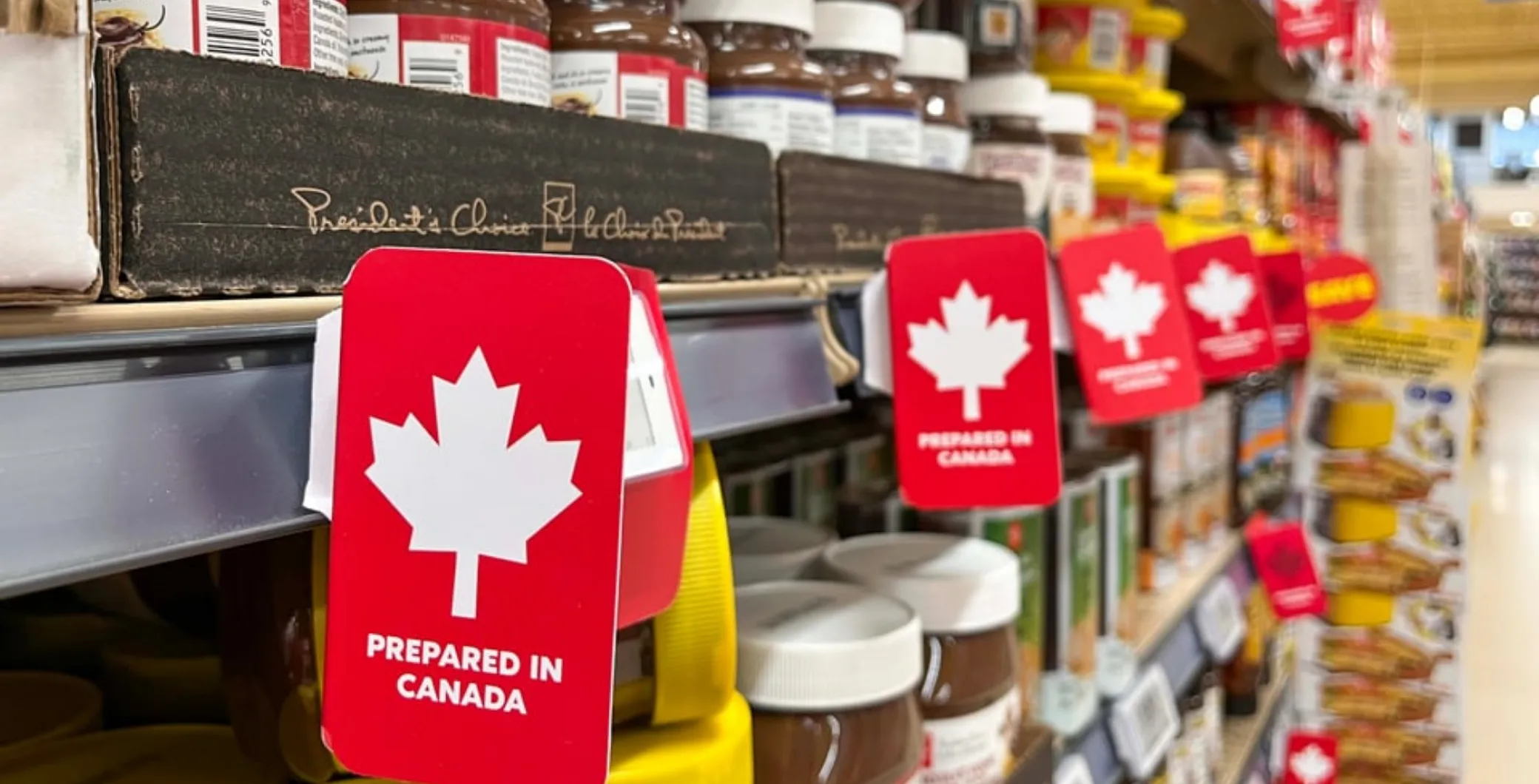
Three of Canada’s largest grocery giants have each been fined for maplewashing from the Canadian Food Inspection Agency.
Loblaw, Walmart, and Pattinson Food Group — which operates Western Canada stores Save-On-Foods, PriceSmart Foods, Urban Fare, and more — were each fined $10,000 after the CFIA conducted inspections earlier this year in March and April.
This isn’t the first fine Loblaw has received in 2026. Back in January, a Fortinos and a Superstore in Ontario were also fined $10,000 for mislabeling imported products.
Additionally, the CFIA handed out two warnings in February regarding food mislabeling to Loblaw locations in Atlantic Canada.
An analysis of CIFA inspection data by The Globe and Mail in early November, found complaints soaring this year compared to 2025.
What is maplewashing?
Keldon Bester is the executive director at the Canadian Anti-Monopoly Project. He defined maplewashing as “misrepresenting the origin of a product or a company.”
He compared it to the widely-known practice of “greenwashing,” the practice of marketing a company or product to be more environmentally friendly than it actually is.
“The average consumer really doesn’t have the time to check the details [on a product] and there could be quite a long detailed supply chain or even an obscured ownership structure of these companies,” Bester explained.
“The short answer is that it’s too much work for consumers to actually know.”
Sometimes, even if a consumer puts the time into researching a product’s origins, he said, that information may not be available.
How can consumers identify foods as Canadian?
On the CFIA’s website’s “How to Identify Canadian Food” page, the agency recommends consumers look for “Product of Canada,” “Made in Canada” and “100% Canadian” verbiage on a product’s packaging.
But Bester thinks average Canadians shouldn’t be on the hook at all for decoding where their food comes from. He said it’s on federal regulators to take action.
“What we need to have on the part of regulators is some sort of set standard for what qualifies as Canadian, and we need to interrogate that,” he said.
“The folks at the Canadian Shield Institute have been doing some great work lately around what actually constitutes a Canadian company, but this really can’t be on the consumer to identify what truly is a Canadian company.”
Do grocers even care?
Seeing as Loblaw has been fined several times this year already, it begs the question: Do grocery companies even care that they’re breaking food regulation laws?
The CFIA, according to Bester, has quite a limited capacity in what punishments they can dole out to grocers that skirt the rules. And with fines of only $10,000 each instance, he said “it is hard to be optimistic that these are having a meaningful impact.”
To effectively punish grocers, Bester suggests removing their market access by pulling misrepresented and mislabeled products from store shelves.
That’s the only thing that will change the incentive structure to either make your product more Canadian or stop misrepresenting it.”