What to know
- The partial eclipse begins at 10:34 p.m. EDT on Aug. 27, reaches peak coverage at 12:13 a.m. EDT on Aug. 28, and wraps up around 1:52 a.m.
- As the Earth’s inner shadow (umbra) covers the moon, the obscured portion may take on a distinct reddish or coppery tint.
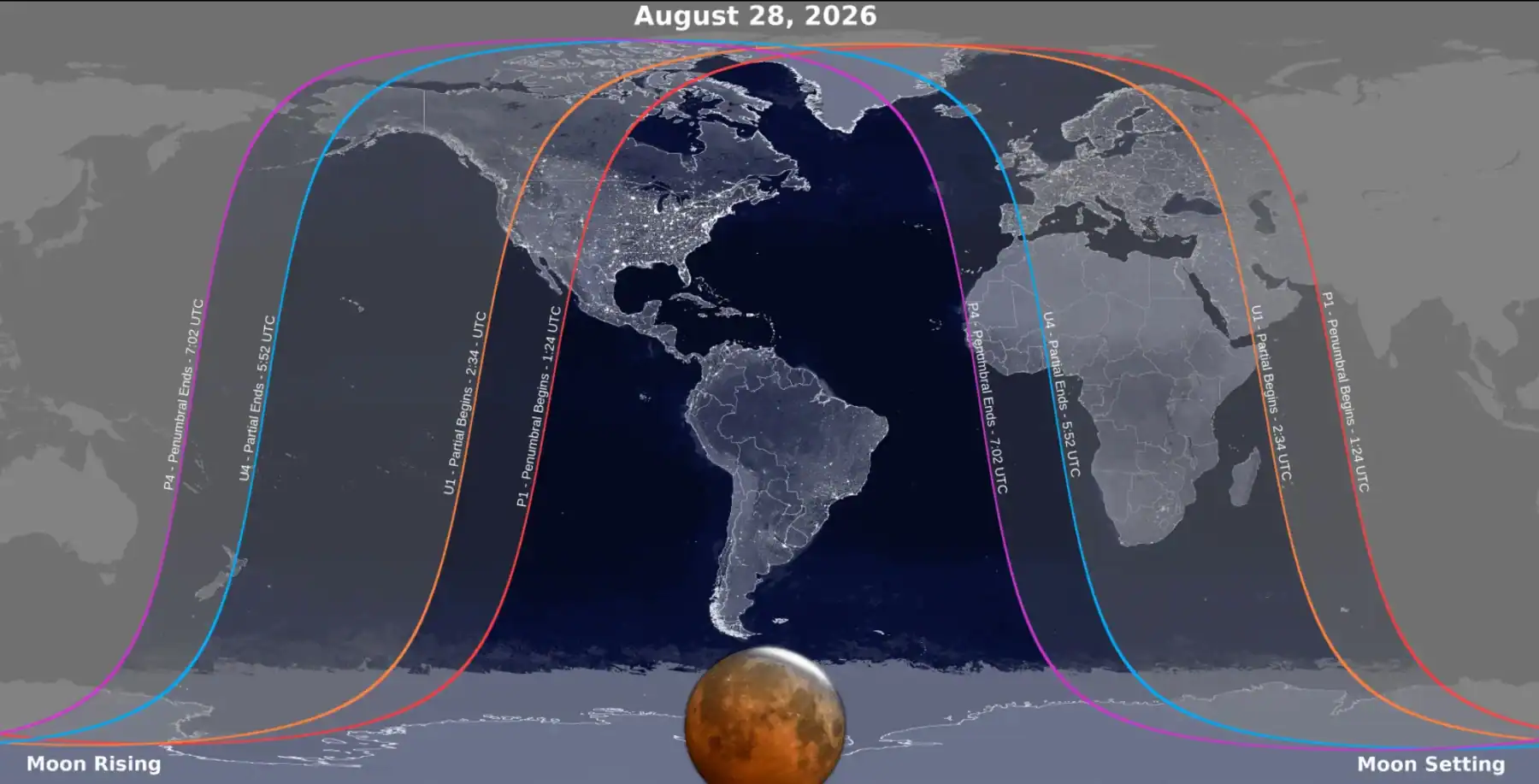
- The event will be visible across the Americas, Europe, Africa, and most of Canada, with the exception of the northwestern regions.
- Unlike solar eclipses, a lunar eclipse can be safely observed with the naked eye and requires no protective eyewear.
- Local weather conditions could spoil the view, as cloud cover and a chance of showers are in Toronto.
Weeks after witnessing a partial solar eclipse, Canadian skies are about to see a partial lunar eclipse tonight.
The lunar eclipse will be passing over the Americas, Europe, and Africa on the night of Aug. 27–28, being visible in most of Canada, including in Toronto.
What is a lunar eclipse?
A lunar eclipse happens when the moon is in its full phase, and Earth is positioned exactly between the moon and the sun.
When that happens, Earth’s shadow falls on the surface of the moon, making it dimmer and sometimes reddish. The phenomenon is only visible across half of the planet.
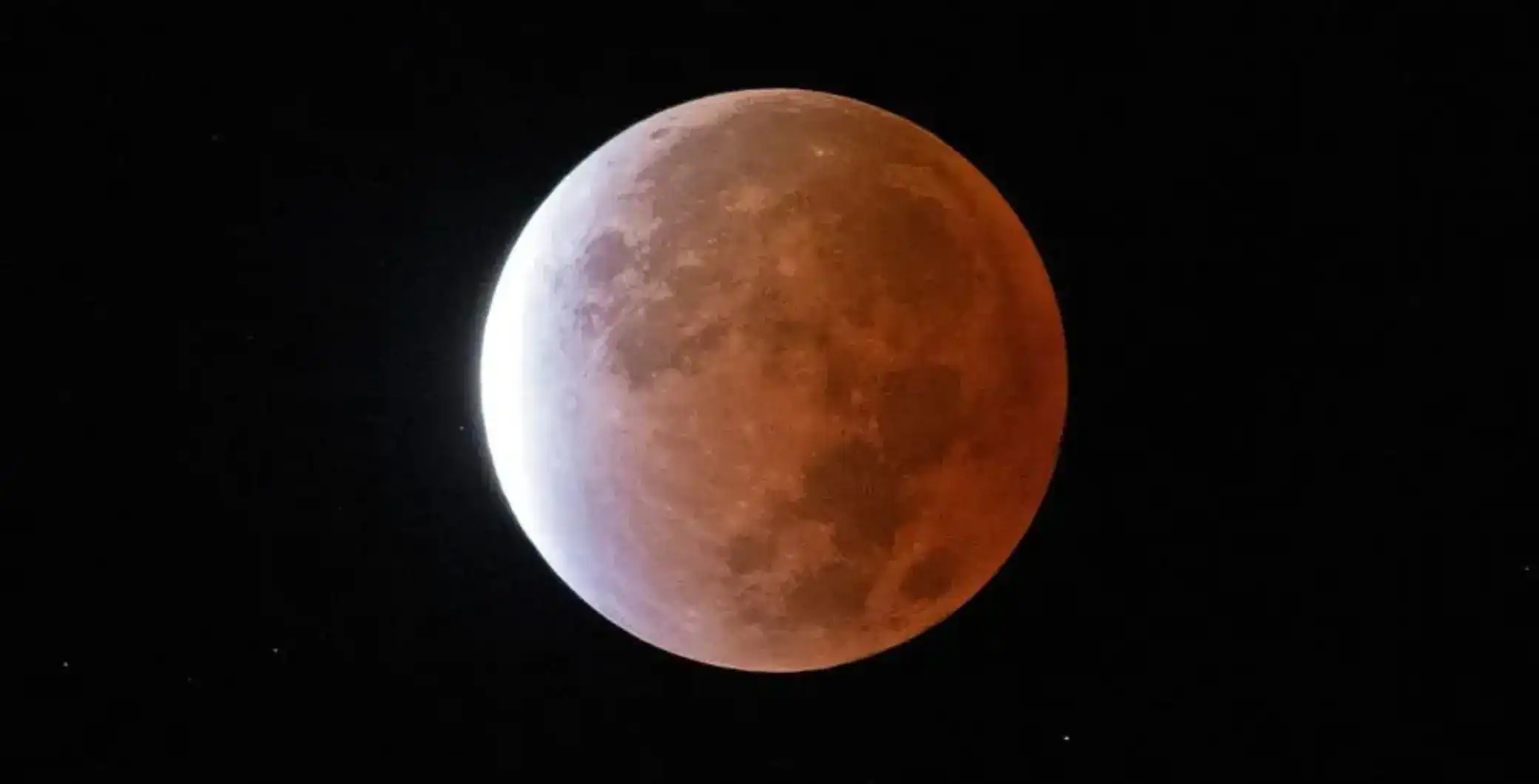
In a total lunar eclipse, the moon moves into the inner part of the Earth’s shadow, which is known as umbra. When that happens, some of the sunlight reaches the moon’s surface making it dimly lit and the moon may appear orangish or reddish.
During a partial lunar eclipse, like the one happening tonight, the alignment between the sun, the moon, and Earth is imperfect, making the moon pass only through part of Earth’s umbra. When this happens, the shadow grows and then shrinks, not completely covering the moon.
The most difficult to spot is the penumbral lunar eclipse, when the moon travels through Earth’s faint outer shadow, known as penumbra. The moon might become slightly dim, which can be difficult to see.
When and what you might see
According to NASA, once the moon first enters the Earth’s penumbra, the event won’t be mostly visible. However, at around 10:34 p.m. EDT, the moon will enter the umbra, allowing viewers to see part of the moon covered by the shadow.
Less than an hour later, most of the moon will be covered by Earth’s umbra, leaving only a small portion lit by the sun.
Once your eyes adjust, you might be able to see the part of the moon that’s covered by Earth’s shadow, which will appear to be coppery.
The event will reach peak visibility at 12:13 a.m. on Aug. 28 when about 96.3 per cent of the moon will be covered by Earth’s shadow. This part will be visible in most of the country, except for northwestern Canada.
The partial eclipse will end at about 1:52 a.m. on Aug. 28, with the penumbra remaining visible until 2:15 a.m.
Unlike a solar eclipse, where observers must wear proper eye protection to avoid injuries, the lunar eclipse can be observed without protective gear.
Weather might get on the way
Although the phenomenon should be visible in most of Canada, the weather might have other plans for Toronto.
The Environment Canada forecast indicates a mainly cloudy day on Thursday, with 30 per cent chance of showers, and a high of 26ºC with humidity making it feel like 31.
The cloudy conditions are expected to continue through the evening, which will also see partly cloudy skies and a 30 per cent chance of showers.