What to know
- Chris Alexander has unveiled a four-year, seven-part plan aimed at moving about 1,000 unhoused Torontonians into permanent housing by 2027.
- Alexander’s plan would include a new lead agency, a team to help secure housing units, corporate and philanthropic funding, and the potential purchase of distressed condo and rental buildings.
- Alexander also wants to close Toronto’s 10 largest encampments in 2027 while offering residents permanent housing.
- Olivia Chow’s campaign criticized Alexander’s proposal, saying her administration has moved 15,000 people from shelters and encampments into permanent housing and plans to continue expanding shelter and affordable housing.
- Brad Bradford has called for mandatory addiction treatment for some people with severe addictions and says he would make at least 100 recovery-house beds available across Toronto.
Mayoral candidate Chris Alexander has unveiled a new campaign plan that aims to relocate unhoused residents into permanent housing and relieve pressure on city shelters.
On Wednesday, Alexander announced a four-year, seven-part plan titled “A New Way Home for Toronto’s Unhoused,” which he said could move about 1,000 people into permanent housing by 2027.
According to him, this plan would rely on the existing shelter budget, with placement estimated to cost $80 per person per night instead of $200 for a shelter bed. In addition, it would count with provincial support to offer addiction and health-related services.
“I’m not saying we’re saving money by doing this, but we’re saving lives,” he told reporters on Wednesday.
What is Alexander’s plan?
The plan includes replacing what his campaign calls “dozens of agencies [that] run dozens of programs” for one lead which will be named in 30 days and manage outreach, shelter, access and housing placement, which will meet weekly to fast-track projects. This unified coalition would have case managers that would “open units the way a travel agent sees seats,” working with incentives to house people.
Alexander also plans to invite Toronto corporations and philanthropies to “help fund items [the] government will not cover,” including first month’s rent, damage funds, and furniture, and work with unhoused clients to help them access stable housing, training, and employment.
It would also include a team to help unhoused individuals sign housing units, including guaranteed rent, signing incentives and a 24-hour line. According to the campaign, this team would aim to sign 1,000 units by the summer of 2027.
The plan would also have an independent review to compare spending in shelter and supportive housing in order to buy “distressed condo and rental buildings” and run them with support from Ontario Health-backed clinical staff.
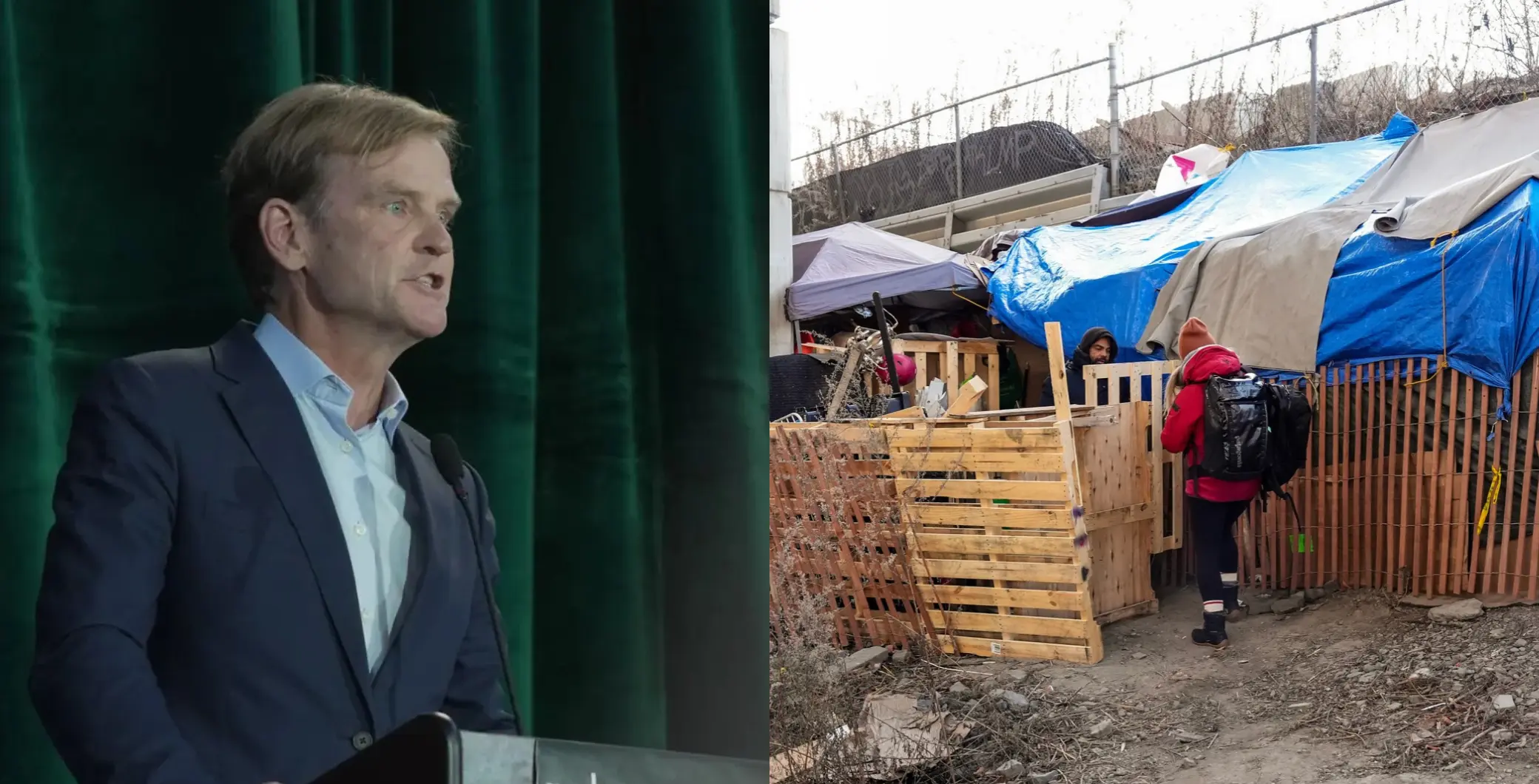
The candidate also promised to close Toronto’s ten largest encampment sites in 2027, while offering residents stable housing instead.
The plan would seek federal funding for Toronto and the GTHA to manage separate housing accommodations for refugees and asylum seekers in the region.
With this plan, Alexander aims to have under 1,000 unhoused people in Toronto by October 2027 and less than 200 by 2030 and reduce nightly shelter use to 5,000 by August 2027 and under 3,000 by August 2028.
According to a Medical Officer of Health report published in March, an estimated 11,094 people were unhoused by the end of January. Another report from the City of Toronto unveiled last summer suggested the amount of unhoused people doubled in the city in under three years.
Read More
‘His plan would set us back’: Olivia Chow’s campaign responds
Following the announcement, Olivia Chow’s campaign criticized Alexander’s plan, saying it ignores the challenges of finding solutions to homelessness, and would set the city back on progress.
“Chris Alexander’s plan which oversimplifies homelessness in Toronto shows that he doesn’t understand the challenges we face. His plan would set us back, taking Toronto off the course that is getting results under Olivia Chow’s leadership,” Chow’s campaign said in a statement shared with Now Toronto.
“Just like Brad Bradford, who voted against building shelters while saying the opposite, Alexander’s plan isn’t serious about giving people the help they need. We need to keep moving forward with leadership that understands our city.”
Chow has previously criticized Bradford for voting against shelters. Back in 2025, Bradford moved a motion to reject zoning permissions for a proposed shelter at 66 Third St., calling for more consultations. The motion was eventually voted down, and the shelter project was carried forward, with Bradford opposed.
In a statement, Chow’s campaign said she adopted a “caring approach to homelessness” during her time as mayor, saying her administration moved 15,000 people from shelters and encampments into permanent housing, led housing projects, prevented evictions, and reduced encampments by 70 per cent.
According to the campaign, Chow plans to continue taking a similar approach if re-elected.
“As Mayor, Olivia Chow has proven that a caring approach to homelessness works. She has expanded services for those most in need and made record investments to build affordable housing by partnering with the federal and provincial government,” Chow’s campaign said. .
“This approach is working. Over the past two years, homelessness in Toronto declined 8.2 per cent, despite soaring 17.2 per cent in other areas across the province. Olivia Chow is building more shelter beds and homes to get people off the streets and put a roof over their heads, and she will continue to do so.”
Bradford called for mandatory addiction treatment
This August, mayoral candidate Brad Bradford unveiled a plan that included calling on the provincial government to introduce mandatory treatment for those with severe addiction which “has stripped their capacity to make treatment decisions and who face a serious, near-term risk of harm.”
“I’m a father. I can’t step around an unconscious human being on the sidewalk, holding my daughters’ hands, and teach them that’s normal,” Bradford said in a statement shared by his campaign.
“Some people look at our streets and talk about zombies. I won’t. Those are people, somebody’s kid, somebody’s parent, and they need our help. It’s time to bring order and compassion back to this city. We can have both. We must have both.”
The candidate’s campaign said he also plans on making at least 100 recovery house beds available across the city to provide structured recovery for up to a year for those who need it. The plan also includes expanding response teams, including mental health and addiction clinicians on the TTC with treatment referral.
In a statement to Now Toronto on Thursday, Bradford’s campaign emphasized that his plan includes an intertwined approach that will first focus on moving unhoused individuals from shelters into housing with support and deliver more treatment beds
“These approaches are the only compassionate approach and offer people a real path back to stable, hopeful lives. Clearing encampments only helps if there is somewhere to go and support to get there. Brad will make sure there is,” his campaign said.
“Mayor Chow has called this a city at its full potential, but for the people lining up at food banks and shelter doors, it isn’t. Toronto is stuck, and is ready for change.”