What to know
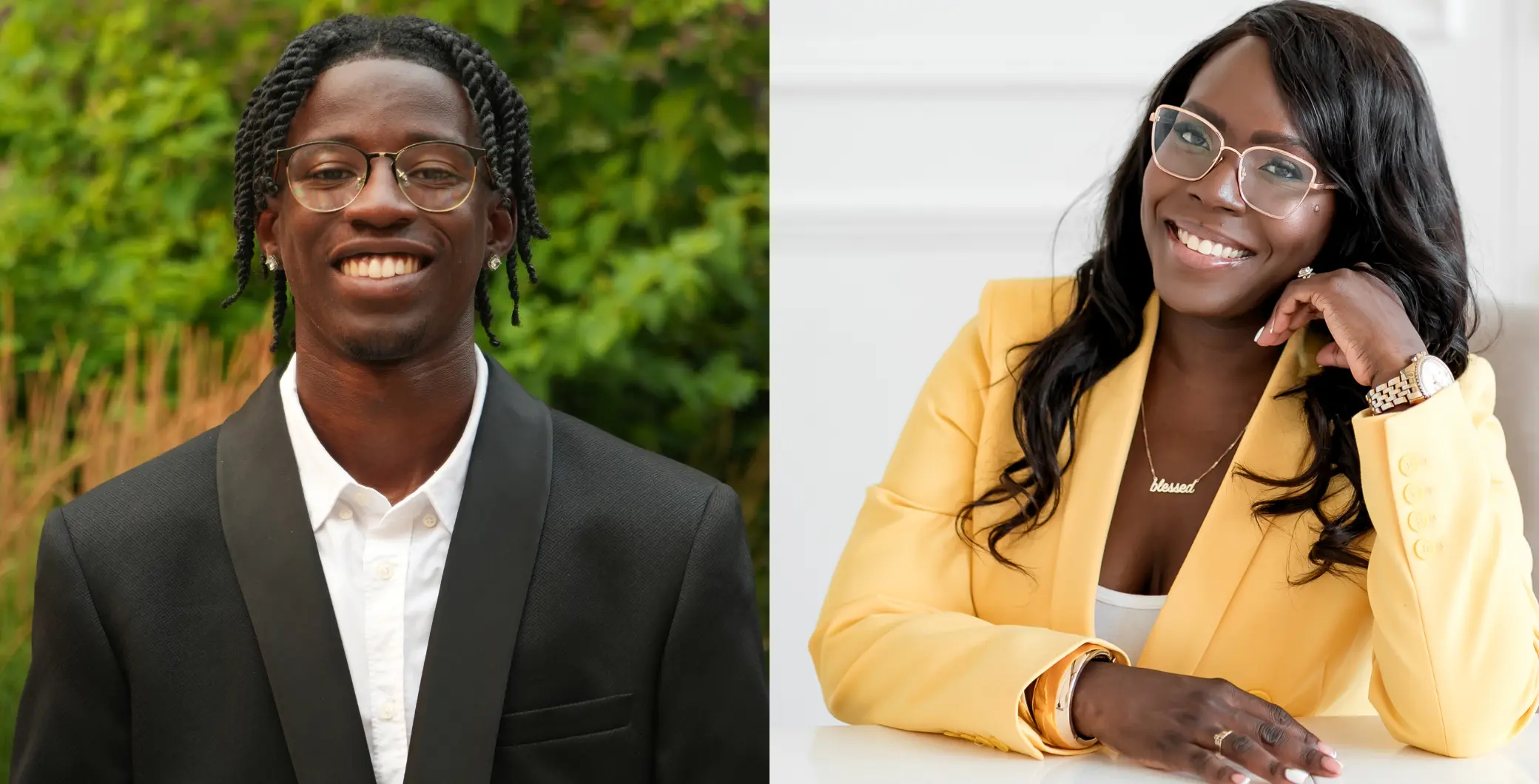
- U of T neuroscience student Tobi Oyedele shared a TikTok video about the loneliness of regularly being the only Black man in his science classes, research labs and hospital workplaces.
- Black people account for approximately 4.7 per cent of Ontario’s population but only 2.3 per cent of the province’s physicians, according to the Canadian Medical Association.
- Oyedele said he was 20 years old when he first met a Black male doctor, Dr. Hance Clarke, whose mentorship helped him feel welcomed and represented in medicine.
- Dr. Trudy McFarlane says increasing representation must be paired with early exposure, mentorship, institutional support and efforts to address unconscious bias throughout health care.
When Toronto student Tobi Oyedele looks around his university science lectures, he is often the only Black man in the room.
For the 21-year-old University of Toronto neuroscience student, that isolation points to a larger problem: Black students continue to be underrepresented in the classrooms, research labs and medical schools preparing Canada’s future health-care professionals.
“Being a Black male in science might be one of the loneliest things,” Oyedele said in a recent TikTok video about his experience.
Now entering his fourth year, Oyedele said he can count on one hand the number of Black students — particularly Black male students — he has encountered in his science classes.
Most of the time, he said, there have been none. He experienced the same thing in high school, where he was the only Black male student in his Advanced Placement program.
The numbers show that his experience is part of a broader representation gap. Black people account for approximately 4.7 per cent of Ontario’s population but only 2.3 per cent of its physicians, according to the Canadian Medical Association.
In his video, Oyedele described underrepresentation as a feedback loop. When Black students do not see people who look like them in science and medicine, they may be less likely to believe they belong in those fields or may have fewer mentors and supports available when they pursue them.
For Oyedele, sharing that message was about making other Black students feel seen while calling on those who have already established themselves in underrepresented fields to help create opportunities for the next generation.
Feeling like the only one
Oyedele said the message in his video had been building inside him for years, but it was not until he entered university that the extent of the underrepresentation became especially clear.
“I was expecting, at least, I’m in a bigger university, I’m in a lecture hall of 1,000 people, and I look around and it’s like, wow, there really isn’t another Black guy here,” he said. “It’s like we’re paving the way, but it can get really lonely.”
Oyedele has completed research experiences at Mount Sinai Hospital and Toronto General Hospital, but said he has also rarely encountered other Black men while working in those spaces.
“Even as a summer research student, I’m looking around and I’ve never actually gone to work with another Black guy, and so it’s something that does weigh down on me,” he said.
His video quickly became a gathering place for Black students and professionals who understood that feeling.
Oyedele said people from Canada, the United States and the United Kingdom filled the comments and his direct messages with their own experiences of being the only Black person in a classroom, school or workplace.
“It was really bringing a community of people together,” he said. “I realized, yeah, it may look lonely from my aspect, but there’s so many other people going through this as well.”
The response also included messages from high school students, undergraduate students and parents whose sons hope to follow a similar path.
“Even on the days where I’m feeling like, ‘This journey is hard, this is difficult,’ I have already 10, 15 DMs just saying, ‘You can do it,’” he said. “It’ll be undergrad students, it’ll be high school students. It’ll be moms with their sons who look like me, trying to say, ‘We’re supporting you. My son’s joining you soon.’”
The power of seeing someone who looks like you
Oyedele hopes to become a neurologist and contribute to both patient care and research into neurological and neurodegenerative diseases.
His interest in the brain began in high school, when a Grade 11 research project allowed him to study amyotrophic lateral sclerosis, commonly known as ALS, and interview researchers from Canada and abroad.
“From there, I was really like, ‘Wow, neuroscience is really where I want to be, and it has to be at U of T,’” he said.
Although his father works in infection control at Trillium Health Partners, Oyedele said no one in his family is a doctor. As a result, much of the path toward medical school has been something he has had to learn to navigate himself.
One person who has helped him imagine what his future could look like is Dr. Hance Clarke, an anesthesiologist and the director of Pain Services and medical director of the Pain Research Unit at Toronto General Hospital.
Oyedele worked under Clarke and described meeting him as a defining moment in his journey.
“Before meeting him, I’ve never met a Black male doctor before, and that was my first experience,” Oyedele said. “It took 20 years of my life to even see another Black male doctor that looks like me.”
Even small interactions with Clarke helped him feel welcomed in the field.
“Going into a lab meeting, and he’ll give me a fist bump or say, ‘How you doing, bro?’ It makes me feel so welcomed,” Oyedele said. “It’s like this is how it should feel, and this is who I’m trying to aspire to be.”
‘The lonely only’
Dr. Trudy McFarlane, a family physician and the interim associate dean of Black Flourishing in Medicine and Healthcare at Toronto Metropolitan University’s School of Medicine, understands that isolation personally.
Dr. McFarlane has practised medicine for approximately a decade, but said there were points during her education when she was the only person who looked like her.
“I would say that in parts of my medical education, I was the ‘lonely only,’ and so that just means that I was the only one that looked like me in my class, in my training, and sometimes that was quite difficult,” she said.
Dr. McFarlane said Oyedele’s account reflects experiences she has heard from many other Black students. The issue, she explained, is not an absence of ability or ambition.
“It’s not that there isn’t necessarily the interest or the talent or the skill set,” she said. “However, I think it’s more about representation and actually having the opportunities, the early exposure, feeling as if you truly belong, and really having the support to pursue those interests.”
Students may be interested in science and medicine but lack access to mentorship, early exposure and guidance about entering competitive programs. Others may be discouraged or redirected before they have an opportunity to explore their interests fully.
“People flourish where they are nourished,” Dr. McFarlane said. “If we’re not fostering and building on those early interests, sometimes that gets lost.”
She said institutions must examine not only who is recruited, but whether students are given the support and psychological safety needed to succeed after they arrive.
“Every system is cultivating something,” she said. “If we continue to see things like underrepresentation in science and medicine, we have to consider asking ourselves what conditions have our systems been cultivating, and how can we be intentional about cultivating something different?”
Some institutions have introduced pathways aimed at reducing those barriers. U of T’s Black Student Application Program, for example, is an optional medical-school application stream intended to increase and support Black student representation. Its Community of Support also offers undergraduate students access to mentors, research opportunities, admissions guidance and interview preparation.
Additionally, Toronto Metropolitan University’s School of Medicine has since partnered with the Community of Support, extending those resources to prospective TMU applicants.The school also offers its own optional Black Admissions Pathway, through which applicants who identify as Black may choose to have their application considered through this pathway. The pathway is intended to address systemic barriers and the underrepresentation of Black students in medical education.
That support also begins before students apply to university. The Future of Healthcare Pathway Program, a partnership between TMU and the Peel District School Board, introduces underrepresented students to post-secondary programs and careers across health care. The initiative includes speaker series, course offerings and experiential learning opportunities aimed at expanding access and increasing representation among equity-deserving communities in the health-care workforce.
Representation can also shape patient care
The consequences of underrepresentation continue beyond the classroom. Dr. McFarlane said racism and unconscious bias remain present within medicine, which has not always been a safe or responsive system for Black patients.
A greater diversity of voices can help health-care professionals understand the different ways patients experience health, illness and medical institutions. However, she cautioned that representation alone will not eliminate bias.
“Culturally affirming, culturally responsive care is really, really important,” Dr. McFarlane said. “With increased representation, there’s increased representation of diverse voices, and we can look at the different lenses in which folks experience life, experience health and wellness.”
Changing the system will also require health-care workers and institutions to confront unconscious bias, reconsider how decisions are made and ensure care is tailored to each patient rather than applying a one-size-fits-all approach.
“It’s going to take more than representation,” she said. “The learning and unlearning, and addressing one’s unconscious bias, and critically reflecting on why you think the way you do about certain people.”
Paving the way forward
Oyedele is preparing to apply to medical schools across Ontario this fall. While he hopes to achieve his goal of becoming a neurologist, he said personal success will mean little if he does not help other Black students come after him.
“It’s really nice if you can have your own personal success and you can flourish in that field,” he said. “But if we’re leaving our own people behind, our own friends behind, then it’s really all for nothing at the end of the day.”
For Oyedele, mentorship is not simply about offering encouragement. It allows younger students to see that their goals are possible through someone who understands the barriers they may face.
“It means so much more when it’s someone who looks like you and someone who’s gone through a lot of the same experiences or knows what it feels like,” he said.
Dr. McFarlane echoed that message, urging institutions to invest in early outreach, pathway programs, mentorship and learning environments where students feel supported. She also encouraged young people not to count themselves out of spaces where they do not yet see themselves represented.
“You can’t aspire to what you’ve never been exposed to, and it’s difficult to believe you belong in spaces where you’ve never seen yourself reflected,” she said. “Representation helps young people imagine new possibilities, but it also signals that their aspirations are welcomed, they’re achievable, and they absolutely can do it.”
Oyedele hopes his growing social-media platform can become part of that support system — one that helps Black students feel less alone while creating a clearer path into science and medicine.
“The biggest thing is just giving back,” he said. “That’s the biggest thing.”