What to know
- Indigenous Fashion Week and the Runway of Rezilience event celebrate Indigenous culture through fashion, art, and performance.
- The National Day for Truth and Reconciliation (Sept. 30) honours residential school survivors, their families, and the children who never returned home, sparking conversations about language and identity.
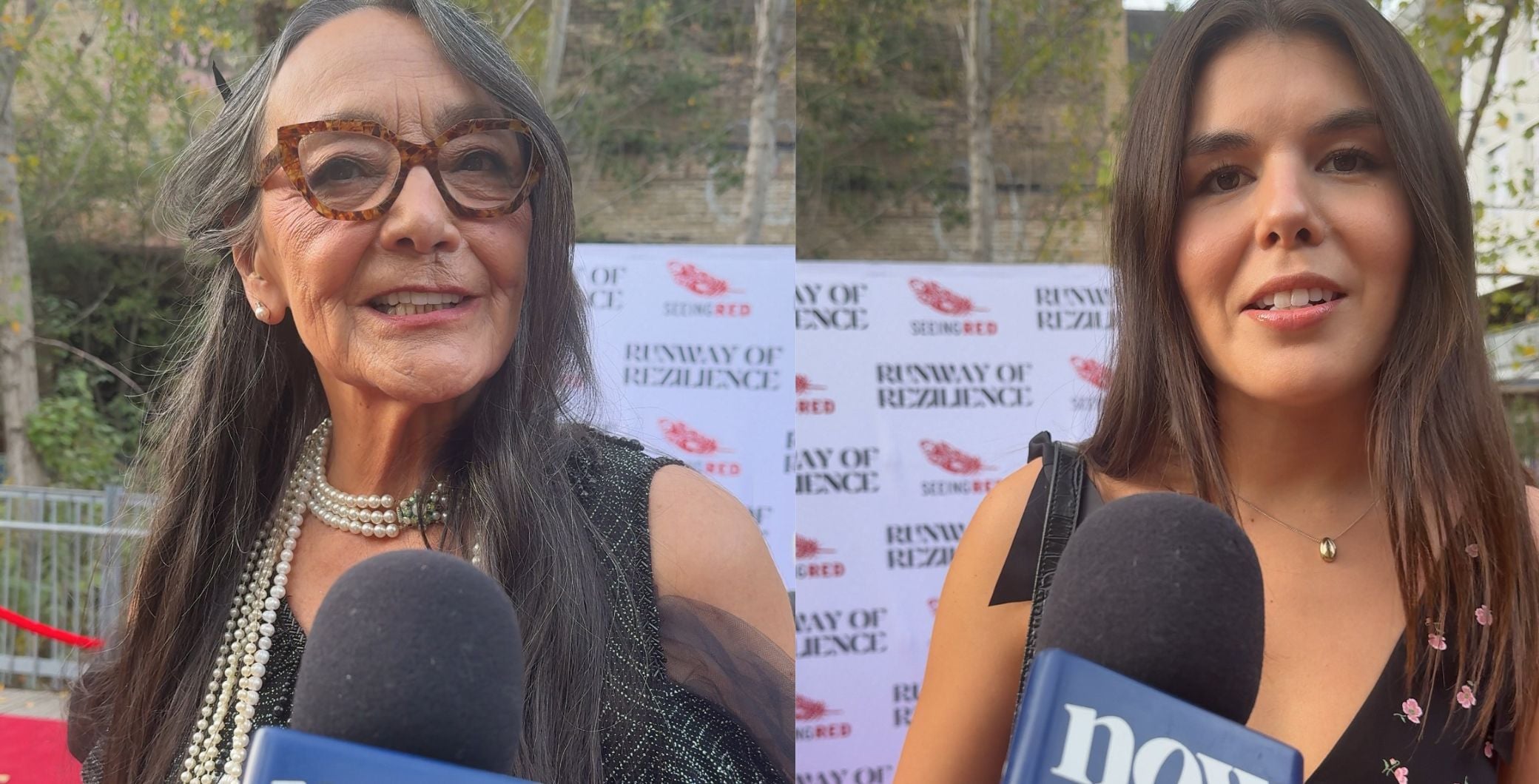
- Prominent Indigenous figures, including actress Tantoo Cardinal, designer Lisa Marie Lavallee, and singer Sara Kae, shared words from their languages that hold deep personal and cultural significance.
- Many Indigenous languages were suppressed by colonial policies, but today, sharing these words is a way to reclaim identity, connect with heritage, and foster understanding across communities.
As Indigenous Fashion Week showcases culture to the city and the National Day for Truth and Reconciliation arrives, locals are sharing one meaningful word everyone should know from their native languages.
On Saturday, Sept. 26, Indigenous-owned media company Seeing Red hosted the Runway of Rezilience event, bringing Indigenous fashion, art, and performance to centre stage.
As Wednesday marks the National Day for Truth and Reconciliation, a day to remember residential school survivors, their families, communities, and the children who never returned, Now Toronto asked attendees to share one word from their culture they believe everyone should know.
Read More
‘Iskotêw’: The fire at the core of Mother Earth
Cree actress Tantoo Cardinal says the word “Iskotêw” is a word everyone should know.
“Iskotêw, which is fire in Cree, is made up of two words: Iskwêw, which is “woman,” and “otêh,” which is “heart,” Cardinal told Now Toronto.
“So fire is woman’s heart, and then the stories go on to talk about the fire at the core of Mother Earth,” she added.
Cardinal explained that language is a touching medium for sharing cultures.
“We were accused of having no world view, we were accused of not having much intelligence and being primitive and pagan widows and misinterpreted on every possible level. But our languages tell the truth, and I think that it’s really important that our languages come back,” she said.
Cardinal explained that younger generations are starting to learn the languages their parents were once beaten to lose, so that bringing back Indigenous languages helps connect one another to the earth.
“That’s the power of who we are as Indigenous Peoples: that we have a language that converses with creation, and that’s crucial. And we have that responsibility as Indigenous Peoples. We have to carry it, whether we know the language or not. We know the essence. We know the intuitive,” she said.
“Don’t beat yourself up if you don’t know the language you’re supposed to have, knowing that someone made [it] illegal for you to know, but someone survived so that you would know,” Cardinal added.
‘Aanii, Boozhoo’: The first hello
Anishinaabe designer Lisa Marie Lavallee says the most important word is one of greeting.
“‘Aanii, Boozhoo.’ That’s ‘hello.’ That’s the opening door to start the conversation,” she told Now Toronto. “Without that hello, you don’t have that introduction, that first step to meeting somebody new.”
Lavallee explains that her ancestral background and her grandmother’s experience as a residential school survivor kept her from knowing her language as much as she wishes.
“My grandmother was a residential school survivor, and so my mother and her siblings were not allowed to be taught the language, and my generation was not allowed to be taught the language as well,” Lavallee says.
However, the younger generations are getting to know the language a bit more.
“It’s coming back for them. They know the language. I don’t have too much knowledge,” Lavallee added.
‘Mino-bimaadiziwin’: Living the good life
Ojibwe and Cree singer Sara Kae says the Ojibwe word “Mino-bimaadiziwin” encourages living a good life.
The singer has recently released her single, “Do You Think Of Me?” So she sees her experience as a musician as reflective of “living the good life.”
“One word that resonates with me is ‘Mino-bimaadiziwin,’ which means living the good life. I think that’s just something to keep in mind as I go through this journey and navigate my career,” Kae told Now Toronto.