What to know
- Masabilities, a sold-out Carnival-inspired event returning July 25, creates an accessible celebration for disabled and neurodivergent Afro-Caribbean people, alongside their families and caregivers.
- The event features adaptive dance, sensory-friendly spaces, accessible costumes, ASL interpretation, mobility supports and other accommodations designed around participants’ needs.
- Founder Marty Lampkin says the initiative challenges the stigma surrounding disability in many Caribbean communities while ensuring people don’t have to choose between their cultural identity and their disability.
- Lampkin hopes the project will eventually help pave the way for greater accessibility across Toronto Carnival, encouraging organizers to consider accommodations from the earliest stages of event planning.
A Carnival event coming to Toronto is creating space for Caribbean people on the disability spectrum.
For Toronto’s Afro-Caribbean community, Carnival is more than a parade; it’s a celebration of culture, history and resistance that everyone should have the opportunity to partake in. But for many disabled and neurodivergent people, participating in these cultural celebrations hasn’t always been possible.
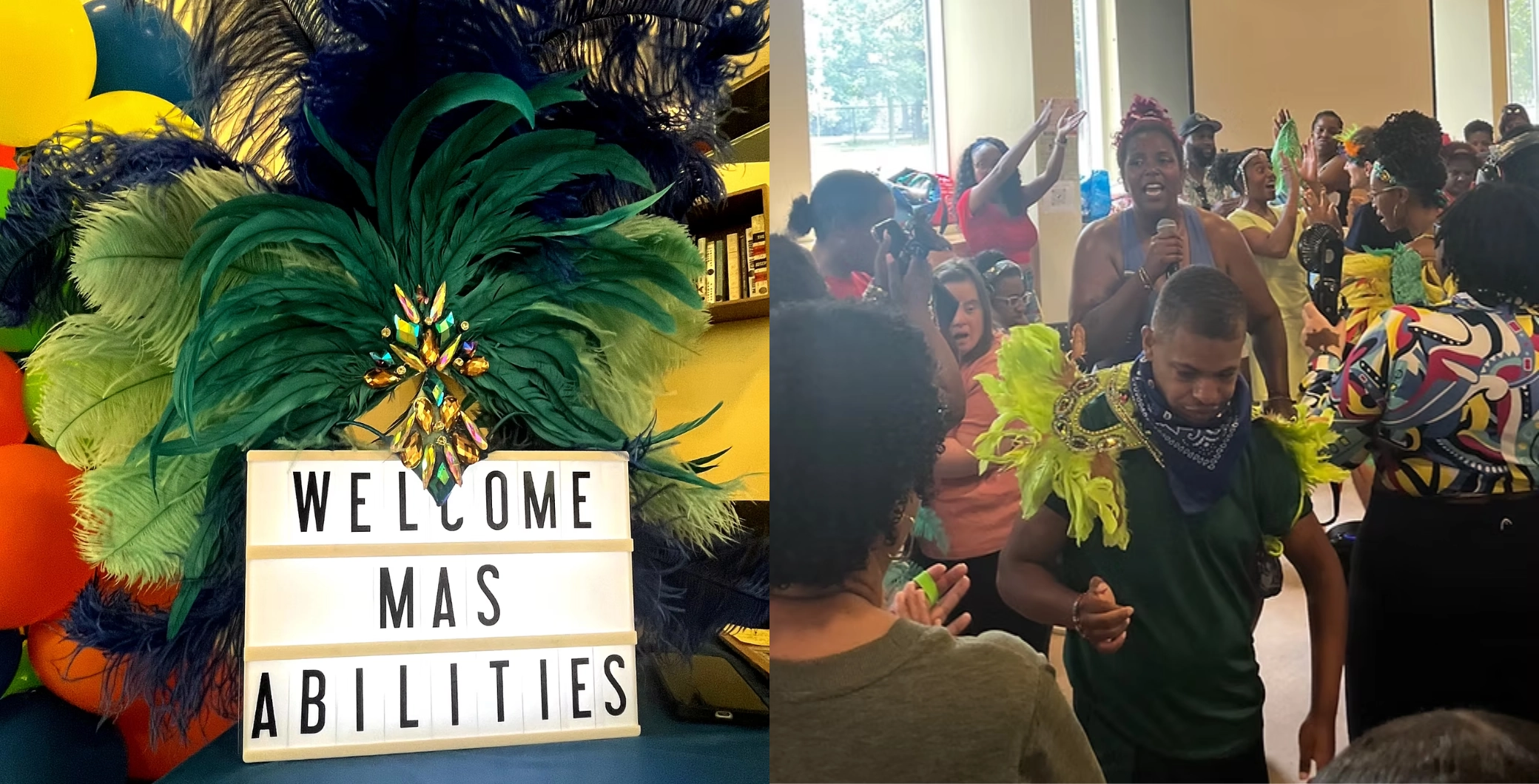
That’s what inspired Toronto social worker, psychotherapist and professor Marty Lampkin to launch Masabilities, an inclusive Carnival-inspired event designed specifically for Afro-Caribbean members of the disability and neurodivergence community and their friends, family, and caregivers. Now in its third year, Masabilites has officially sold out, with around 100 attendees expected to take over the Jamaican Canadian Association venue from 12-2:30 p.m. on July 25, offering a perfect way to gear up for the feting season.
Complete with adaptive dancing, sensory supports, costumes and Caribbean music, Lampkin says the idea blossomed after years working alongside Black families navigating the disability sector. She witnessed the barriers these communities experience while attempting to access services, including anti-Black racism. As someone of Afro-Caribbean descent who grew up participating in Toronto’s Carnival, she also noticed an absence of accessible programming celebrating Caribbean culture.
“I would constantly go and play mas and look around and realize, where are the disabled, neurodivergent folks?” Lampkin told Now Toronto. “There are so many events that lead up to experiencing Carnival, and again, how are folks with disabilities included in that?”
A core mission of Masabilities is addressing what Lampkin explains as barriers in Carnival spaces that isolate and exclude neurodivergent and disabled people from participating, while also creating culturally informed programming that’s missing in the disability sector.
For Lampkin, the conversation is about more than physical accessibility—it’s also about challenging long-standing cultural stigma surrounding disability within many Afro-Caribbean communities. She says disability is still often misunderstood or left unspoken, making it even more difficult for disabled people to fully participate in community traditions like Carnival.
“Disability is rarely talked about in Caribbean households. Disability is rarely discussed in African households,” Lampkin said. “Disability is still heavily disregarded. It’s shunned, it’s shamed, it’s tabooed, it’s kind of looked down upon.”
She explained that her event aims to push back against that stigma by creating a space where participants don’t have to choose between embracing their disability and celebrating their Afro-Caribbean identity. Instead, the event encourages them to honour both.
A Carnival experience designed with accessibility in mind
Rather than asking participants to adapt to the event, Lampkin explained that Masabilities is built around participants’ individual needs. Guests can choose specially designed costume pieces based on their sensory preferences, including headpieces, armbands and other accessories.
Throughout the event, an instructor specializing in adaptive dance will lead participants through movements that can be enjoyed from wheelchairs, walkers or while standing, while quieter spaces and noise-cancelling headphones are available for anyone needing a break from the music and other noise.
Accessibility measures at Masabilities also include Afro- Caribbean American Sign Language Interpreters and trained volunteers available to support attendees who are impacted by blindness. Additionally, masks will be available on-site for those who choose to wear them.
The event has a designated Wheel Trans drop-off/pick-up site, while free parking is also available for attendees and caregivers who are driving.
Lampkin shared that she has many special memories from the previous two events, including one mother who shared that she had never seen their daughter dance that way before.
“They didn’t even know their daughter could move her hips in that way,” the organizer recalled. “It was a really nice experience for the entire family.”
The event also intentionally centres Black and Afro-Caribbean businesses and creators. Interpreters, caterers, vendors and many of the featured artists all come from the African and Caribbean diaspora, while books by disabled autistic authors are also available.
Looking toward a more accessible Carnival
While Masabilites is currently a one-day event as opposed to an official participating band in the Toronto Caribbean Carnival, Lampkin’s long-term goal is to bring the show on the road as part of the parade itself.
She hasn’t yet approached Carnival organizers, saying her priority is first understanding what disabled participants would need to safely take part in such a large-scale event, because it’s not about rushing to get people in the parade.
“It’s actually about doing things very diligently and in a way that is respectful of people’s lived experiences,” she explained.
Lampkin explained that accessibility planning should begin long before the parade itself, considering everything from registration forms that ask about accommodation needs to mobility, sensory and washroom access throughout the route. She also shared examples of participants describing difficulties navigating previous Carnival events, including inaccessible facilities and crowded conditions.
But she explained that her work isn’t about criticizing Carnival organizers.
“It’s a call-in,” she said. “It’s a call in to think about things a little bit differently.”
For now, she’s focused on growing awareness that disabled and neurodivergent members of Toronto’s Afro-Caribbean community deserve to celebrate Carnival just like everyone else.
“Our slogan is, ‘Everybody deserves to play mas,'” Lampkin said. “Nobody should be excluded from that.”


