What to know
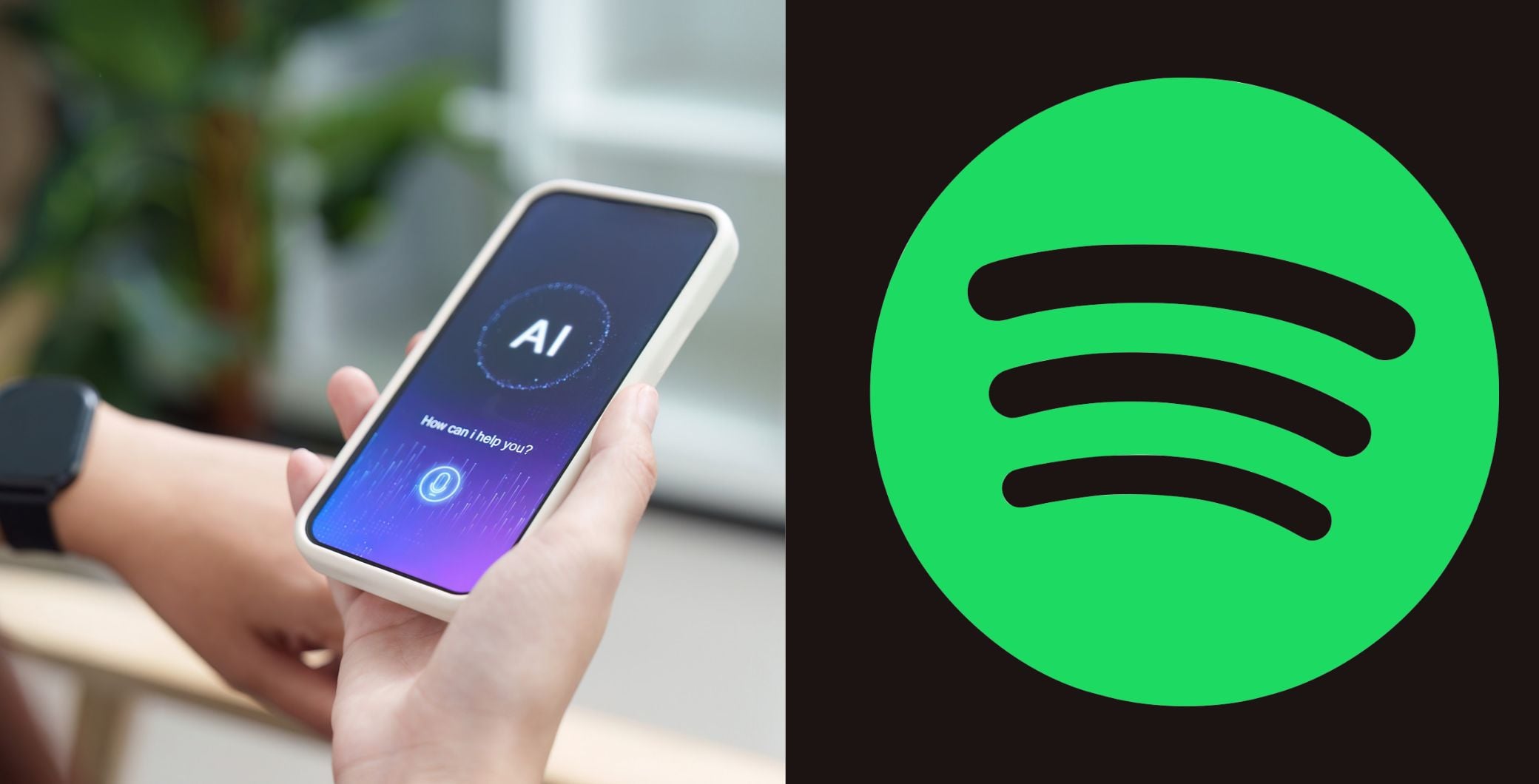
- Spotify has purged more than 50 million AI-generated “slop and spam” tracks from recommendations and removed over 75 million from the platform entirely.
- The platform now flags AI-generated songs, excludes them from playlists, and labels AI personas to prevent confusion between artificial and human artists.
- Royalty rules have changed: AI tracks are far less likely to reach the 1,000-play threshold required for payout, reducing their financial impact on real musicians.
- The crackdown follows mounting industry pressure, lawsuits, and concerns that AI music is siphoning royalties and credibility away from human artists.
The music industry is pushing back against the rise of AI-generated tracks, and Spotify is taking action. The streaming giant has removed millions of songs it considers “AI slop,” as it looks to protect human artists.
In 2025, Spotify outlined its efforts on protecting real artists in an era where AI-generated music is entering the mainstream.
Now, one year later, Spotify has revealed its crackdown tactics and statistics on how it’s protecting human artistry. The specifications include:
- Mass-upload purging: Spotify uses machine learning spam filters to target bulk-uploaded, repetitive, or duplicate tracks, removing tens of millions of AI files.
- Recommendation blocking: Songs flagged as AI-generated “slop” or “spam” are systematically excluded from personalized mixes, discovery tools and editorial playlists.
- Royalty thresholds: AI-generated tracks are 10 times less likely to clear the 1,000-stream minimum required to earn payouts.
- AI Persona badges: Profiles representing AI characters receive an AI Persona label and are cut from default recommendations.
- Anti-impersonation rules: Strict bans target unauthorized AI voice clones or fake profiles pretending to be human musicians.
- Credit transparency: Spotify demands specific AI contributions, such as vocals or instrumentation, to be displayed in song credits.
“This year alone, we’ve taken more than 50 million slop and spam tracks out of recommendations,” Spotify said in a press release. “This is in addition to more than 75 million spammy tracks we’ve removed from our platform altogether for serious or repeated violations of our rules.”
The pushback comes amid multiple lawsuits and growing legal action from major artists and music companies over AI-generated content.
Earlier this year, TAS Rights Management filed several patents on behalf of Taylor Swift, including one for her voice saying the words “Hey, it’s Taylor,” to protect herself from generative AI mimicking her.
This also comes as the ongoing battle against AI-generated music has led the Society of Composers, Authors and Music Publishers of Canada (SOCAN) to sue SUNO, a generative AI music creation platform, for allegedly replicating artists’ songs without consent or compensation.
Read More
Music commentator Alan Cross says it’s “about bloody time” that Spotify protects real artists against AI-generated music.
“Spotify must be very concerned with the energy that all this slop takes up. These songs are being uploaded at a rate of 50,000 to 100,000 a month, probably more, and they take up space on their servers, take up energy on their servers, and they’ve got to get rid of it because this slop is costing them money,” Cross explained.
Beyond the cost, Cross explained that allowing AI music on its platform can cost Spotify credibility.
“It’s also costing them credibility with their user base because very few people want to hear this kind of stuff, and much of it is garbage designed to siphon royalties from real human artists. That’s the credibility problem. Money is going to bots that are being used to listen to these AI-generated songs,” he said.
Cross believes Spotify should do more, such as fully banning AI songs from the platform instead of relying on self-identification.
He also says that relying on the 1,000-play threshold for monetization, which significantly reduces AI songs’ payouts, isn’t enough. Cross says these songs are only “cluttering up algorithms.”
He explained that it’s already affecting royalties.
“At the end of the month, Spotify tallies up all the money it’s made and the streams that have been listened to, and then they divide up the money based on the percentage of streams,” he explained.
So if, for example, Drake gets 20 per cent of the streams that month, everyone else is divided below that.
“Some of these AI tracks are going to be over 1,000 listens, and they’re going to be funnelling away money from real human beings,” Cross said.
Beyond stolen royalties, AI artists are robbing real musicians of opportunities, too.
Cross says record labels have started using AI instead of signing artists to cut costs.
How other streaming platforms are handling AI-generated music
Streaming service Apple Music has also announced a plan to tag AI-generated content with “Made With AI,” reportedly rolling out by the end of the year.
This will provide transparency, allowing listeners to choose whether to listen to AI-generated music or real human artistry.
YouTube Music has also recently announced its own labelling system for AI-generated music, teaming up with music partners and using its own detection tools to identify AI-generated tracks.
Cross hopes AI will only be a tool to move forward in the medical field, helping with math problems or other concrete tasks, not replace human artistry.
“I want AI to do these things that I hate doing, to do my laundry and to pick up after my dog, so I have more time to create art… AI-generated music is a solution to a problem that nobody is worried about — a problem that doesn’t exist,” he said.