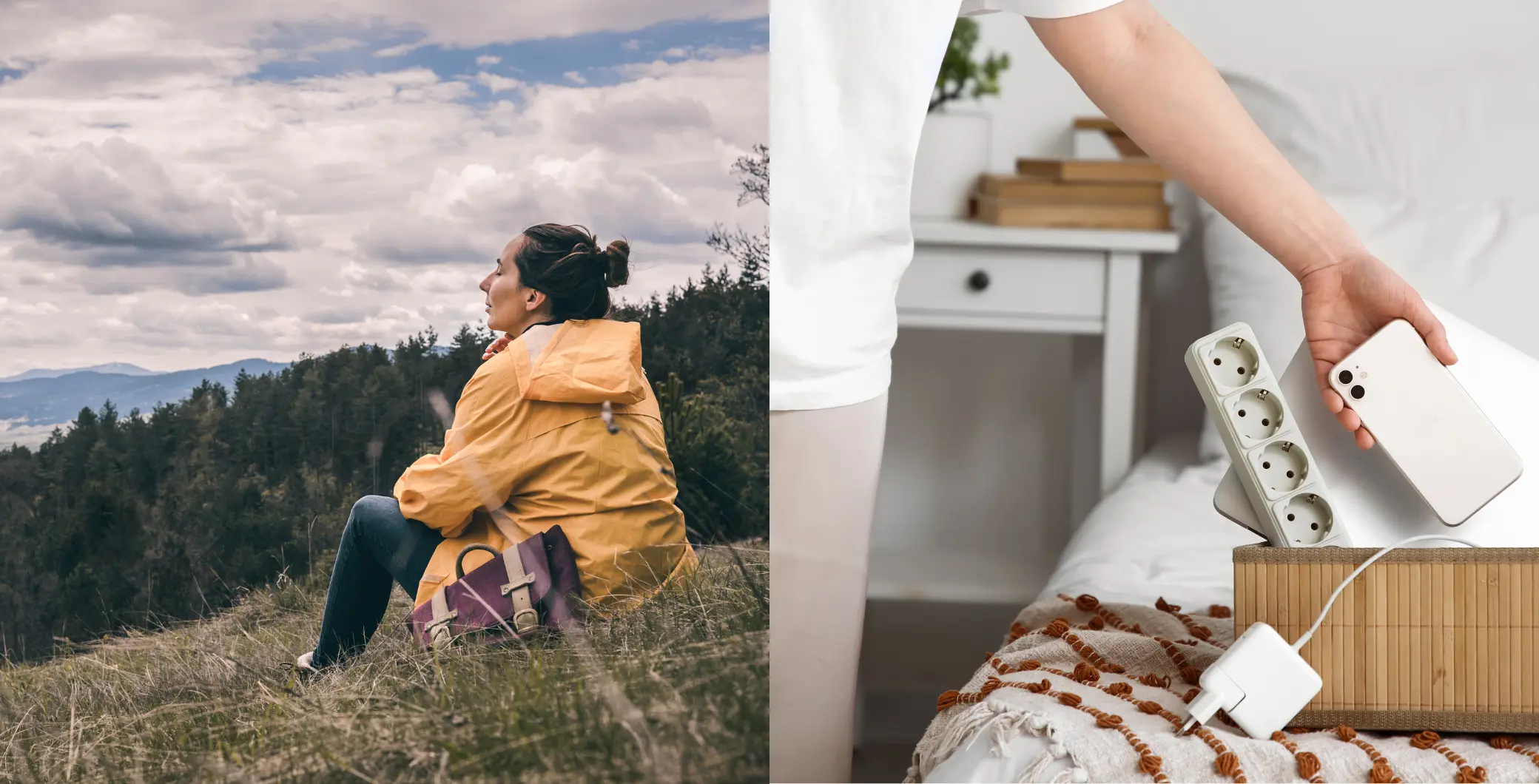
What to know
- Searches for digital detoxes have increased in recent years, while Hutson says more young people are recognizing that spending so much of their lives online is no longer making them happy.
- Spending time outdoors can help restore attention, reduce stress, improve mood and sleep and create opportunities for stronger social connections.
- Unplugging can start with small changes, such as disabling unnecessary notifications, establishing tech-free zones or silencing your phone during time with friends and family.
- Extreme heat, wildfire smoke and poor air quality can complicate outdoor plans, so Hutson recommends limiting activity during unsafe conditions and finding screen-free ways to connect indoors.
As Canadians deal with digital fatigue and constant screen time, more people — particularly Gen Z — are choosing to put down their devices and reconnect with the outdoors.
Unplugging appears to be one of the summer’s growing trends, according to Brock University Associate Professor of Recreation and Leisure Studies Garrett Hutson.
Hutson, whose main teaching responsibility is outdoor education, says searches related to digital detoxes have grown in recent years, while research suggests young people are becoming less satisfied with living so much of their lives online.
“Searches on things like digital detox in some cases have tripled since 2023. There’s some interesting research coming out of the UK saying that youth are essentially saying their entire lives are online, but they wish that wasn’t the case, and that their time online is no longer making them happy,” Hutson told Now Toronto.
He has also noticed the shift among his undergraduate students. While students previously resisted putting away their phones during multi-day outdoor trips, he says many now embrace the opportunity.
“When we used to go on trips, for instance, and say we’re going to leave our phones, you know, tucked away somewhere safely while we’re gone for three days. Maybe backpacking. I used to get a lot of pushback, and now students are just welcoming it and saying, ‘That sounds great. I would love to not have my phone for a few days,’” he said.
Although Gen Z still spends less time outdoors than some older generations, Hutson believes young people may understand the effects of constant connectivity better than anyone because technology has been part of their lives from the beginning.
“Gen Z’s been saturated with technology from day one. They are the experts, I think, about what it does and doesn’t do for them,” he said.
“I think Gen Z is sort of coming to the realization that maybe this doesn’t feel good anymore. Like, I don’t like the way this feels.
So I’m gonna do other things that might make me feel better, including going outside, connecting with friends and family and nature-based environments, and just anything that might offset that overstimulated online environment.”
According to Hutson, excessive phone use has been associated with increased anxiety and depression, disrupted dopamine pathways, reduced attention and physical issues such as pain in the thumbs, neck and back.
He says apps are intentionally designed to hold people’s attention, making it difficult to step away.
“These apps have been designed to keep us engaged, these apps have been designed to keep us addicted to engagement, and I think that’s another really big piece is that I think we’re all realizing now that big tech’s not our friend,” Hutson said.
“Big tech’s not out there to help us with our health and well-being. That much has been made clear by the recent social media bans for kids across the world.”
Why unplug outdoors?
Taking a break from technology can be beneficial anywhere, but Hutson says spending that time outside can also help restore attention, reduce stress, improve mood and sleep, and create opportunities for meaningful social connection.
He points to the idea of “soft fascination,” where nature gently captures a person’s attention without overwhelming them.
“You could be walking through the forest, and your attention is-I think-soft is the key word. Maybe just directed to leaves blowing in the trees in a way where you’re kind of being engaged but restored at the same time because you’re slowing down and seeing something that’s moving at a slower pace,” he explained.
“It’s kind of a reset for our brains and our bodies.”
Unplugging outdoors alongside friends, relatives or partners can also strengthen relationships by removing the notifications and other distractions that often interrupt time together.
“Time outside with friends and loved ones certainly increases social cohesion, sense of community, and then if you combine that with an intentional choice of maybe not having your phone out. I think those things just become that more influential,” Hutson said.
Unplugging does not have to mean disconnecting completely
For people whose work, relationships and responsibilities require them to remain reachable, Hutson recommends starting with small and realistic changes.
That could include turning off unnecessary notifications, deleting unused apps, placing a phone on airplane mode before bed or establishing tech-free spaces and activities at home.
Hutson and his wife are currently trying to introduce 20 minutes of screen-free reading before bed with their six-year-old twins.
“We’re just trying to have 20 minutes of reading time, screen-free reading time before bed, where we’re just together in the bedroom. They could be looking at books, any of their favorite books,” he said.
“We might do a little bit of reading together, but for the most part, we’re trying to keep it quiet to almost reduce stimuli, and be sure that real books are out, phones are out of sight, and we’re trying to show them that this kind of time together is important to us, and that we don’t need to have screens out all the time.”
Climate conditions can make getting outside difficult
The desire to reconnect with nature is growing at the same time that extreme heat, wildfire smoke and poor air quality are making outdoor recreation more challenging.
When conditions are unsafe, Hutson says people should prioritize their health by limiting their time outdoors or temporarily moving their activities inside. Those who still choose to exercise outdoors should consider reducing the duration and intensity of their activity.
“First, take care of yourself. Obviously, limit your time outside. If we had the air pollution situation that we had just recently, maybe choose to exercise indoors until the smoke passes. If you are going to be outside and be physically active, consider reducing the time and intensity that you’re spending time outside.”
“Some of the research on what happens when there’s wildfire smoke for long periods of time shows it certainly impacts people’s mental health.
So if you can, replace the time that you were planning to be outside with social connections or another form of leisure that creates positive emotion, but do that indoors where it’s safer,” he said.
Even looking at images of nature may offer some calming benefits when heading outdoors is not possible, though Hutson emphasized that anyone experiencing symptoms related to wildfire smoke should contact a doctor or seek emergency care.
For anyone hoping to unplug this summer, Hutson recommends first paying attention to how they feel before and after spending time on their phone.
From there, they can experiment with leaving their device at home while meeting friends, introducing tech-free zones around the house or intentionally scheduling screen-free time outdoors.
“I’m going to keep it in my bag. I’m going to keep it in my pocket. I’m going to silence it for this one hour or this 30 minutes, and just see how you know that experience might be different for you compared to if you were plugged in the whole time,” Hutson said.


