What to know
- An Ontario Court of Appeal panel unanimously overturned a 2025 lower-court ruling that had blocked the province from removing bike lanes that were protected in Toronto.
- The decision clears the way for the Ford government to remove about 19 kilometres of bike lanes on Bloor Street, Yonge Street and University Avenue.
- The appeal judges said there is no constitutional right to bike lanes and criticized the lower court for using the Charter to interfere with a government policy decision.
- The decision could still be challenged at the Supreme Court of Canada, while Mayor Olivia Chow says she is working with the province on a solution that keeps all road users safe.
- The city has also estimated removing the infrastructure could cost about $48 million.
An Ontario court has given its seal of approval for the province to remove previously protected bike lanes from some Toronto streets, overturning a lower-court ruling that had initially blocked the move.
On Friday, the Ontario Court of Appeal overturned a Supreme Court decision that prevented the province from removing bike lanes on portions of Bloor Street, Yonge Street and University Avenue.
The decision reverses the previous July 2025 Ontario Superior Court of Justice ruling that found removing the lanes would put cyclists at risk of serious injury or death, therefore violating section 7 of the Charter, which details the right to life, liberty and security of the person.
Despite this, a three-judge Court of Appeal panel unanimously overturned the 2025 decision, stating there is no constitutional right to bike lanes, and adding that governments can change policies made by previous governments, despite experts disagreeing with those policies.
“Something has gone wrong,” Justice Grant Huscroft stated in the decision.
The judges further criticized the Superior Court for straying into policy-making and political considerations.
The judges stated that the lower court had gone too far by using Charter protections to prevent the Ontario government from making a policy decision about how road space should be used.
What does the ruling mean for the future of Toronto’s bike lanes?
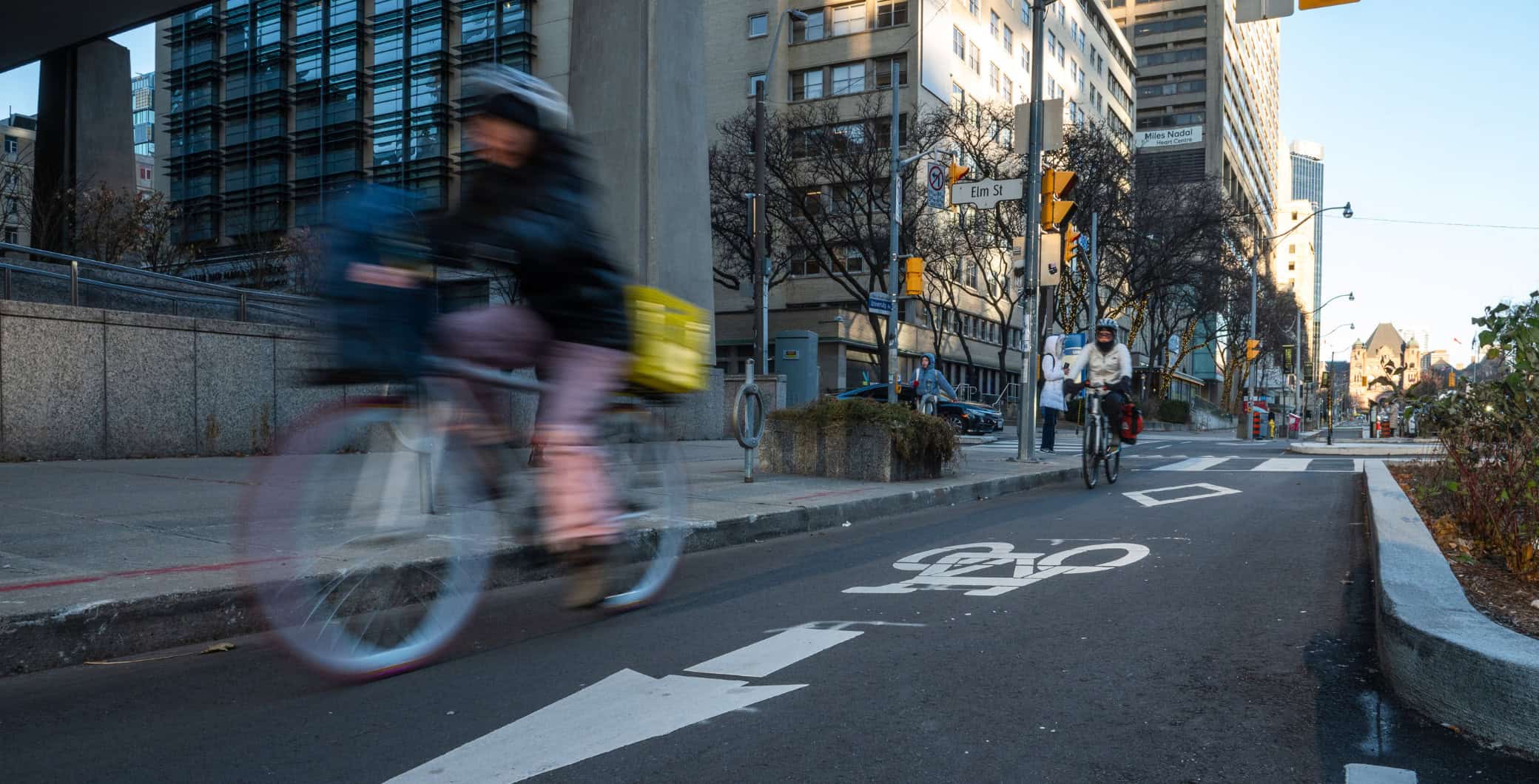
This decision to overturn the previous decision means the Ford government is able to move forward with the removal of around 19 kilometres of bike lanes along Toronto’s busiest streets.
Bloor Street, Yonge Street and University Avenue could see future changes with legislation no longer impairing the premier from any initial plans to remove the bike lanes in 2024. The province argued in the Reducing Gridlock, Saving You Time Act that removing the lanes will tackle traffic congestion on major roads.
Since the Court of Appeal’s decision, the government has not yet announced whether they plan to have construction crews remove the bike lanes.
The legal fight may not be over either.
The applicants could seek leave to appeal the Court of Appeal’s decision to the Supreme Court of Canada.
Cycle Toronto and the other applicants could seek leave to appeal to the Supreme Court of Canada, potentially extending the legal battle.
Additionally, Toronto Mayor Olivia Chow could negotiate with Ontario.
Chow responded to Friday’s ruling on X, saying that she has been working with the province on a path forward that keeps all road users safe.
The city and province have previously disagreed on whether removing the lanes would actually reduce congestion.
A November 2024 city report stated that removing the infrastructure could cost around $48 million.
These options mean the choice to remove the bike lanes on specific Toronto streets is still up in the air.
For now, the Court of Appeal decision gives the Ford government a path to proceed with its bike-lane plans.
Whether the lanes are actually removed will depend on the province’s next move, any further court action, and the outcome of ongoing discussions with the city.