What to know
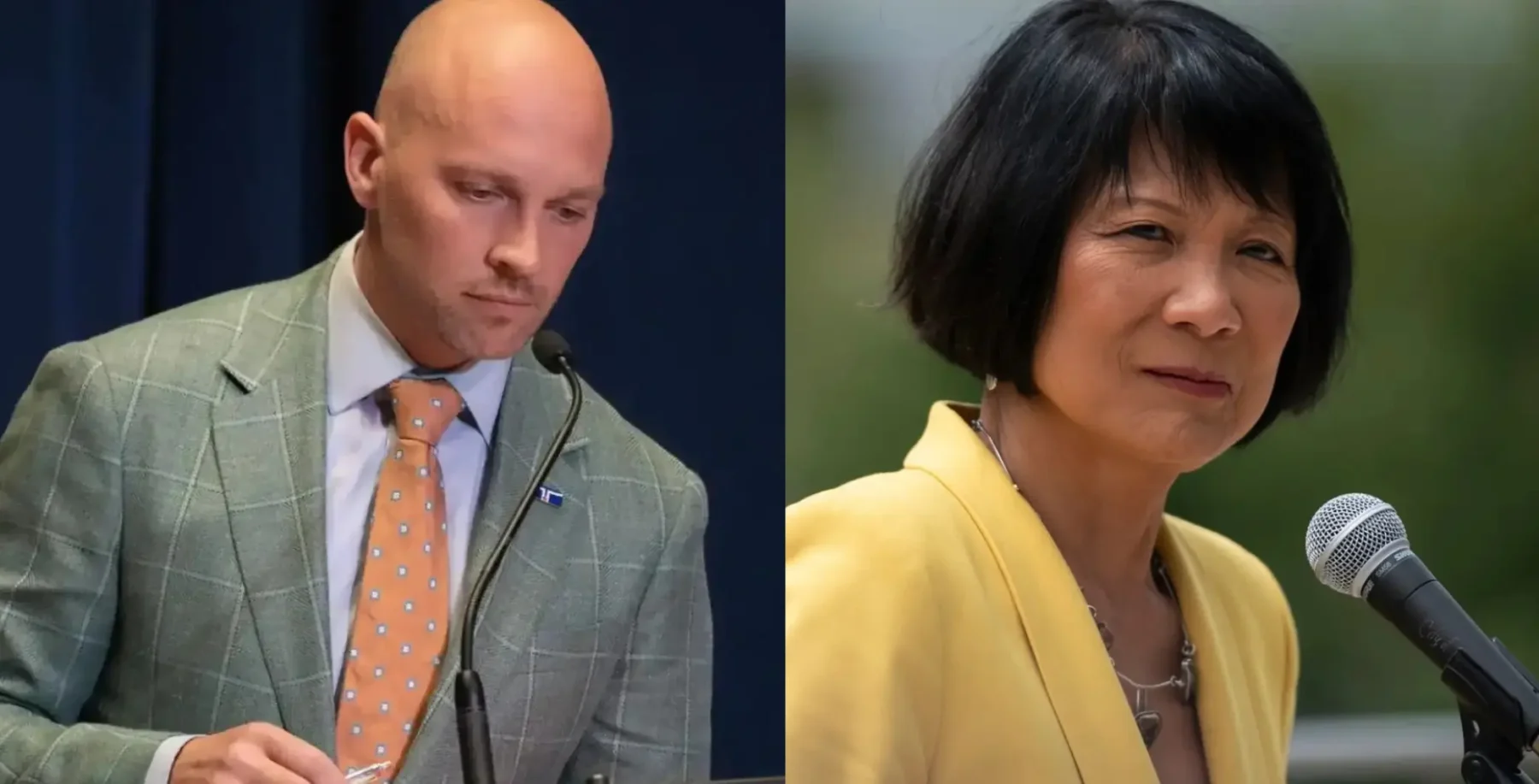
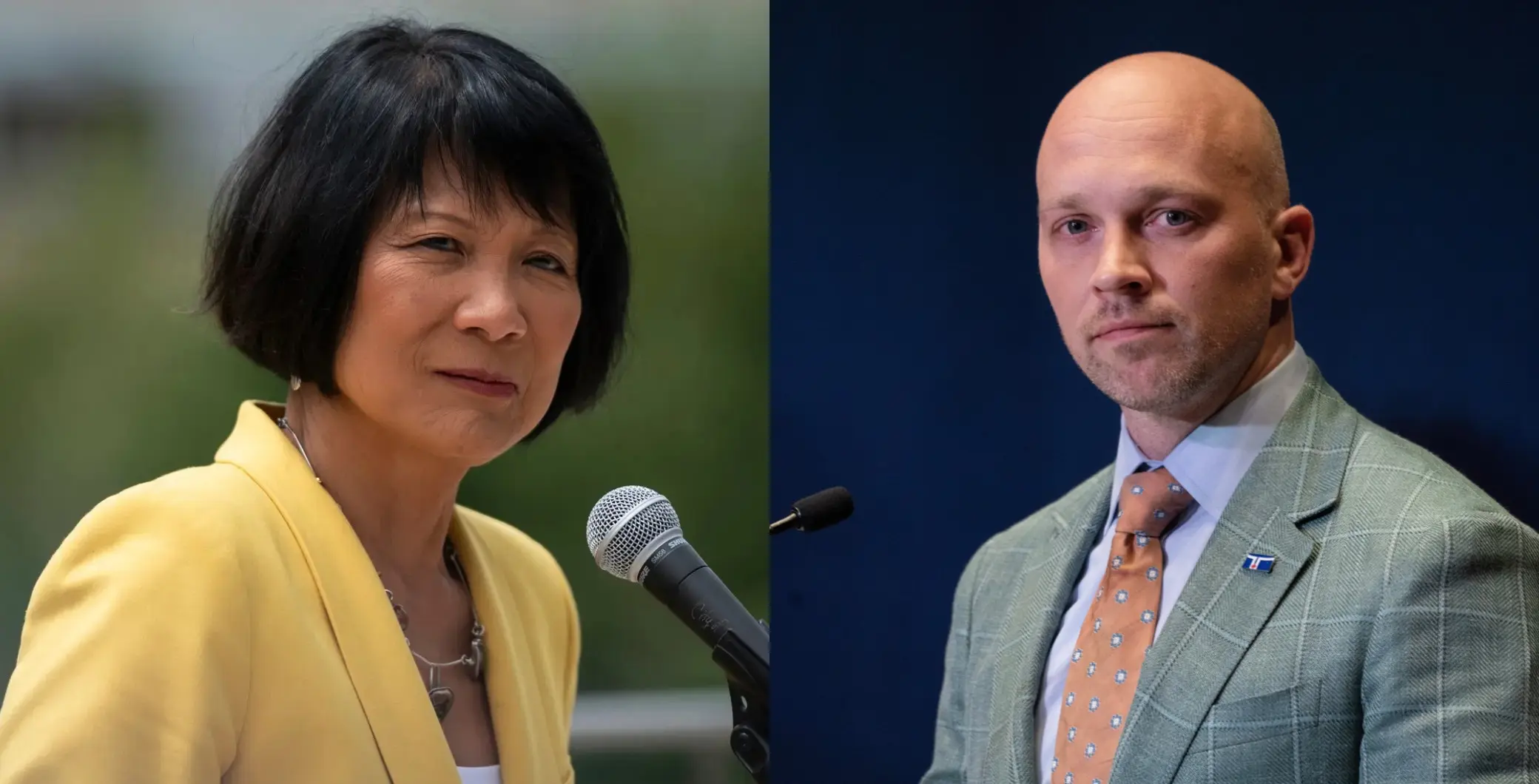
- Olivia Chow and Brad Bradford faced off in their final debate before Toronto’s Oct. 26 mayoral election.
- Bradford criticized Chow’s progress toward her pledge to build 65,000 purpose-built homes by 2030 and questioned how she would fund campaign promises.
- Chow defended her housing record and said she plans to keep property tax increases around the rate of inflation.
- The candidates clashed over Bradford’s proposal to cut water bills by 25 per cent, with Chow raising concerns about potential privatization and Bradford insisting his plan would keep water publicly owned.
- Chow also accused Bradford of neglecting his councillor responsibilities during the campaign, including concerns raised by residents at 500 Dawes. Bradford rejected the criticism.
With days left until Toronto’s mayoral election, Olivia Chow and Brad Bradford faced off at their last debate before election day.
The two leading candidates met for a final debate, led by CP24, on Thursday night. They clashed over a series of issues that have been prominent in this election, from affordability, to tax increases, to water services.
Bradford criticizes Chow’s housing plans
One of the most prominent themes addressed in this election has been affordable housing.
Like in previous debates, Bradford took aim at Chow for vowing to build 65,000 purpose-built units by 2030. Citing that Chow has only delivered 1,500 of these units so far throughout her time as mayor, the candidate suggested it could take her 115 years to deliver on the promise, if work continues at the same pace.
“Unfortunately, housing starts have cratered. We have the lowest amount of housing starts in the past 30 years, we know what works. City Hall’s job is to create the conditions to build,” he said.
The incumbent candidate responded by saying Bradford had contributed to slow housing starts by voting to increase development charges when he was chair of the Housing and Planning Committee from 2022 to 2023.
“Under his watch, no affordable housing was being built, and in fact it took much longer to get anything approved. It was the lowest in North America to get any building approved. I have improved it by 80 per cent… I have lowered the development charges so it’s a lot cheaper and faster to build housing,” she said.
In contrast, Bradford emphasized his plan to eliminate the Municipal Land Transfer Tax, which he said will save average homebuyers $18,000.
Bradford questions Chow’s budget
A common theme in this election has been for both candidates to question each other on how they plan to afford implementing their campaign promises.
Bradford doubled down on the debate on Thursday, pressing Chow on how she plans to pay for her promises, such as implementing a school lunch program across Toronto public schools by 2030, without raising taxes further.
Bradford has previously extensively criticized Chow for raising property taxes, something she has done three times since taking office in 2023.
Read More
To that, Chow said most of her campaign plans are already included into the 2027 Budget, and said she will be keeping taxes around the rate of inflation.
“When I first became the mayor, the Scarborough LRT had derailed, we had COVID, we had a big budget deficit. It’s [as] if you have a home, the roof is leaking and you have to go fix it. [The] first two years were very difficult, but we have turned a corner,” she said.
Speaking about her lunch program, Chow said she plans on gradually phasing it in, with “a lot of that money” required to implement it already part of the budget.
“I have a comprehensive plan, and the plan starts with a meal in school and then it goes to lunch. Councillor, you’ve probably heard me say that we have a lunch program coming up, and that’s why I’m able to be so ambitious because I have booked in money already,” she added.
Read More
Councillors continue clashing over water
Another major election topic has become potential water privatization.
Bradford previously vowed to cut water bills by 25 per cent and save households an average of $300 per year if elected. The plan also includes restructuring Toronto Water, responsible for water treatment and supply, into a publicly-owned utility similar to Toronto Hydro.
Read More
The plan has been extensively criticized by Chow, City of Toronto union workers, and environmental activist David Suzuki, who suggest the plan could open a door to privatization and cut funding available for infrastructure, treatment and repairs.
Chow once more asked Bradford about the plan, emphasizing concerns over privatizing the service and compromising its quality.
The incumbent candidate also cited legislation passed by Ontario Premier Doug Ford’s government, which would allow the Minister of Municipal Affairs and Housing to create public corporations to manage municipal water systems, shifting it away from the city, to emphasize a perceived risk of privatization.
Bradford once more pushed back on the concerns, explaining that his plan does not involve privatizing the service, keeping it publicly owned. He also pointed out that the Water and Wastewater Public Corporations Act, as part of the Ontario legislation, does not include the privatization of the water service.
“Mayor Chow, you know that’s not true. And it’s unfortunate that your campaign is at the fork in the road where you’ve just engaged in this wild accusations, misinformation, [and] frankly dishonesty. I think that’s below you because I think you’re a good person,” he said.
“My plan will keep Toronto’s water public, as a public municipal water utility, just like Toronto Hydro. The same water utility model they use in Kingston, and Windsor, and Peel Region is moving forward with, and Edmonton, and also Calgary.”
Although the debate mediator also pointed out that as it stands, provincial legislation does not in fact allow for privatization, Chow doubled down on her concerns.
“Actually [the legislation] opens the door to privatization. It’s not just Olivia Chow saying it, it is lawyers, former mayors, we have councillors that are saying ‘Do not give control of our water.’ We [have] had control over it since 1873. We set the rate, but giving that control to Doug Ford means that he will set the rate,” she pushed back.
To that, Bradford once more stated that water can’t be privatized in Ontario municipalities, according to existing legislation, and even vowed to resign his seat if that were to happen under his administration.
Chow criticizes Bradford for failing to attend to his councillor obligations
Chow also suggested Bradford has been failing to comply with his councillor obligations during his mayoral campaign, citing issues at 500 Dawes, notorious for its deplorable living conditions, that are facing financial and safety challenges due to infrastructure work.
However, Bradford pushed back, saying he has in fact been making time for his constituents.
“It’s simply not true. These sort of attacks on character that are unfounded, I really do think madam mayor, it’s below you and it’s below the office,” he said.
“I have met and worked with the residents of 500 Dawes over the past eight years. The city identified over 170 deficiencies in the last two years, with me as a councillor. We pursued 73 prosecutions since 2010, long before you ever walked [through] the door. And this landlord, which is one of the worst landlords in the entire city, now faces a fine of over $1 million.”
Read More
- ‘They’ve been getting away with it for too long’: Olivia Chow promises new task force targeting bad Toronto landlords
- ‘I will not tolerate slum lords,’ Mayor Olivia Chow introduces motion to crack down on bad Toronto landlords
- Toronto landlord faces jail time, hefty fine for failing to comply with fire safety requirements; here’s what rules Ontario landlords must follow
But Chow insisted that Bradford had not been meeting with residents.
“The residents are never wrong, and they said you’ve never visited or [met] with them. And it’s also the businesses on the Danforth, it’s the local residents association, people that want the 54 Division to be built, and you’ve let them down,” she said. “You’re now applying for the biggest job in the city, you don’t get a promotion if you can’t even get your own job done well.”
Toronto’s mayoral election is taking place on Oct. 26.