What to know
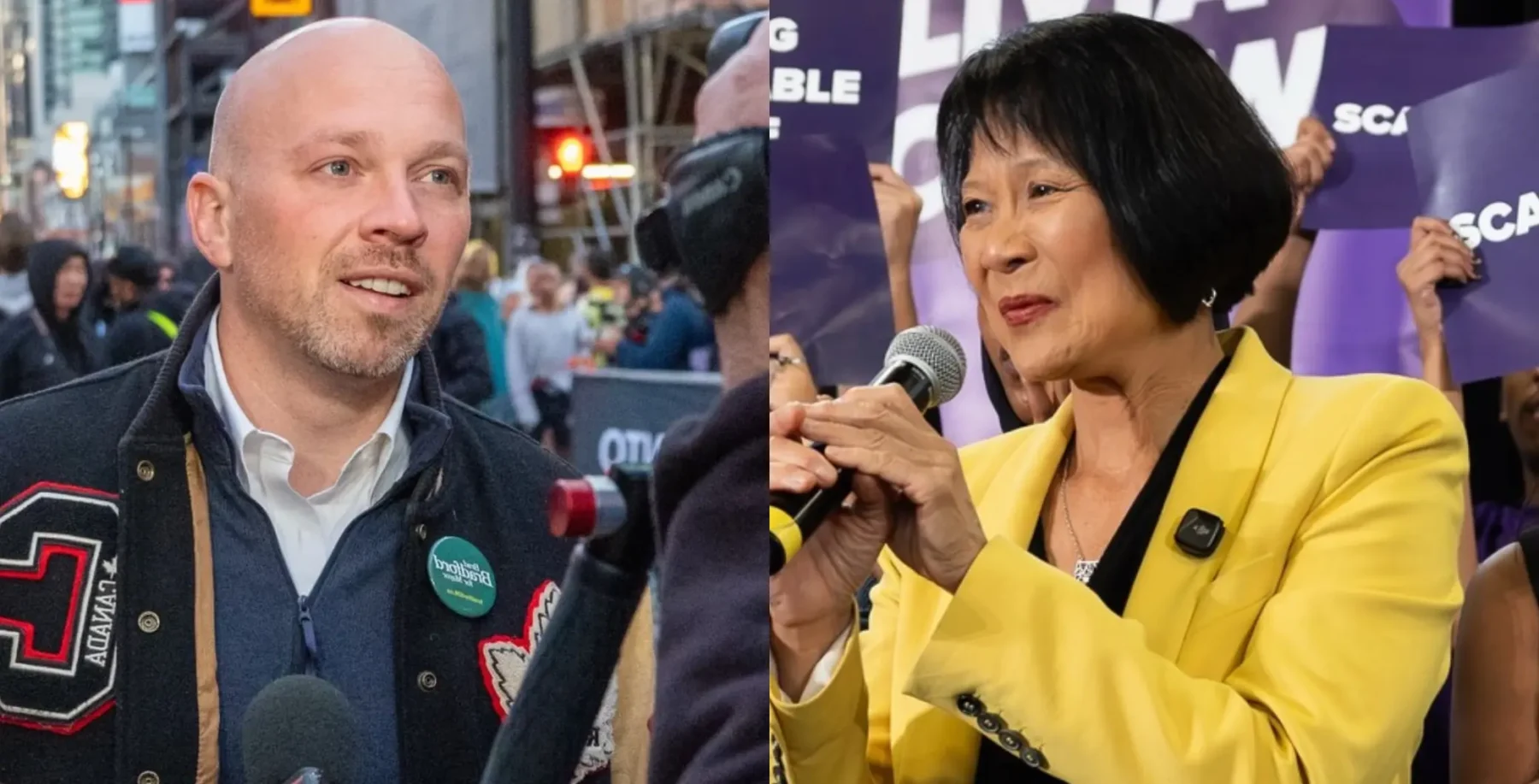
- Mayoral candidate Brad Bradford has proposed eliminating the MLTT on the first $1.1 million of an eligible principal residence.
- Bradford’s campaign says the proposal could eliminate the tax for about two-thirds of Toronto resale homes and provide up to $18,000 in relief for some buyers.
- The Toronto Regional Real Estate Board (TRREB) is calling on mayoral candidates to consider MLTT reductions or rebates, saying the tax adds to buyers’ upfront costs.
- A Toronto real estate broker told Now Toronto that while MLTT relief could reduce closing costs, it may not significantly improve affordability while home prices and monthly mortgage payments remain high.
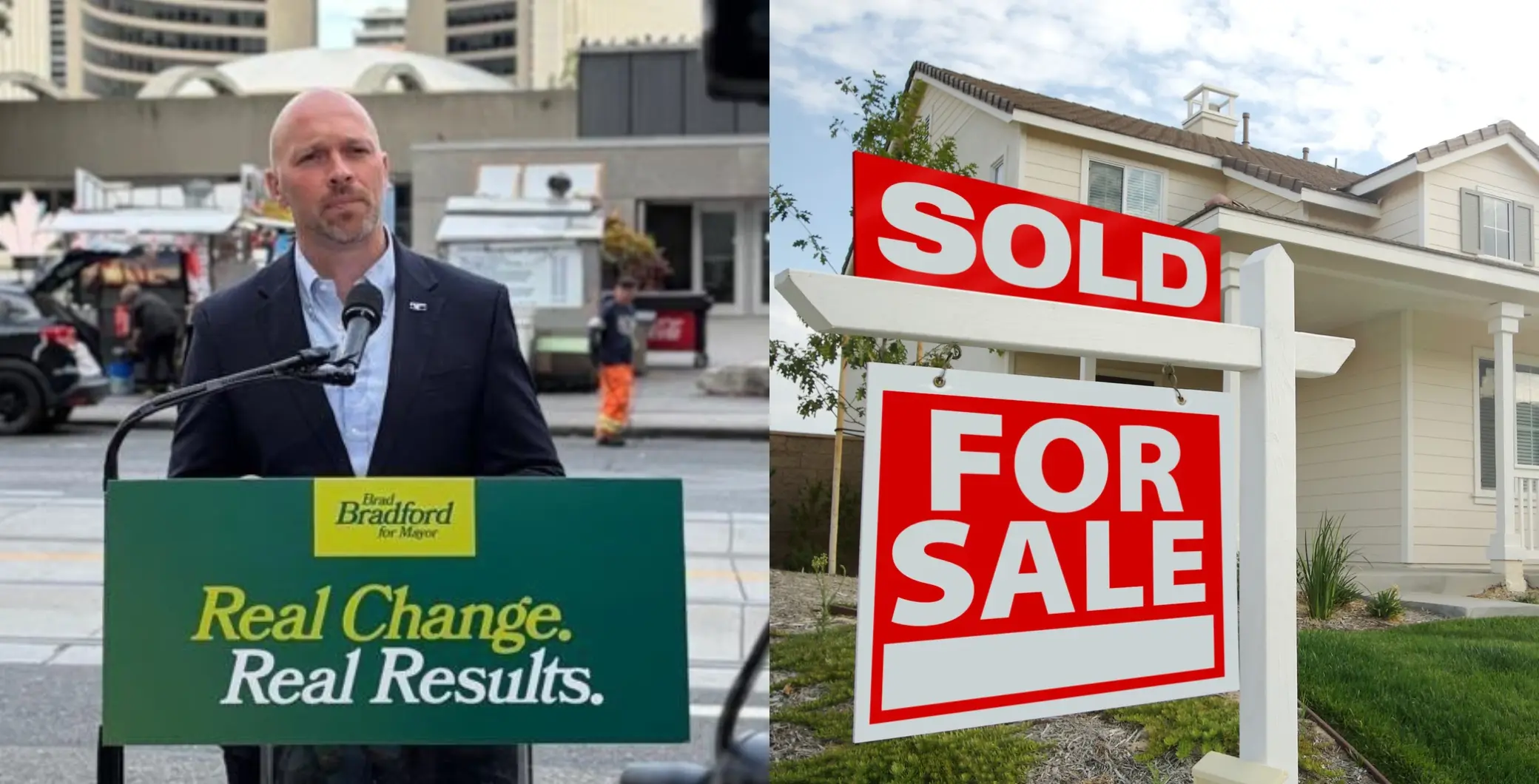
Following mayoral candidate Brad Bradford’s proposal, the Toronto Regional Real Estate Board (TRREB) is calling on municipal candidates to address Municipal Land Transfer Tax (MLTT), saying a tax relief or rebate could significantly help homebuyers.
On Tuesday, Bradford announced he would eliminate Toronto’s MLTT on the first $1.1 million of an eligible principal residence. The candidate’s campaign said the move could eliminate the tax completely for about two-thirds of Toronto resale homes, and provide $18,000 in relief for first-time buyers and those reselling their homes to buy in another city.
Read More
Other candidates respond
In a statement shared with Now Toronto, mayoral candidate Chris Alexander’s campaign said although it agrees MLTT are too high, Bradford’s plan could mean the city would lose $300 million a year in revenue.
“Three hundred million dollars a year, every year, from a city that is already
more than a billion dollars short. There are only three ways to cover it: raise
taxes, cut a service, or borrow. Which one is he choosing? He has to say,” Alexander said in a statement.
“Everyone agrees the land transfer tax is way too high, and I want to bring it down… But you fix the books first, then you cut. What he is proposing is worth six
points of property tax, three hundred million dollars, every year. Gone.”
Similarly, a spokesperson for Olivia Chow’s campaign suggested the plan can’t be financially sustained.
The spokesperson said Chow is instead focused on other solutions for housing affordability, including by continuing to secure partnerships with other level of government to accelerate development and cut costs.
“Brad Bradford will say anything to get elected. He is making a big promise with no real way to pay for it,” the spokesperson said in a statement to Now Toronto.
“We are focused on real solutions that will unlock more affordable housing for people long-term.”
TRREB urges for more reduction plans
Following the proposal, the TRREB President Daniel Steinfeld released a statement calling on more municipal election candidates to address the MLTT and consider reduction or rebates that could help homebuyers deal with the upfront costs of buying a home.
According to him, recent studies have shown that housing affordability has remained a top concern for many residents, while 56 per cent of polled residents said the city depends too much on these taxes. It also said proposals such as the one presented could make a significant impact for buyers.
“The MLTT suppresses housing supply by adding thousands of dollars in costs at the time of title transfer when a property is sold,” Steinfeld said in a statement.
“After almost 18 years, the Toronto Land Transfer Tax has not made our City more affordable. Reforming the MLTT to provide relief to all homebuyers will help first-time buyers, individuals, growing families, and seniors looking to right-size and stay within the community they have called home for decades,” he added.
Now Toronto spoke with Rishard Rameez, founder and CEO of tech-powered real estate brokerage Zown, about what impacts a MLTT relief could have on homebuyers.
What is the Municipal Land Transfer Tax?
When purchasing a home, many homebuyers tend to focus on their downpayment as their main upfront investment. However, there are other fees they must meet in order to close their purchase, including land transfer taxes.
According to Rameez, homebuyers must pay these fees in order to transfer the land from the previous owner to themselves. This tax is divided into the provincial Ontario Land Transfer Tax and the municipal tax, depending on which municipality the property is located, and is calculated based on the total home value.
The Ontario Land Transfer Tax includes:
- 0.5 per cent on the first $55,000 of a home;
- One per cent between $55,001 and $250,000;
- 1.5 per cent between $250,001 and $400,000;
- Two per cent between $400,001 and $2,000,000;
- 2.5 per cent on amounts over $2,000,000.
On top of the Ontario Land Transfer Tax, the Toronto MLTT is calculated with the same rates, as well as:
- 4.4 per cent on amounts between $3,000,000 and $4,000,000;
- 5.45 per cent on those between $4,000,000 and $5,000,000;
- 6.5 per cent on those between $5,000,000 and $10,000,000;
- 7.55 per cent between $10,000,000 and $20,000,000;
- 8.6 per cent for those over $20,000,000.
While the down payment remains the main upfront cost buyers face when purchasing, the land transfer taxes still have a significant impact on these costs, according to Rameez.
For instance, a homebuyer purchasing a $700,000 property valued would pay about $21,000 in land transfer taxes upfront on top of their down payment, being $10,500 provincial and $10,500 municipal. Combined with a minimum down payment of $45,000, the total upfront cost would add up to $66,000, in addition to other costs including legal fees or insurance.
As explained by Rameez, first-time homebuyers can get a rebate of about 8,500. Still then, the upfront amount would be at about $57,500.
“It is significant, especially given first-time homebuyers most of the time do put down the minimum down payment required to purchase a home, which means the land transfer tax, it could be more than 20 per cent of the total that someone needs to save in order to buy a home,” he said.
Would a MLTT relief make a difference?
Despite the TRREB’s statement and the significant amount that the MLTT can add to upfront payments, Rameez said he doesn’t think providing land transfer tax relief would make a critical difference for homebuyers.
The expert shares that Zown has been providing a part of its commission back to customers to help cover the MLTT over the past four years. While he says the move has helped homebuyers save a few thousands in closing costs, it hasn’t necessarily encouraged people to take steps towards buying a home or helped them afford one.
“What people are worried mostly about is the monthly payment, which is a [portion] of what the home prices are, right? So, even when prices have come down significantly over the past couple of years, it’s still unaffordable for a lot of young Canadians to be able to afford a home,” he said.
“Adding the land transfer tax rebate is not necessarily going to provide a significant advantage to buyers when the home prices are still over $700,000.”
What could make a difference instead?
Instead of offering MLTT relief, Rameez said there are other steps candidates can take to help more potential buyers move from the sidelines.
When it comes to MLTT, the expert said offering a rebate to those who have taken a mortgage in the past few years could help provide relief as they deal with monthly payments.
“A ton of people who bought a home in the last couple of years are actually in a place where the home prices have come down from the time they purchased a home, and on top of it, they did pay this land transfer tax. So, if anything, we should pay them back that land transfer tax to help them with their day-to-day lives,” Rameez said.