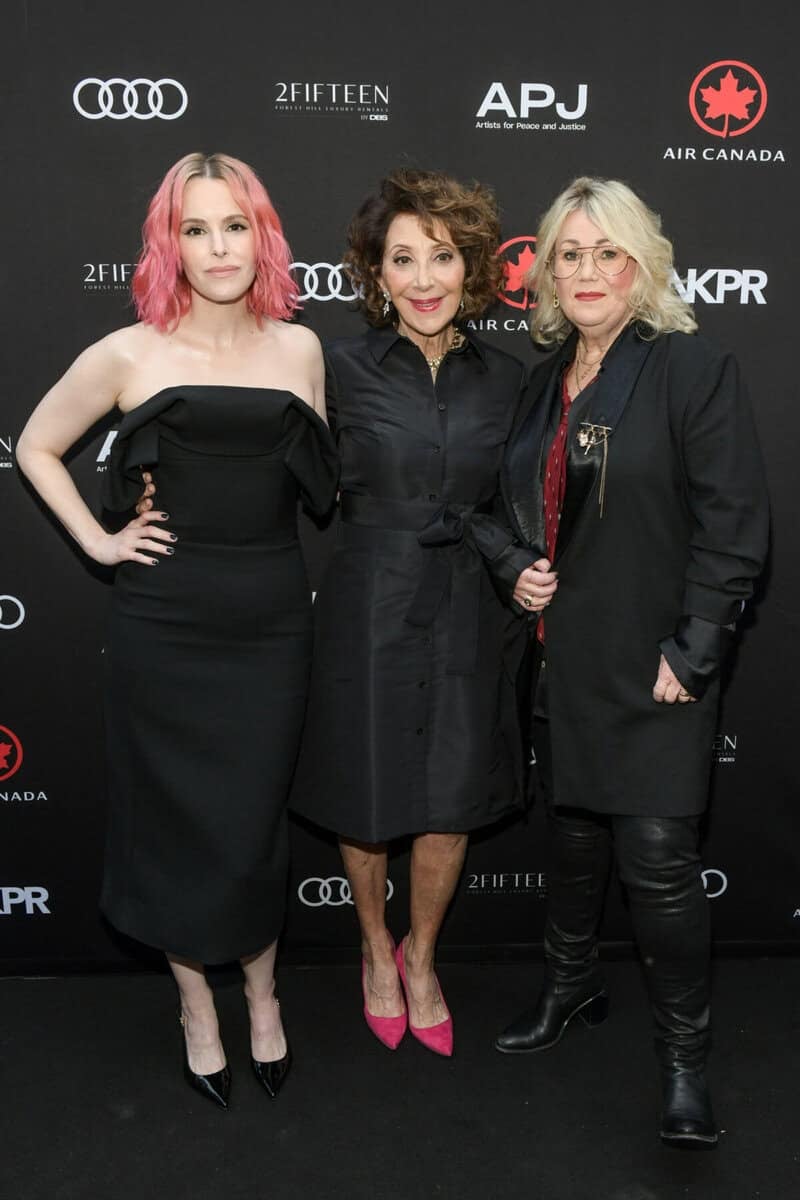
During a time of intense political uncertainty for 2SLGBTQ+ people in North America, Toronto drag superstar Sanjina DaBish Queen is speaking out about her journey to self-discovery as a transgender woman.
It’s a conversation that’s even more timely as March is Women’s History Month, and the queer community owes a lot to its trans and gender-diverse sisters, who for decades have remained at the forefront of the fight for 2SLGBTQ+ equality but often don’t receive the recognition they deserve.
Whether you’re cisgender or transgender, womanhood is a journey of self-discovery and growth. Born and raised in Surrey, British Columbia, Sanji Dayla, also known by her drag name Sanjina DaBish Queen, found herself experiencing just that when she moved to Toronto in her 20s. She soon after met her drag mother, “Canada’s Drag Race” Season five winner The Virgo Queen, and has been working as a drag queen ever since.
She has an impressive portfolio of work, including strutting her stuff as a contestant on “Canada’s Drag Race,” hosting the weekly Thottie Thursdays and Saturday Drag Brunch shows at the Church Street Garage, and serving as the new house queen at SoHo House Toronto. But her journey to this point was not without struggle.
COMING OUT AS A TRANS WOMAN
Dayla explained that without a large queer community in her hometown, she never had the chance to explore her identity as a young person, despite being outed as a teenager. In the eighth grade, a family friend started a rumour at her school, telling other students that Dayla was gay. Despite this causing relentless bullying, she never denied the accusations, identifying as a gay man for years before coming out as transgender.
This label never sat well with her, but not having the opportunity to explore what felt right, she continued to identify this way. Dayla told Queer & Now that she had never been immersed in the queer community before moving to Toronto six years ago.
“I was never exposed to the queer community back in B.C. because everything was so backwards there, especially during my time.”
She didn’t come out as transgender until she was around 30 years old, explaining that she had the realization about her identity while she was a contestant on the drag competition show “Call Me Mother.” While she was reading a book about Hinduism, and attempting to reconnect with the religion she was raised in, she had a realization about her gender.
“In Hinduism, [being] queer is a very big, powerful thing. Trans women especially were known to be Demi-Gods,” she explained. “I was like, ‘oh my God. I’ve been a woman all my life, my soul was a woman.’”
“It felt like I came into my truth that moment and just realized who I am.”
Fast forward to five months ago, she entered what she calls her “glow-up.” Dayla started undergoing hormone replacement therapy as part of her transition, which triggered another life change. Explaining that she used to drink heavily and use a lot of cocaine, at the suggestion of her doctor she gave up those substances to have a safe transition.
“So, I went through three journeys. As a trans woman, I’ve had to go through transitioning, ‘Drag Race’ and sobriety. Like I’m a f**king bad b**ch.”
She explained that she’s excited to continue using her platform to share her story with other people who need to hear it.
“I have inspired so many trans siblings. I’ve been able to stand in my power, my truth, and be a voice for them,” she explained. “I can fight and be the leader in the warrior that I am. I was born to be for my people.”
This is important during a time of growing uncertainty for 2SLGBTQ+ people in North America. According to the American Civil Liberties Union, the U.S. has seen the introduction of a record number of bills attacking 2SLGBTQ+ rights in recent years. The union is currently tracking 527 anti-2SLGBTQ+ bills.
Dayla explained that the constant anti-trans narratives and news stories coming from the U.S., and from some Canadian sources, are exhausting.
Read More
“We don’t deserve that. Trans people, we just want to live.”
She added that people don’t realize that a lot of anti-trans narratives are also being shared in Canada.
“People think it’s not gonna happen here, it’s happening already,” she said. “If the states, sneeze we catch a cold and it hurts me because those are my siblings.”
WOMEN’S HISTORY MONTH: WHAT DOES BEING A WOMAN MEAN?
Three years after coming out, and five months after starting hormone therapy, Dayla has a nuanced perspective on womanhood, which she feels should be celebrated every month, not just in March.
“[To me] womanhood means Mother, it’s just the power of just feeling… very strong and powerful. I just think you’re so in touch with the universe, you’re so in touch with energy, spiritually,” she explained.
“Especially on the hormones I’ve seen such magic through the changes I’ve been going through, and that girls do run this f**king world. They 100 per cent f**king do, and it’s a woman’s world.”