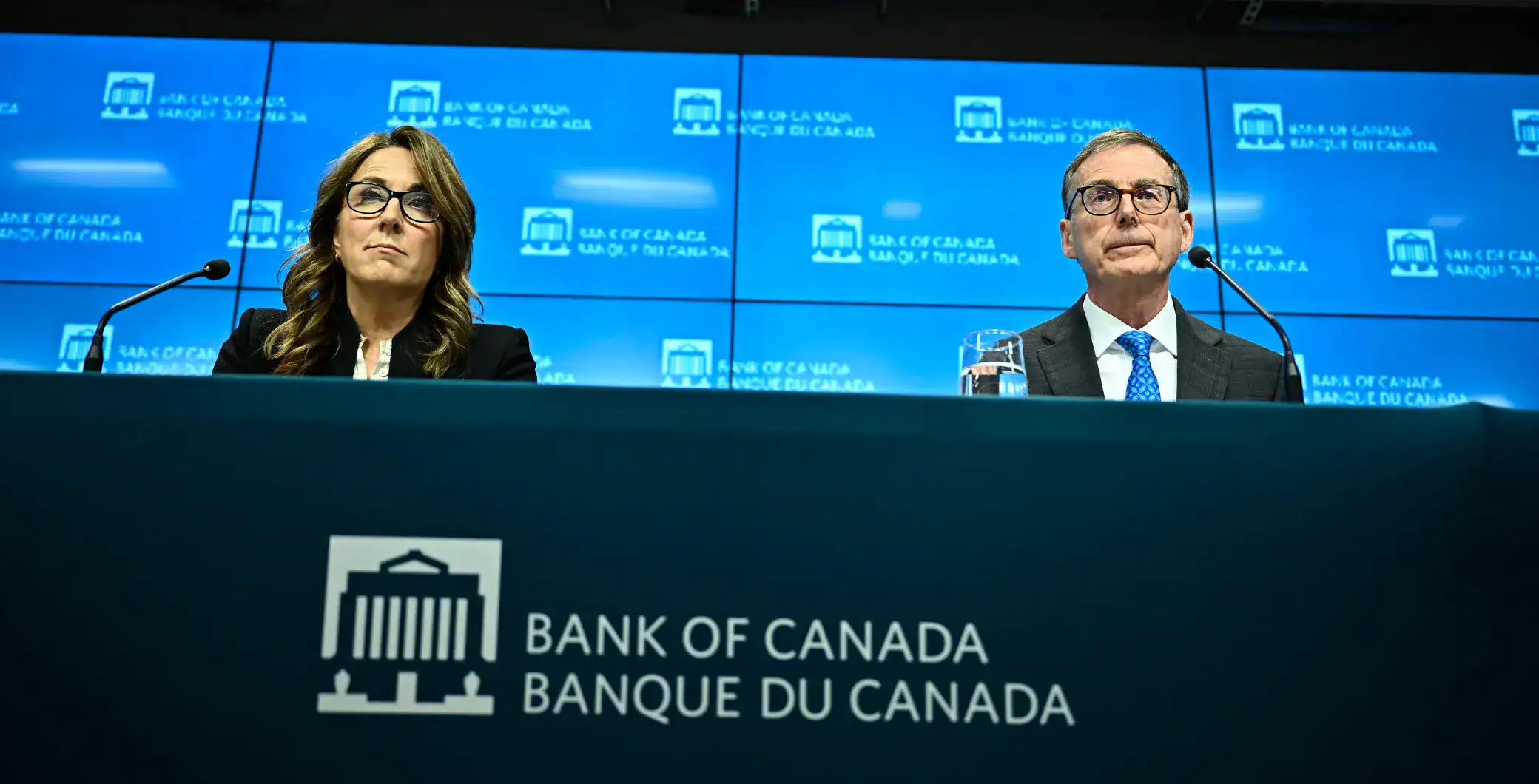
The Bank of Canada (BoC) is dropping its key interest rate for the first time since 2020.
The lowered rate of 4.75 per cent marks a 25 basis point reduction after being kept steady at five per cent since last July.
“The Governing Council decided monetary policy no longer needs to be as restrictive,” BoC Governor Tiff Macklem said in a press conference on Wednesday morning, adding that there’s continued evidence that underlying inflation is easing.
According to the central bank, the inflation rate slowed in April to 2.7 per cent and the bank’s measure suggests it will continue downward to its two per cent target.
We have lowered our policy interest rate to 4.75%.
— Bank of Canada (@bankofcanada) June 5, 2024
Learn more: https://t.co/vh3hq6sEA4#economy #cdnecon pic.twitter.com/EJ4uGESc4K
“We’ve come a long way in the fight against inflation, and our confidence that inflation will continue to move closer to the two per cent target has increased in recent months,” Macklem added.

However, the BoC says risks to the inflation outlook remain.
“Governing Council is closely watching the evolution of core inflation and remains particularly focused on the balance between demand and supply in the economy, inflation expectations, wage growth, and corporate pricing behaviour,” the release concluded.
WHAT DOES THIS MEAN FOR HOMEOWNERS AND BUYERS?
A decrease of 25 basis points will lower the current prime rate from 7.2 per cent to 6.95 per cent and most variable rates at major lenders will be set at about six per cent.
Variable rate mortgages are tied to the prime rate and current variable rates are available at a discount of prime minus 0.95 per cent, LowestRates.ca explained in a press release Wednesday morning.
For example, a homeowner with a variable rate mortgage of 6.25 per cent on a home priced at $900,000 will have a monthly mortgage payment of approximately $4,749.
The same mortgage at six per cent will decrease monthly mortgage payments by about $110 per month.
However, the drop in key interest rates doesn’t necessarily mean it’s a good time to refinance.
“Today’s typical fixed rates are around 4.79%. This is a spread of 1.21% between typical fixed and variable rates. It would require several overnight rate decreases for a switch from fixed to variable to make sense for most,” Leah Zlatkin, LowestRates.ca expert and licensed mortgage broker said in a statement.
The next scheduled date for announcing the overnight rate target is July 24.


