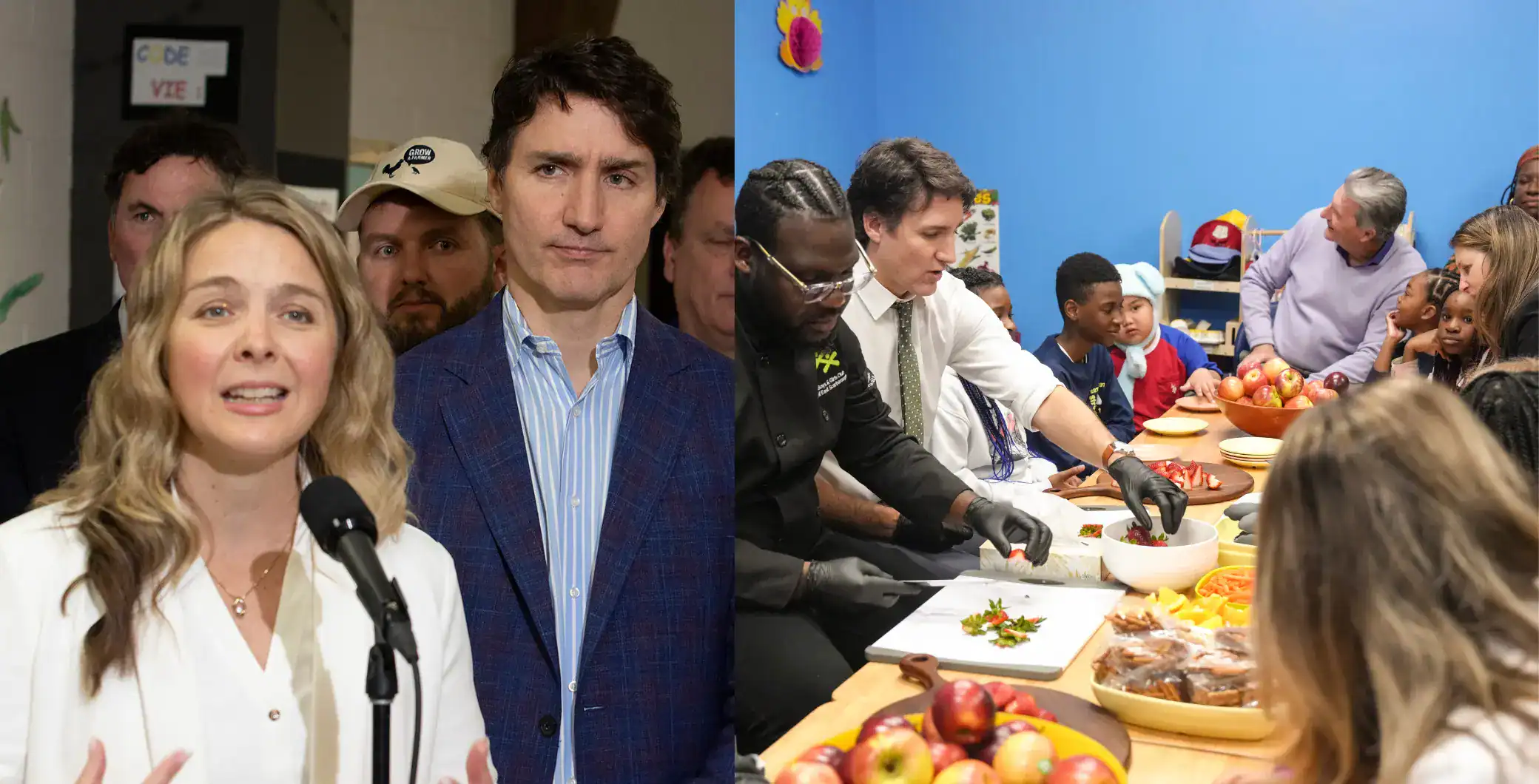
As the federal government works to roll out a National School Food Program, it says the biggest hurdle lies in coordinating with provincial governments.
The federal government is investing $1 billion over five years to implement the program in partnership with provinces, territories, and Indigenous communities, in an effort to ensure children across the country have access to nutritious food.

Minister of Families, Children and Social Development Jenna Sudds acknowledged to Now Toronto that “raising a family is very expensive” and emphasized that the program is designed to ensure there is food available in schools for hungry children, support their success, and assist families.
“The goal is to guarantee every student is going to be able to access free meals but it’s going to take time to get there,” she added, in an interview earlier this month.
In a statement shared with Now Toronto, the federal government confirmed that the investment will help expand access to school meals for up to 400,000 additional children annually.
Read More
How will it work in provinces like Ontario?
The federal government says it will provide funding to provinces, territories, and Indigenous partners to run the program. Since provinces and territories have jurisdiction over health and education and already support school food programs, the start date will vary across regions.
The program will build on existing school food initiatives in Ontario, like the Student Nutrition Program and the First Nations Student Nutrition Program, the provincial government said.
Last school year, Ontario invested an additional $6.15 million to both these programs, bringing the total provincial funding to over $38 million.
“Our government was pleased to learn more about the National School Food Program in the recent federal Budget. We look forward to reviewing the specific details as we work to enhance program accessibility and sustainability,” a statement from Ontario’s Ministry of Children, Community and Social Services shared with Now Toronto reads.
Sudds says she has been negotiating with provincial ministers, including Ontario’s newly appointed Minister of Education, Todd Smith, to determine how the program will be implemented locally.
“Conversations with him have been positive so far,” she noted, but added that discussions with the Ontario government have not always been smooth.
“The provincial government has been slow to finalize the funding formula,” Sudds said, adding that this delay is affecting the stability of child care centres and operators.
Read More
When will the program roll out?
Sudds hopes to finalize agreements soon, ideally by late summer, so provinces can prepare for implementation as early as the 2024-25 school year. She noted that British Columbia and Prince Edward Island have been particularly cooperative.
Now Toronto reached out to the Ontario government on the timing of the rollout of the program but did not receive an answer on the start date.
What happens to childcare supports if the Conservatives win the next elections?
“This is what keeps me up at night,” Sudds, who is a Liberal Member of Parliament representing Kanata—Carleton, Ontario, said.
If Conservative Party Leader Pierre Poilievre wins the next election and follows through on his plan to cut taxes, she worries that critical supports like the Canada Child Benefits, dental benefits, pharmacare, $10-a-day child care, and the National School Food Program could be at risk.
Furthermore, she encourages people “to engage with their elected officials” to discuss their needs and advocate for continued support for these programs.