What to know
- From You To Them is a GTA-based, Black-owned charity offering families in need a dignified, store-like shopping experience for clothes.
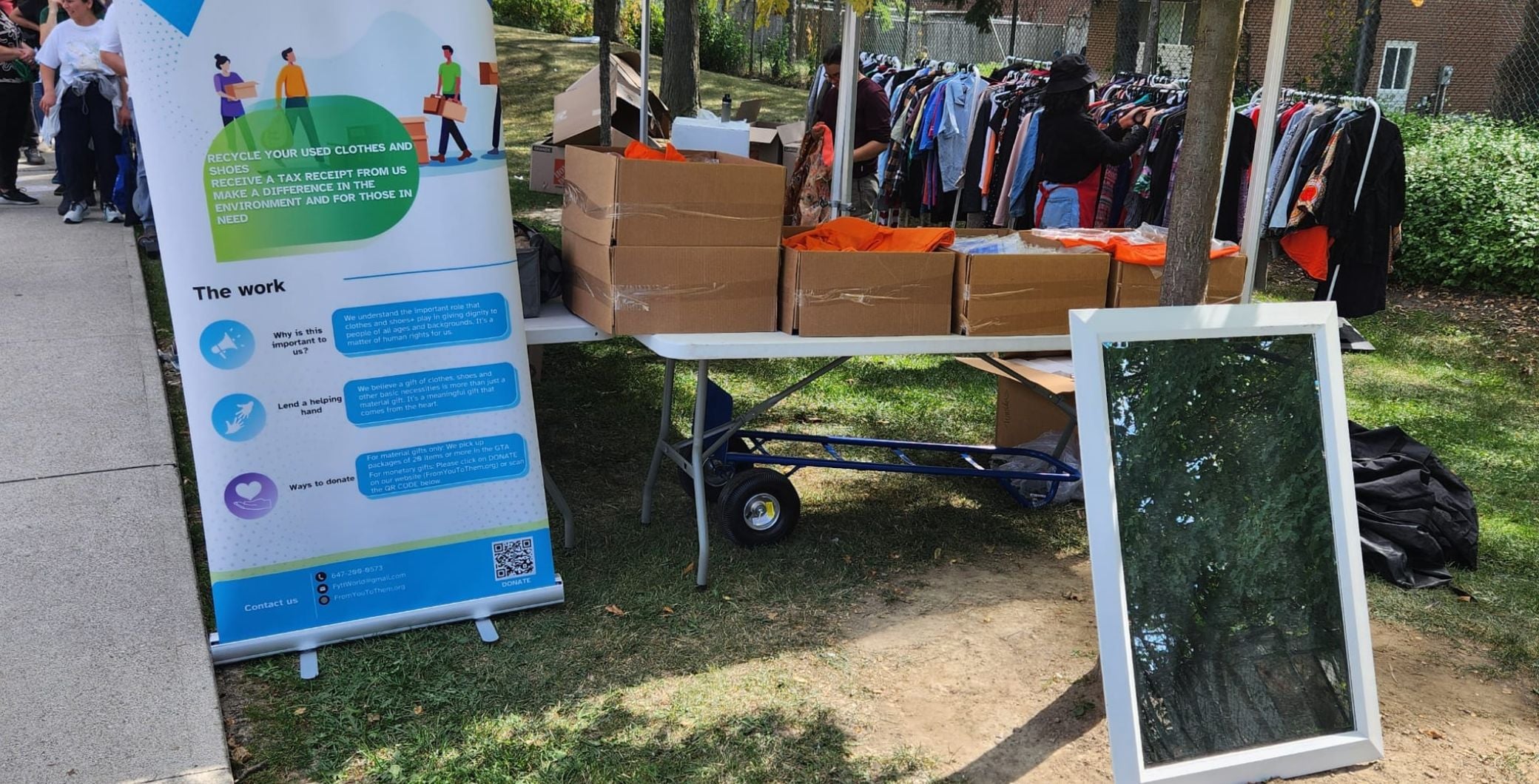
- All clothing is clean and carefully displayed on racks; guests sometimes find brand-new items with tags still attached.
- No intrusive questions are asked; just first names, ensuring privacy and a welcoming environment for every visitor.
- Donations of clothes, time, or money are welcome, and donors receive a tax receipt; a $5 gift helps cover pickup costs for those unable to drop off items.
For many low-income families, picking through boxes of donated clothes at a shelter can feel disheartening. From You To Them brings dignity back to shopping by offering clean, sometimes brand-new clothes on racks, just like in any store.
From You To Them is a GTA-based, Black-owned charity that supports those in need with clean clothes.
Executive Director Charmant Kems says he and his colleagues saw the need for this charity in the community after noticing a lack of transparency from other clothing charities.
“Two things that we noticed were either we weren’t sure where the clothes were going, or we knew they were going to be resold somewhere,” Kems told Now Toronto.
Especially after COVID, with clothes piling up, he decided to create From You To Them to provide clothing to those in need—while staying transparent with donors.
Kems is working with food banks based on their needs and availability, and caters to that demographic, too.
“If it’s for winter clothing, we know that we’re going to bring winter clothing and we’ll set them up as if it’s a store, so that people can walk in and pick and choose [clothes], and we do the same for different seasons,” he explained.
By setting the clothes up on racks and in a store format, Kems says visitors can shop with dignity.
“They are already registered [with food banks]. Their privacy is protected. We only ask for their first names, and we don’t ask any questions in regards to what brings them here… We welcome them and invite them to pick the clothes that will help them and their families,” he explained.
To date, From You To Them has served over 600 families.
How to donate?
Kems encourages clothes, time or monetary donations.
To donate, get your items ready in a bag to drop off, or if you’re too far or cannot commute, wait for a volunteer to pick them up.
In exchange for the pickup option, Kems says a small $5 gift is appreciated to cover transportation costs.
No matter how big or small the donation, Kems emphasizes that someone else will see the value in the item and can bring them lots of joy.
“It could be as simple as a small bag of items, a couple pairs of shoes. That’s really all it takes to make a difference,” Kems said.
Donors also receive a tax receipt as an incentive to help.
Why does this work matter?
Kems says it all comes down to children’s smiles.
“The most touching part has been with kids… To see the excitement that they get from going through and getting items of their choice, and just seeing them smiling and trying on things — there’s just nothing better than that for us,” he said.
Kems says he’s also touched to create a Black-owned origin, touching on his own Congolese roots.
“The DRC is a country which, for the most part of its existence, has been a country in need, and we’ve been very fortunate that we have received a lot of support from other communities around the world,” Kems said.
Despite coming from the U.S. and France, his Congolese ethnicity was just another factor which pushed him to create From You To Them.
“Just being here and seeing how the lifestyle is a little bit different here, people often forget that there are people struggling,” he said.
“As we provide donations that we receive to families, we get to hear their stories as well. So, in a way, it’s like a gift to be able to listen and hear stories about the immigrants, and sometimes it’s not immigrants, but kids of immigrants from Jamaica, from the Caribbean islands, from other parts of Africa, from the U.S., Europe. It’s just great to be able to be part of the diaspora,” Kems added.