Many Torontonians are wondering how long they’ll have to endure frustrating commute times after the TTC released a map identifying its slow zones this summer.
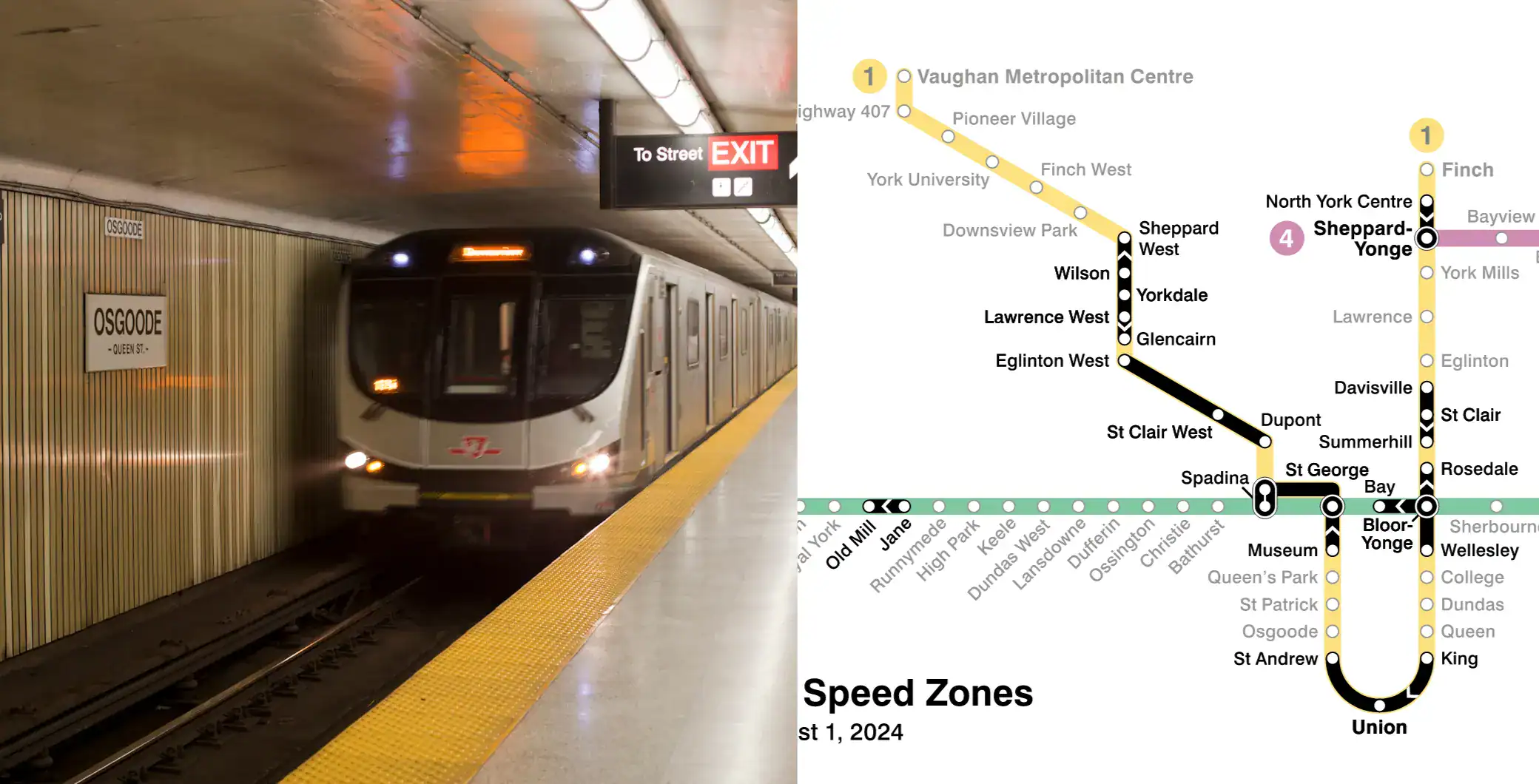
The TTC updated its map of its restricted speed zones for the end of the month. According to the transit company, trains are running at reduced speeds on Lines 1 and 2 resulting in longer travel times because of maintenance work taking place along the tracks.
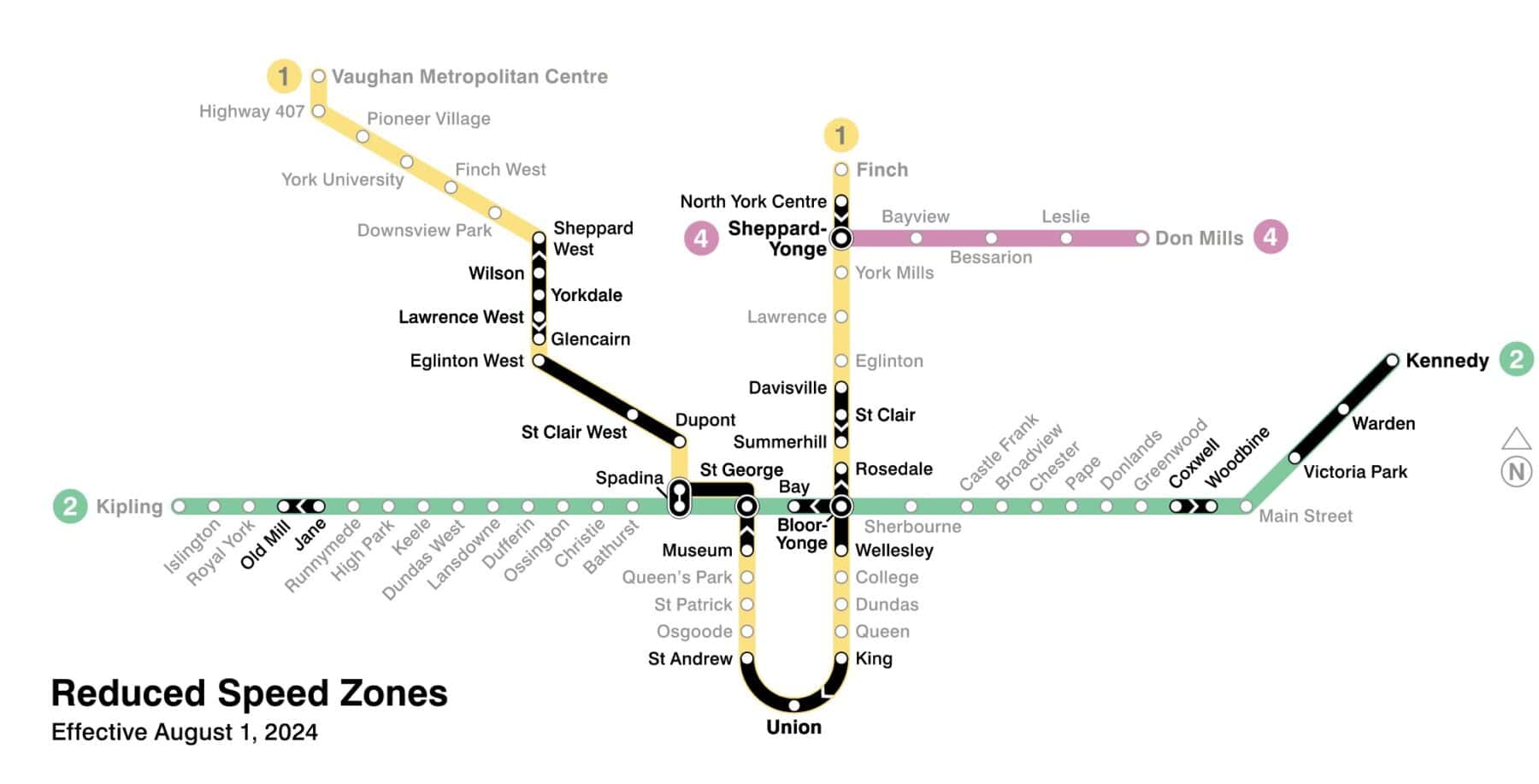
“In these restricted speed zones (RSZs), trains are travelling between 15 and 25 km/h, compared to normal operating speeds of 40 to 60 km/h. As of July 30, there were 34 RSZs in place, with most zones ranging from 500 to 1,000 feet in length,” the transit agency said in a press release on Tuesday.
As a result, the TTC says those who travel on Line 1, between Vaughan to Finch stations will experience an average 15 minutes longer wait time than normal. Meanwhile on Line 2, customers experience longer commutes of approximately three minutes between Kennedy and Coxwell stations.
“This proactive approach allows the transit agency to address potential issues before they escalate into more serious disruptions and to ensure the ongoing safety and dependability of subway service,” the TTC said.
In response, some Torontonians say the TTC needs to update its slow zone schedule immediately, so riders can plan ahead.
“My main issue with the slow zones is that they’re not reflected in the schedules. A couple of weeks ago I was trying to catch a YRT bus at Sheppard West and gave myself 15 minutes to make the connection. The subway was so slow that I didn’t make it. Now, I see on the map that almost the entire way is a slow zone,” one user on Reddit said.
“Those slow zones between Sheppard West and Dupont have been there for at least two months if not longer. Has there been track work on that stretch every single day in this time or is the TTC too lazy to just update the slow zone schedule and website when work happens? I don’t get what’s the deal with that, it’s depressing how they run things,” another user said.
TRANSIT ADVOCACY GROUP SAYS THIS CAN’T BE THE ‘NEW NORMAL’
Meanwhile, transit advocacy TTC riders says it was told by the TTC earlier this year that all slow zones would be cleared up by March, but instead the agency has continued to lengthen the process.
“It’s better to be safe than sorry, but it is not okay for slow subways to become our new normal. We are glad the TTC is taking safety seriously and inspecting subway tracks more frequently, but riders deserve answers about when the repairs will be completed and whether the TTC has enough resources to do proper maintenance,” the organization said in a statement to Now Toronto on Wednesday.
“The TTC subway system has seen major shutdowns this year because of issues linked to maintenance, such as a cracked switch rail on Line 1 and multiple hydraulic fluid spills due to faulty maintenance equipment,” the organization continued.
TTC advocacy group A Voice for Transit shares the same sentiment.
“Delays caused by reduced speed zones affect students getting to class on-time and workers getting to their places of work on-time. The reduced speed zones and their underlying causes need to be resolved with the highest priority possible,” Co-Founder and Executive Director Jean-François Obregón said in a statement to Now.
“Will the TTC be able to fix all of them by September? If it takes longer, how much longer would that be? What will it take to avoid having so many reduced speed zones in the future? This needs to be communicated to the public,” he continued.
Obregón goes on to say that if repairs are not completed by the time winter rolls around, riders will only grow more frustrated and look for alternative transportation options, thus leading to decreased ridership levels which the TTC has been working tirelessly to recover from since the COVID-19 pandemic.
WHAT THE CITY IS DOING TO IMPROVE TTC
Mayor Olivia Chow’s office says she’s working to increase transit service while investing in repair work because having “smooth public transit is one of her top priorities.”
“TTC riders deserve reliable rapid transit. The mayor believes the vibrancy of our city depends on this. TTC slow zones make some transit routes a bit slower on scheduled weekend closures in July, August, and September,” Spokesperson for the Mayor’s Office Arianne Robinson said in a statement to Now.
“This is preventative maintenance that requires some trains running at reduced speeds, meaning longer than normal travel times for some customers. Preventative maintenance is critical to keep our system running safely,” she continued.
Riders can follow TTC notices to regularly view the reduced speed zones impacting their trip.