What to know
- WestJet and Air Canada are increasing baggage fees (up to $45–$60 for first/second bags on Air Canada; up to $200 for a third bag on WestJet) and adding new surcharges, including fuel fees on select routes.
- The fee hikes come alongside upgrades, including new aircraft and improved in-flight comfort, especially for longer routes.
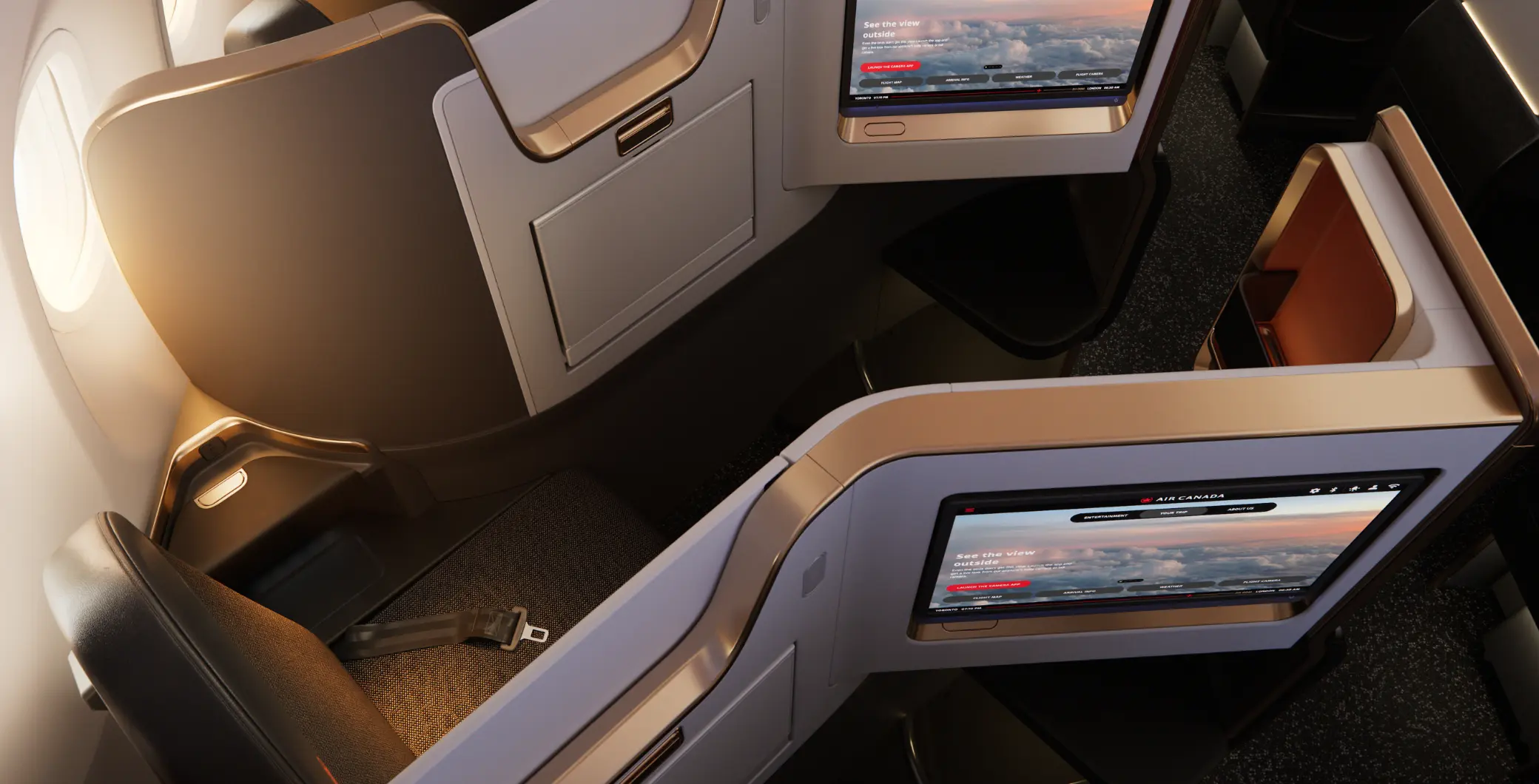
- Air Canada is rolling out Airbus A321XLR planes with lie-flat seats in signature class, offering a more premium experience—at a cost that will likely be passed on to travellers.
Planning a getaway? Unfortunately, your next trip could put a bigger dent in your wallet than planned.
WestJet and Air Canada are raising fees — but they’re also upgrading their aircrafts.
Bag fees
For WestJet reservations booked from April 23 onward, there’s a price increase of $10 for the first and second bag — and third bag fees can reach up to $200.
But if you take care of it ahead of time, the fee will be $5 per bag for the first and second bags.
This is the third increase in the last three years, with the last one in Sept. 2025.
Air Canada joins WestJet in raising passenger fees.
For any economy basic, standard, or flex fare purchased on or after April 13 for flights within Canada, to or from the U.S., to or from Mexico, or to or from the Caribbean or Central America, the fees will apply.
The Economy basic and standard will now be charged $45 (previously $35) for the first bag and $60 (previously $50) for the second. Economy Flex has the first bag free, and the second for $60.
Fuel surcharges
Additional fees include fuel surcharges.
Air Canada announced a $50 surcharge on a select number of SUN Destinations and WestJet a $60 surcharge for trips booked with a companion voucher.
Read More
Upgrades
The higher fees might not look appealing, but they come at the expense of upgrades.
Air Canada is introducing lie-flat seats to smaller aircraft.
The Canadian airline now has 30 of its first Airbus A321XLR, a single-aisle aircraft with 14 additional lie-flat seats. For those in the signature class, they can recline their seats to 180 degrees, turning it into a fully horizontal bed.
The aircraft will make its way across the Atlantic from Montreal and Toronto, and is discussing a future in longer flights in the upcoming years.
“Details matter: we listened closely to feedback and challenged ourselves to create an experience defined by a strong Canadian sense of place, alongside a commitment to craftsmanship, functionality, and long-term durability,” Mark Nasr, Executive Vice President & Chief Operations Officer at Air Canada, said in a press release.