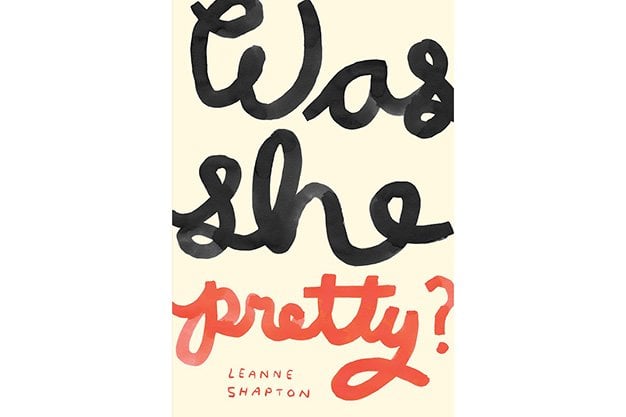
Toronto-born, New York City-based author and artist Leanne Shapton’s Was She Pretty? has just been released in paper ($22.95, Drawn & Quarterly). It’s a mix of text and drawings, evoking the range of emotions – from mild anxiety to outright obsession – that we harbour toward our partners exes. The super-smart Shapton talked to NOW from New York as she’s prepping for her appearance on Saturday (February 6) at Type Books, where she’ll be interviewed by Sheila Heti.
How did the paperback release of Was She Pretty? come about 10 years after its original publication?
It’s great that Drawn & Quarterly thinks there’s still a market for jealousy. They’ve categorized it under comicsand graphic novels/literary, and I say, “Thank you.” [Original publisher] Farrar, Straus & Giroux put it under relationships, and I thought that was insane because if you put this book under relationships it’s only going to help a certain kind of person.
What inspired the book?
I was two years into a relationship, and when you’re building a foundation with someone, that’s when you’re curious about what experiences they had of love and relationships and who preceded you. You’re getting into the patterns of how you’ll fight and the things that really hurt and what you’re going to be dealing with.
And you’re asking, “What kind of a person am I? Am I a snooper or am I not a snooper? Do I read his emails or not?” All these dark questions. There’s competition and hatred. One woman I talked to recalled how she bodychecked her partner’s ex at a Christmas party.
But that’s not in the book?
Oh, she was a wealth of information.
So what did you choose to use from her material?
I chose something weirder, and that was how her partner suggested she wear darker jeans. It was a weird aesthetic, about the body, and I couldn’t have made it up. It was just too gross.
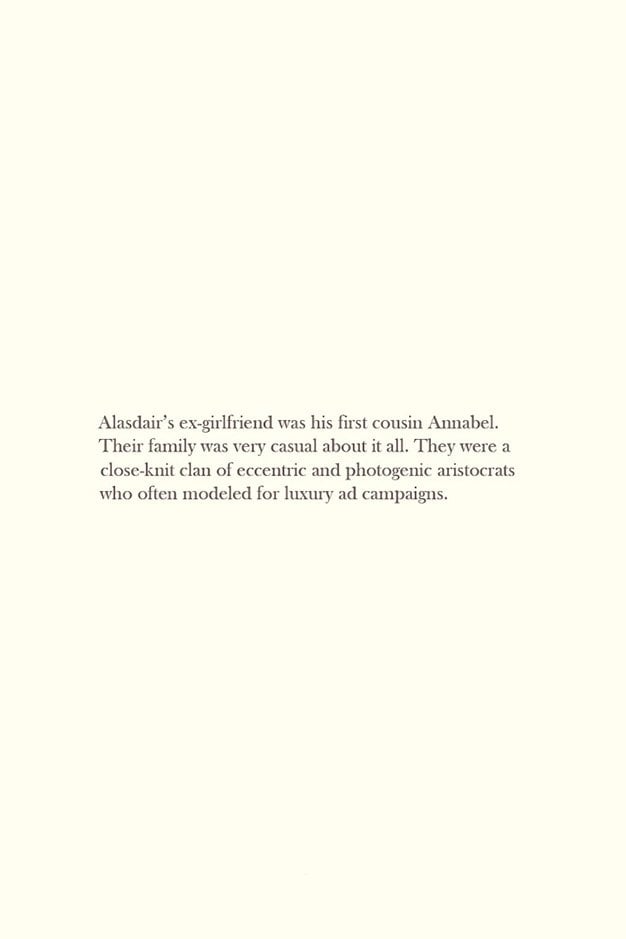
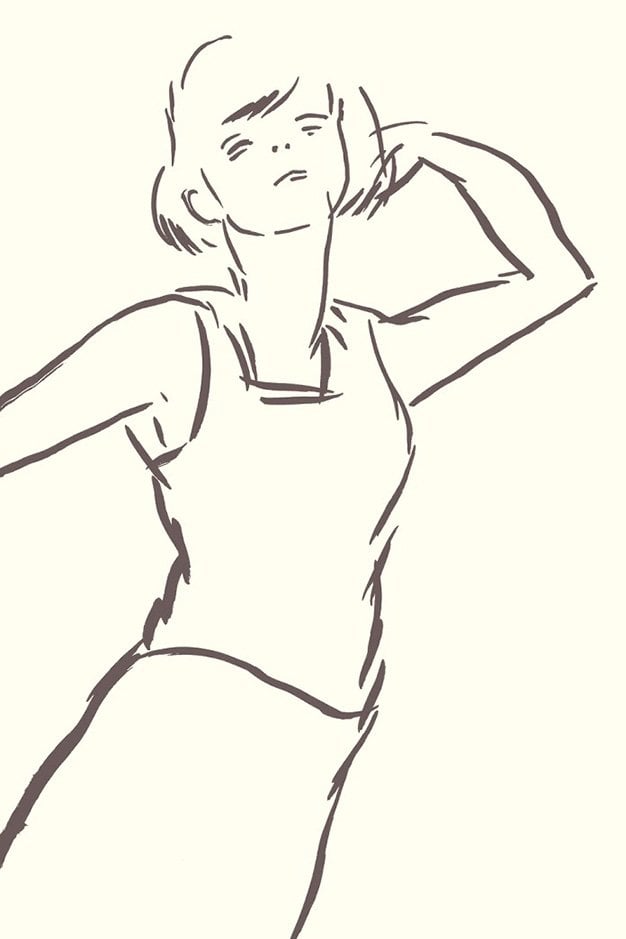
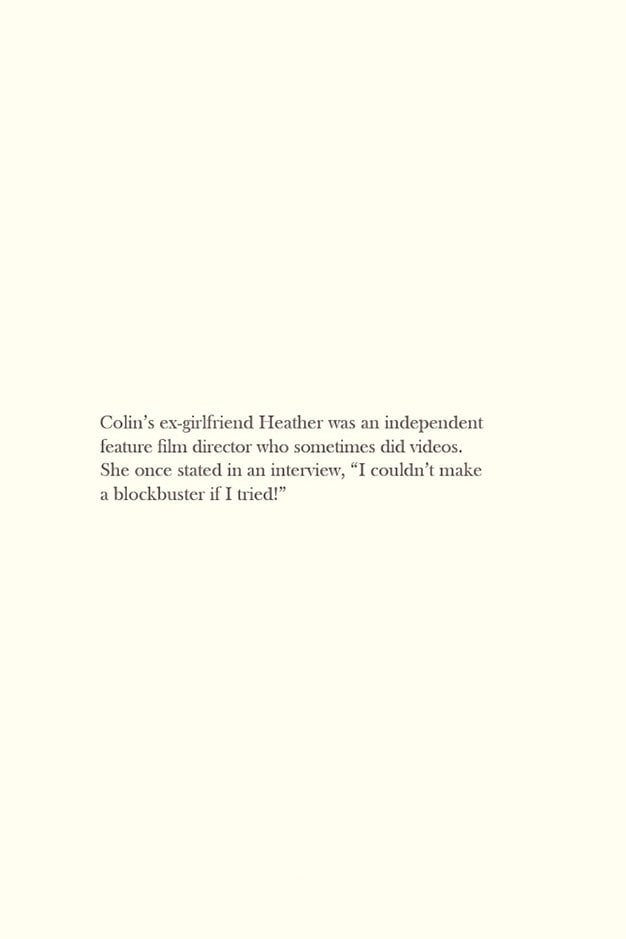

Where did the drawings come from?
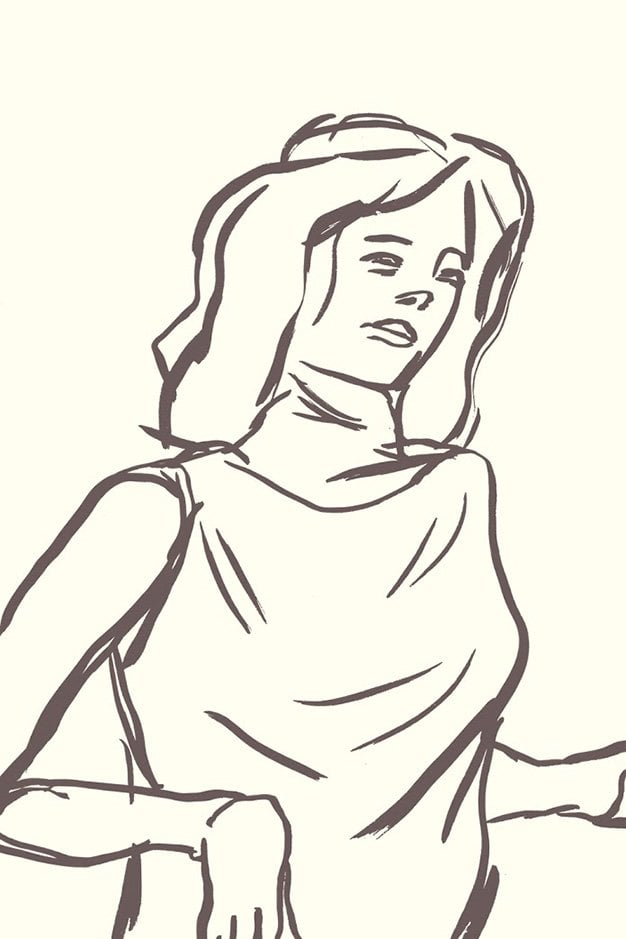
They’re benign pictures of women, kind of harmless – they don’t have much inflection. I looked at images in magazines, some are of my friends. I wasn’t illustrating the text. I wanted the text to have an influence on an innocent image. Otherwise it would have been so heavy-handed – “Oooh, all these evil women” – and it’s not about that. It’s about how we invent ghosts and phantoms out of nothing.
The subjects are all women. Why?
The men I talked to focused more on property and territory than on the qualities of other men: better cars, better jobs, better money. And that was just boring to me, whereas what the women were intimidated by was way more nuanced and funnier.
Do you miss Toronto at all?
I vicariously live in Toronto through [Sheila Heti, who’s interviewing her at the February 6 event]. I like visiting Sheila because she lives in my old apartment. I’ll always pick Mississauga over Toronto – I swam at the Mississauga Aquatic Club – but I miss Toronto so much. I did good work there. In New York, other people’s ambitions and social climbing get in the way. Maybe I look at it with rose-tinted glasses. When I see the kind of projects, large and small, that Sheila’s able to do, I envy that. There’s so much you have to navigate here – like making money to live where you want to live.
What do you think is the connection between the surge of the graphic novel and the fact that we’re living in a digital age?
Graphic novels have blown up because we’re reading differently as a culture. I felt it when I was working at the National Post. “No,” I said, “the picture has to be this big. People have to metabolize that picture because it will help the reading.”
The culture of pictures has accelerated so fast. Instagram, devices, the size of our screens – look at how quickly that’s happened. Especially my generation and younger people have a picture literacy that allows me to do this work. [2012 release] Swimming Studies has chapter after chapter of pictures with no words. Readers are saying, “It’s a no-brainer. I can deal with pictures with no words.” And I’m taking advantage of that.
Don’t miss our review of Was She Pretty? here.
susanc@nowtoronto.com | @susangcole