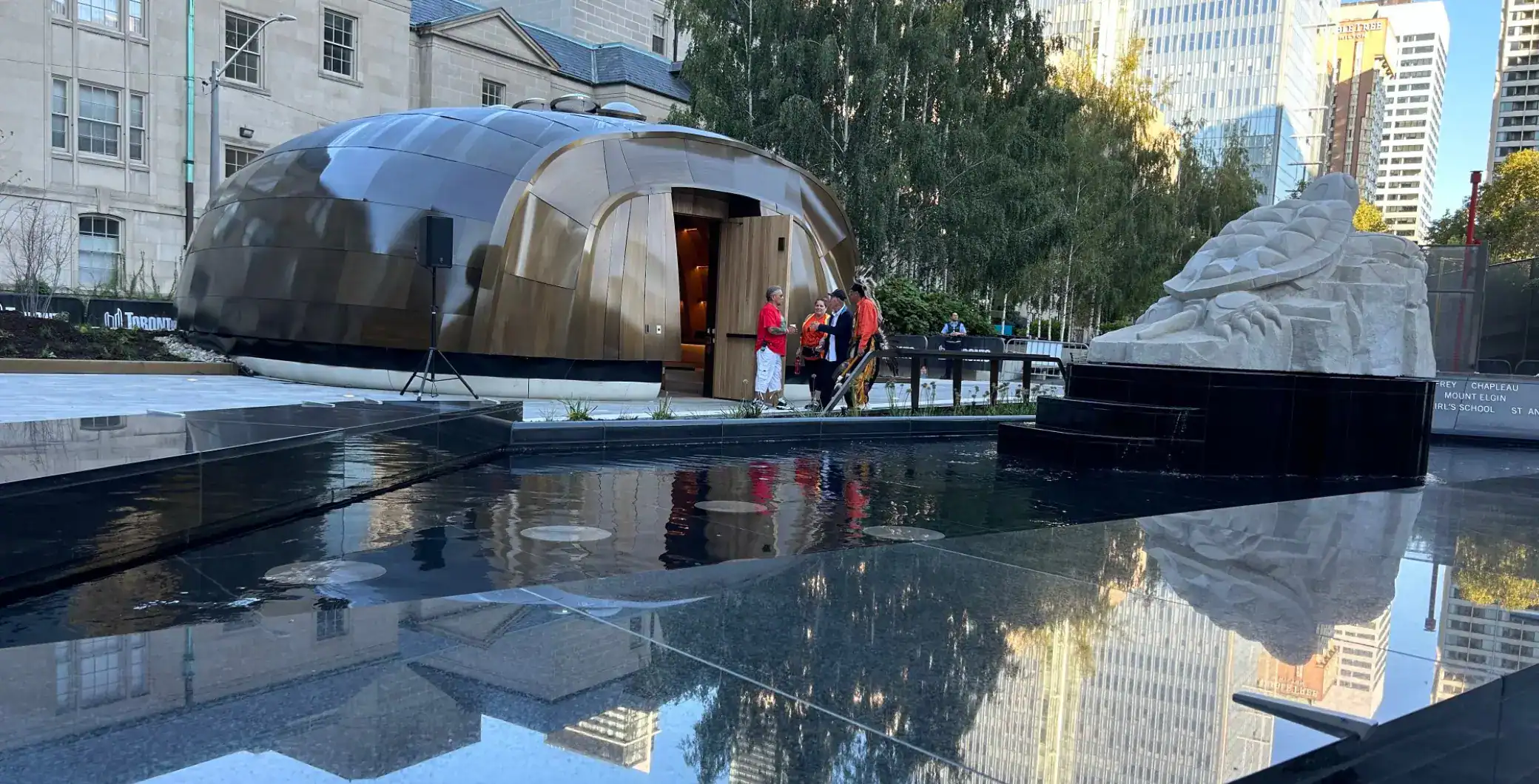
There’s a new garden in Toronto to commemorate and pay tribute to residential school survivors.
On Monday, the city unveiled the Spirit Garden at Nathan Phillips Square as part of the Truth and Reconciliation Commission of Canada’s Call to Action 82, which calls on the provincial and territorial governments to install a resident schools monument in each capital city to honour survivors and all the children who were lost to their families and communities.
“The new spirit garden will be a space to honour residential school survivors and remember the children who didn’t make it home, children so cruelly separated from their moms and dads, forced to abandon their languages, cultures, spiritualities, traditions and identities,” Mayor Olivia Chow said in a video posted on X.
The public garden can be found in front of city hall. The 20,650-square-foot space will serve as an area for diverse programming, spiritual ceremonies, teachings and gatherings centred on cultural traditions.
The garden includes six stand-out features such as the turtle sculpture, spirit canoe, Inuksuk, Three Sisters artwork, teaching lodge, and lastly, the Kaswentha, a Two-Row Wampum Walkway.
At the centre of the Spirit Garden lies the six-foot-tall limestone turtle sculpture that is composed of 10 individual pieces and weighs approximately 10 tonnes. It was made by Anishinaabe artist Solomon King from Neyaashiinigmiing, Ontario, and a member of the Chippewas of Nawash Unceded First Nation.
The city says the turtle represents Turtle Island and embodies First Nations creation stories. It also has the names of 18 residential schools that were once in Ontario, plastered on the pool’s north wall.
Read More
Meanwhile, the spirit canoe is a 36-foot-long stainless-steel sculpture with laser-cut artwork and painted infill panels, designed by Anishnaabe-Red River Métis multidisciplinary artist Tannis Nielsen.
“The canoe is a tribute to the Métis Voyageur tradition, representing resilience, collaboration and the connection of the Métis people to land and waterways,” the city said in a press release.
On the other hand, the Inuksuk is a traditional stone landmark in the spirit garden that serves as a cultural marker and symbol of guidance for Inuit peoples. It was made by Henry Angootinmarik Kudluk who was born in Churchill, Manitoba and raised in Coral Harbour, Nunavut.
Other artwork included in the garden is The Three Sisters by self-taught artist Raymond Skye, from the Tuscarora Nation in Six Nations of the Grand River. The artwork is etched onto Muntz metal panels and symbolizes “the relationship between corn, beans and squash and shared values associated with stewardship of the land and planning for the seventh generation.”
In addition, the garden also includes a teaching lodge that can hold 60 people and acts as a spiritual home for all First Nations peoples. Designed by John Keeshig Maya-waasige, the lodge represents the importance of family and the journey of life.
Lastly, Kaswentha is a two-row wampum walkway that connects the Tree of Peace to the Peace Garden. The walkway epitomizes the treaty agreements between Indigenous peoples and settlers represented by two parallel lines.


