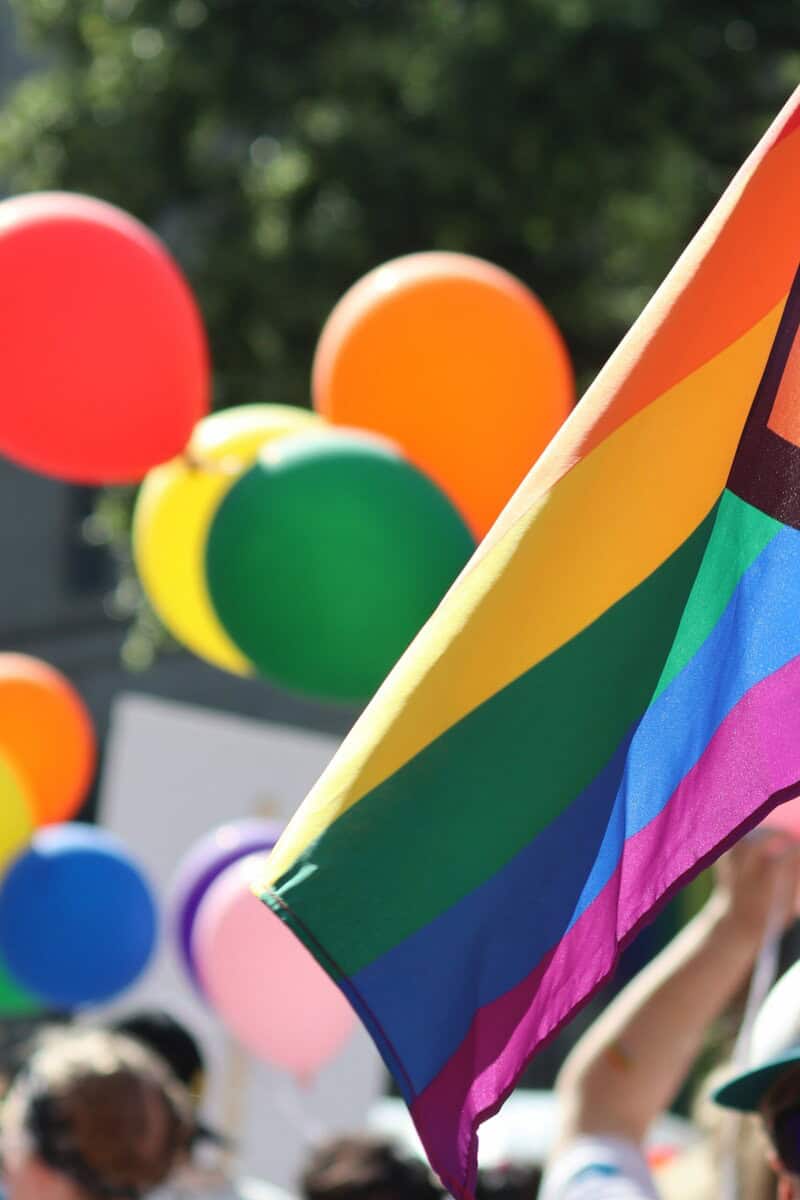
Many queer people in Toronto consider themselves fortunate to live in a city that celebrates Pride with dozens of different events, markets, marches and parades that span all throughout the month of June. But once the annual Pride parade has wrapped up, many organizations remove their rainbow decals from their windows, going silent on supporting queer communities until the following June. It’s not just a Toronto problem. Queer communities worldwide have taken issue with the phenomenon, known as rainbow capitalism.
Also known as homocapitalism or pinkwashing, the term refers to the trend of large organizations participating in Pride events and creating Pride-themed products, profiting on the movement without actively supporting meaningful change.
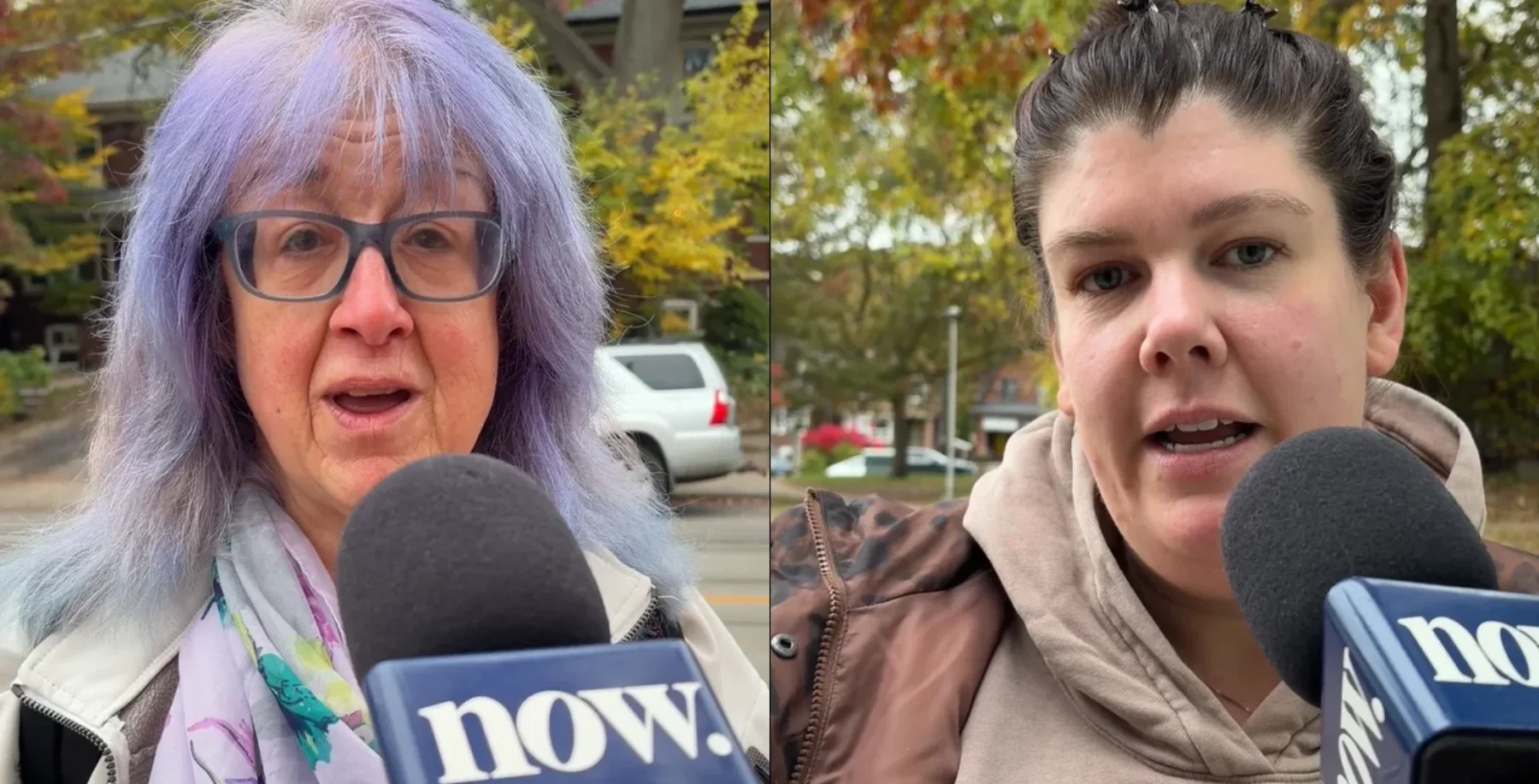
People in downtown Toronto told Queer & Now that the support shown by some companies for the four weeks of June feels gimmicky when it’s not continued throughout the rest of the year, and some people want to see corporations removed from Pride celebrations completely.
“I’d rather they just disappeared altogether and gay Pride simply go back to a smaller event [for] what it was celebrating in the first place instead of some mega huge party,” shared Paul, a resident in The Village.
Paul explained that he wants to see a larger focus on gay rights, and supporting people who are being persecuted for their sexuality.
“We’re doing fine here but we’re living in a bubble. There are people in the world who are being killed for being gay and we should be doing something about that instead of having a big party.”
Meanwhile, others welcome the change but would like to see it continue to evolve.
“[Corporate support] has changed a lot over the years. I can remember in the 80s [there] was nothing,” explained Tim.
“I think sometimes it can help, but [in] the last few years it feels a little overwhelming that it’s just about the money.”
He explained that throughout The Village many stores still display decorations from last month’s Pride celebrations.
“But beyond The Village, you don’t see a lot of it,” he continued, adding that once July 1 hits many companies are “onto the next big thing.”
“It would be nice if it didn’t stop right after June 30, to have some sort of presence after that,” Tim continued, sharing that he believes queer communities do need funding from corporate sponsorship.
“It would be nice to see more involvement after Pride Month. More donations and support for the community for any event that happens, not just in June.”
“There should be support for the community the whole time, the whole year. We’re a fully integrated part of society just like everyone else, so support for our community should exist [from] January all the way to September,” shared Aldwin.
“Big corporations that, like for PR purposes, like to put up a rainbow flag for June, maybe their support isn’t authentic. But I know a lot of small businesses and corporations that really integrate what it means to be LGBTQIA and support our community in that way.”
SUPPORTING QUEER COMMUNITY YEAR-ROUND
While many people had gripes to share with larger businesses participating in rainbow capitalism, others said they appreciate the large and small businesses that support 2SLGBTQ+ communities year-round. We wanted to hear about your favourite queer establishments in the city, which include:
Craig’s Cookies, a number of bakeries located in Toronto, Niagara and Newfoundland, that boast a selection of over 100 different flavours of cookies. Owner Craig Pike is also the person behind “That Arts Group,” a non-profit supporting performing arts in Toronto.
Sweaty Betty’s, a bar run for the queer community, by the queer community, for the past 18 years. The venue is one of the city’s few queer bars outside of The Village, located on Ossington Avenue, and is popular for its drag performances, lesbian nights and sign that reads “If you are racist, homophobic, transphobic, or just an asshole, don’t come in here!”
Glad Day Bookshop, a bookshop/bar and restaurant in Toronto’s Church and Wellesley Village. Glad Day first opened in 1970 and has since evolved to become a cultural hub for 2SLGBTQ+ communities in the GTA, hosting various events, celebrations and fundraisers.
We had the chance to speak with Michael Erickson, lead owner at Glad Day Bookshop, about his take on big corporations’ involvement in Pride. The bottom line? All support is good support, but it’s important that these companies put their money where their mouths are.
THE IMPORTANCE OF SHOPPING QUEER-OWNED
Erickson told Queer & Now that it is crucial to support queer-owned businesses because they often serve as a space where minorities feel safe. “It’s not just something that happens just in the month or week of Pride, but all-year round. It also happens when it’s not convenient.”
Erickson said that despite being threatened by people expressing homophobia and transphobia, including vandalism to their businesses and threats to their physical safety, the owners and employees of queer-owned businesses continue to provide these safe spaces. This, he says, is not something often seen by many larger corporations outside of June.
“When their support is dependant on them maximizing their profit, then they’re not going to be standing behind us if we are once again threatened with violence, or the reduction of our rights and freedoms,” Erickson continued.
He shared that this can be tricky, especially when they have to pay for costly repairs or additional security, something that larger corporations are better financially equipped to handle.
“So, the liberation of sexuality and the freedom of gender identity comes at a price to us, but we’re not afraid to pay that price.”
While walking through The Village these days, it’s hard not to notice an increase in empty store fronts in a neighbourhood that was once a hub for small businesses. For various reasons, including financial hardship and safety concerns, many business owners have closed up shop, something that is heartbreaking for many people who found community for the first time in this neighbourhood. Despite serving the community since 1934, one business in the area, Dudley’s Hardware Paint & Decor, recently announced it is closing after being subject to vandalism numerous times.
Glad Day is no stranger to the threat of having to close its doors. The business was purchased over ten years ago by a group of community members, including Erickson, to stop it from closing. First opened by Jerald Moldenhaur in 1970, the shop existed at several locations before settling into its current spot at Church and Wellesley streets.
While Erickson is passionate about protecting smaller, queer-owned businesses, he believes big companies do have a role to play in supporting the community.
“This support has to be something that is honest and not disingenuous, and not temporary.”
It also has to be inclusive of every part of the 2SLGBTQ+ community.
“As we continue to see the rise in transphobia specifically, in a time where the gay and lesbian market has been catered to for a long time by large corporations, I hope that we understand that none of us are free until we’re all free, and we can’t pick and choose which members of our community are going to get support, visibility and protection.”
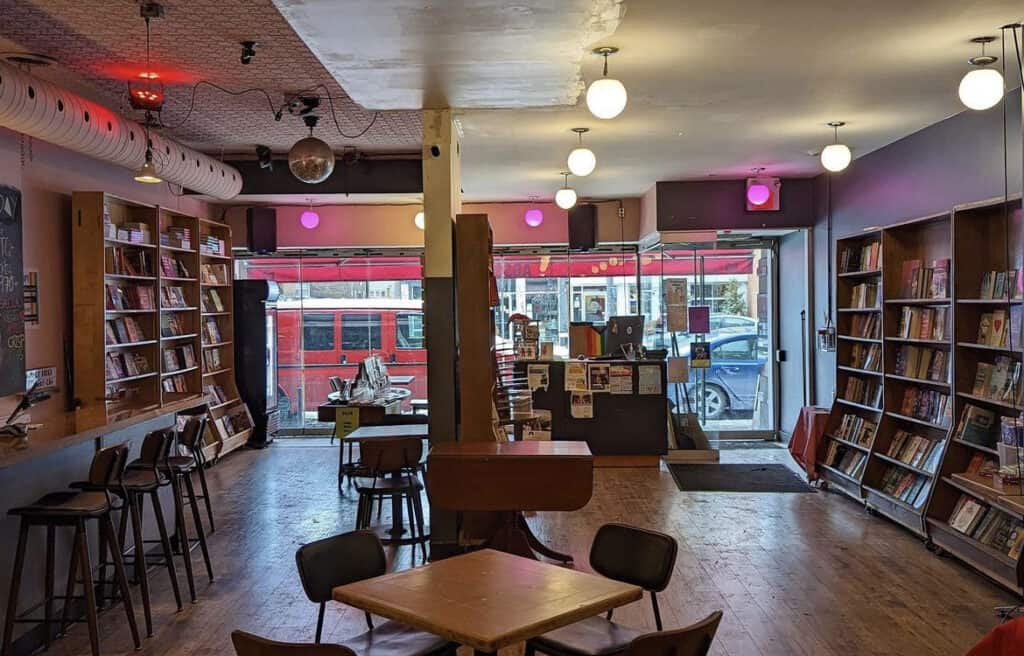
He explained that having the influence of owners and staff who in many ways reflect Toronto’s queer community allows Glad Day to curate a space that is both inviting and important to the fabric of queer life in the city. This has made Glad Day a place where many gay and trans people go to let their hair down.
“It’s important to have a space like ours where [2SLGBTQ+] people feel they can take a break from the micro and macro aggressions they experience in everyday life which doesn’t always happen in places that aren’t queer and trans-owned and controlled.”
But, Erickson is reminding people that like most good things, if you don’t use these spaces, you will lose them.
“People need to understand that coming out of the pandemic, queer and trans spaces across the country are at risk of closing still. Many of us haven’t recovered and we have to remember that we have to either use it or lose it. A lot of our spaces are at risk even if they don’t seem to be. So we can’t be complacent and think we’re going to have something forever, but not support it.”