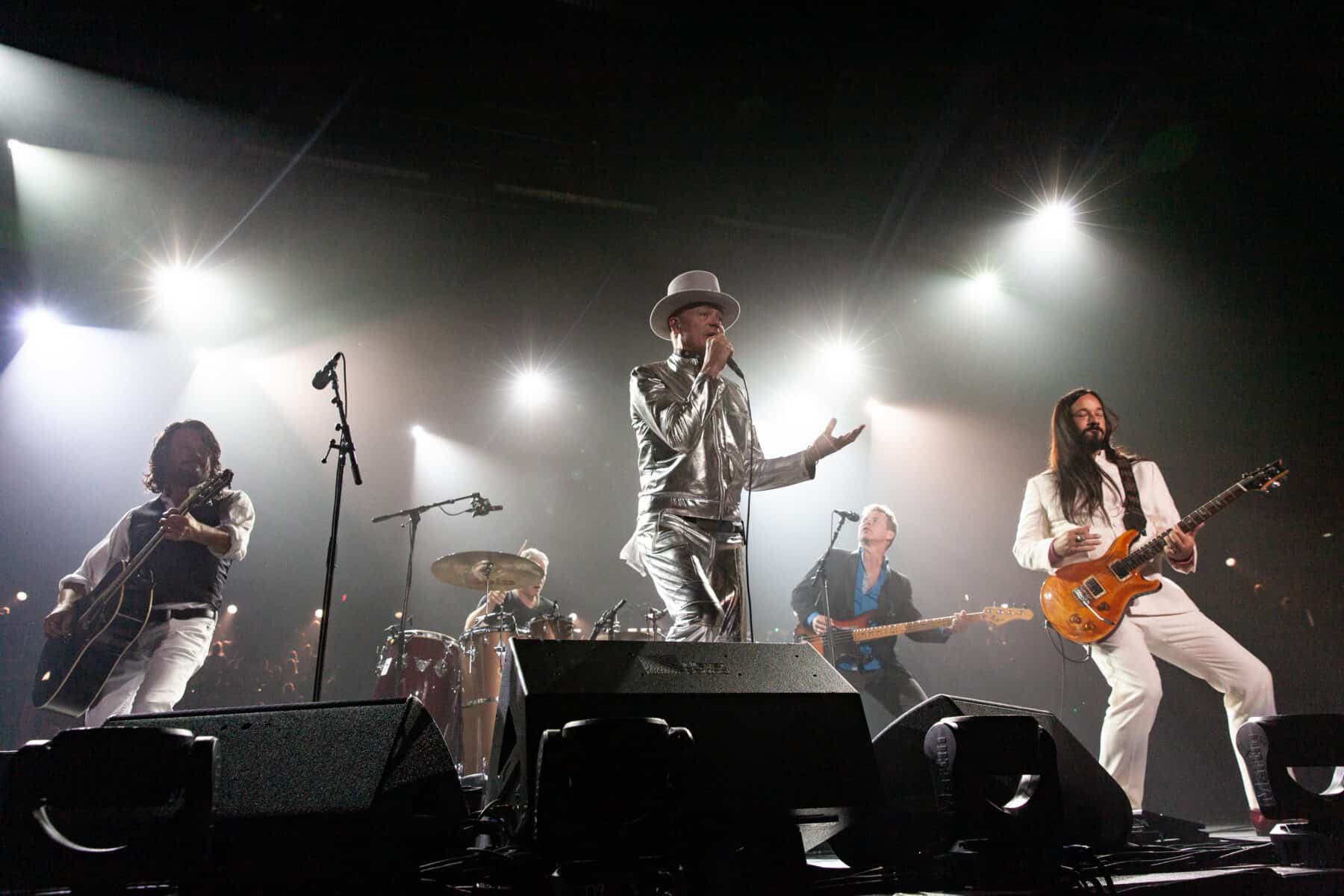
Saul Williams at the El Mocambo (464 Spadina), Thursday (November 11), 8 pm. $20. 416-968-2001. Rating: NNNNN
Music won’t save you from any thing but silence. We can invest it with all the meaning we like and it still will never be more than what it is – a sonic interruption with the potential to tell us what we already know. Saul Williams knows these limitations intimately, and that hasn’t discouraged him yet.
“I’m not trying to lecture or enlighten,” he says through the crackly distortion of his cellphone as he drives across Nebraska toward his next gig. “You don’t have to get people to recognize truth. It’s not about teaching them something new it’s something old that’s always been locked within them. When they’re ready to see it, it’s waiting for them. All I’m doing is expressing my own experience and ideas. I’m expelling.”
And expel he does. Williams is the poster boy for slam poetry, an early fixture of the Def Jam Slam contests and the embodiment of slam culture in the acclaimed films Slam and Slam Nation.
In 2001, he released Amethyst Rock Star, his album debut, a perfectly honed marriage of staccato poetic word-weaving and the sounds of hiphop. His eponymous 2004 sophomore album takes a more musical tack, less poetry over beats and more words as music, inside music.
Williams’s edge hasn’t dulled with the effort. His words are calculated idea flashes wrought over multi-layered riffs, complex engrams washing over you in successive waves of infectious sound.
Although the ties to rap are obvious, Williams works with a different sensibility, adopting a vulnerability and wonder that would seem weak to most heartless MCs. His style has more in common with the likes of the Last Poets, Gil Scott-Heron and the Disposable Heroes of Hiphopracy than with LL Cool J, Eminem or the Dog Pound.
And Williams has his eye on tougher distinctions than the blacks and whites of the standard rap palette.
“The new album is about the transitory nature of truth,” Williams explains. “Matter is fact and spirit is fiction. Between the two is truth. It’s metafiction, partly made up but beyond the point of being made up. It’s more like envisionment, calling a thing into reality because it should xist.”
Williams’s truth adapts and evolves and waits patiently for the time when a person will recognize it.
“The post-election climate is more grim than 9/11,” he says. “We’ve really been hit this time. It was a city and three thousand people in 9/11. This shit is all of us, the entire fucking world.
“There’s a feeling initially, an instinct to flee, a feeling like we’ve been cheated. But those of us who are here, we understand that there’s work to be done, that if we want our world to look a certain way, we have to take it there.
“And the so-called evil-doers, Bush included? There’s a necessity in what they do. There are levels of truth in that as well – maybe not in the acts, but in presence. There are things we need to untangle in that before we can move forward. It might be that we need four more years for people to see and understand the message in this administration.
“When we think of a beautiful woman, the most beautiful thing you can find in a woman is a sense of mystery,” Williams continues. “With a woman, we’re intrigued by the unknown. We don’t think of a mysterious woman as evil. We think of her as more beautiful. We think, ‘I got to meet this woman, I got to know what she’s about.’
“In the realm of life, when we have that same sort of mystery presented to us, it becomes, ‘I don’t know what that’s about. I don’t know why these people dress that way. They look weird to me, they’re evil, let’s kill them.’
“We have to get to the point where what’s unknown is not necessarily going to harm us, where we embrace the unknown as we would a beautiful woman.”