I was supposed to be at my mother’s bedside the day she died. My siblings, stepfather and I were months into the sometimes beautiful, often tortured death watch that so many of us eventually experience.
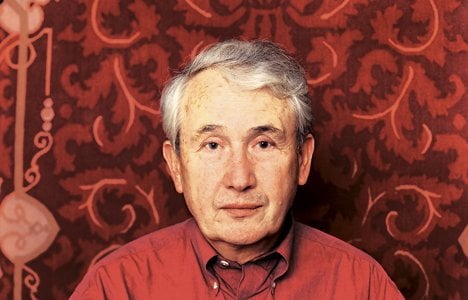
Instead, I was in Manhattan, her favourite city, with late-blooming, Pulitzer Prize-winning author Frank McCourt, who himself shed this mortal coil over the weekend. I was there for the launch of ‘Tis, his follow-up to the mega-successful Angela’s Ashes, which was in part a tribute to his hard-pressed mother, and to interview him before he came to Toronto for a reading at Massey Hall.
I was reluctant to leave my mother, but in the ebb and flow of the inevitable decline she was experiencing, she had been rallying. A former journalist and the daughter of journalists – and the mother of one – she was intrigued by the mom-celebrating McCourt, and her very last words to me would prove to be “Go get the story.”
She wasn’t going anywhere, she joked.
I first saw McCourt – his irresistible blue eyes, great shock of white hair and infectious smile – the night before our interview at Grand Central Station in a beautiful old-school bar where he was hosting a book launch for ‘Tis. It was a classic tavern, all dark wood and darker carpets and curtains, hidden away and intimate in Grand Central’s massive space and not unlike the White Horse Tavern where McCourt spent so many years hanging on the edges in the company of writers while he was still a wannabe teaching high school.
Emboldened by beer and bravado, and following the journalist’s creed taught to me by my mother, her parents and the dozens of reporters I had known growing up, I pushed my way to the front of the room.
As cameras whirred, including a CBC documentary crew, it was time for all to raise a glass in honour of the new book, and McCourt turned to a smiling stranger, me, to clink glasses with.
The next day, I walked in the rain to his impressive, clearly post-bestseller apartment on Central Park West. It was a lifetime away from the Limerick slums he’d grown up in, beautiful though not garish or overdone, and no doubt bright on a sunny day, with hardwood floors and carpets covered with books and magazines.
The author liked to read, and the book he had open on a table beside a comfy reading chair was The Gifts Of The Jews: How A Tribe Of Desert Nomads Changed The Way Everyone Thinks And Feels, by Thomas Cahill.
Of course, we spoke about our mothers. He learned mine was sick, and was sympathetic. Like his, my mother had grown up poor, and stayed that way as a single mother raising my sisters and me after shedding an abusive man. Unlike McCourt’s, mine would eventually find the right guy as well as financial success.
Like other writers I have interviewed, McCourt asked almost as many questions as I did, and I was confident I had the beginnings of a story after our conversation, which had raced by. Even though it was now pouring as I left his building, I practically skipped down the sidewalk adjacent to Central Park, sure I’d be able to write a decent piece.
Minutes later, I’d learn that New York’s airports were shut down, this storm wasn’t a little one and wouldn’t be passing any time soon. I wouldn’t be boarding my flight home after all. Then my sister called to tell me our mother had begun the laboured breathing that meant she was in the final stages of her disease she was going to pass that night, and there was no way I would be with her.
Instead, I walked the streets of her favourite city, convincing myself that I was her eyes in her favourite town on what would be her last night on earth.
McCourt knew how to find beauty in pain, and made art reminding us how closely they coexist. It’s been 10 years since that interview, and the day my mother, Pat Adams, née Stuebing, died, and what I’ve learned is that the pain of loss never leaves you. Eventually, it just becomes familiar.
Life for those left living is a constant stream of successes not shared and pain not processed with the one who has helped you through so much. But what I think McCourt helped me understand is that’s not exactly sad – it’s just life. Maybe we pay tribute by not being able to overcome missing someone we honour them by remembering and learning to endure.
Thanks, Frank. May you, too, rest in peace, well missed but never forgotten.
michaelh@nowtoronto.com[rssbreak]