
The late Nash the Slash, the Toronto-born musical iconoclast and pioneer who wrapped his face in surgical bandages and Iggy Pop immortalized in the song “Eggs on Plate,” would likely have been pleased to see the turnout at Friday night’s screening of Tim Kowalski’s documentary, Nash the Slash Rises Again!, at Hot Docs Cinema.
Billed as “a one night only event,” there was a constant lineup at the merch table to buy the brand-new vinyl tribute album, Nash the Slash: Covered, released by a local label We Are Busy Bodies.

After the screening and the 15-minute Q&A with Kowalski, the director, Kevan Byrne, the writer/editor, Stephen Pollard and Nash’s visual collaborator, a crack house band — Kevin Breit (guitar, mandolin); Dave Clark (drums;) Rebecca Hennessy (trumpet, vocals); Michael Herring (bass;) and Elena Kapeleris (sax) — backed various guests performers including Future Now’s Ian Blurton, Dearly Beloved’s Rob Higgins, and Christine Duncan and her animalistic Element Choir.
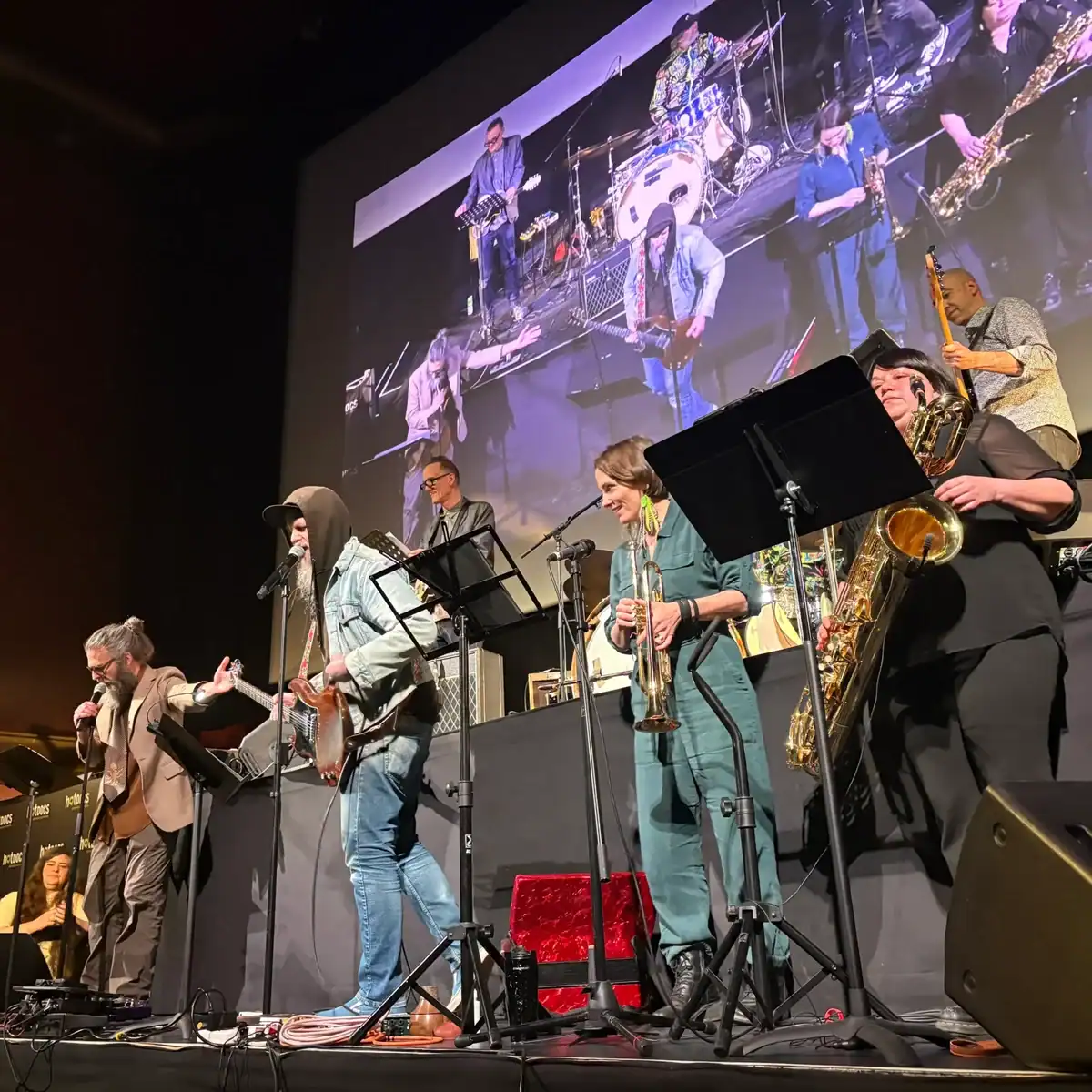
“It’s not very common that we have screenings and then concerts afterwards,” Vivian Belik, lead programmer at Hot Docs Cinema, said, adding that ‘Nash the Slash Rises Again!’ is part of the new monthly music doc series ‘Jukedocs’, curated by local music writer and author, Niko Stratis.
In the next month, Peaches Goes Bananas, Baz Luhrmann’s EPiC: Elvis Presley in Concert; and Any Other Way: The Jackie Shane Story will be featured.
Belik also announced that the Nash The Slash doc would get a second screening on May 9.
Tickets will be available sometime next week. Hot Docs Cinema helped fund the film’s production through its partnership with Slaight Family Fund.
The film, which took eight years to make, tells the story of a complicated man, born Jeff Plewman — an extraordinarily talented multi-instrumentalist who stomped on rules and mainstream paths to success. He played a mean electric violin, a skull-shaped mandolin (on display at the National Music Centre’s Studio Bell, Canada’s version of the Rock & Roll Hall of Fame), synth, and glockenspiel, but never, ever, conventionally.
He mixed prog rock, industrial and electronic music, with a punk rock focus and theatrical horror-influenced visuals. He was also a film composer (including Bruce McDonald’s Highway 61 and Road Kill) and collaborated with surrealist painter Robert Vanderhorst, under the moniker Two Artists.
Toronto in the 1970s is painted as “boring” and “tired British outpost,” and here came Plewman who is anything but. Taking his stage name from a murderous butler in Laurel and Hardy’s Do Detectives Think?, he went on to inspire, confound, befriend and piss off (to varying degrees) almost everyone who worked with him.
The film includes plenty of differing perspectives, among them are Iggy Pop, Gary Numan, Youth, Danielle Dax, Owen Pallett, his former band mates from FM, legendary promoter Gary Topp and heaps of others.
As one could tell by the turnout of the screening, Nash The Slash made an impact and left a legacy.
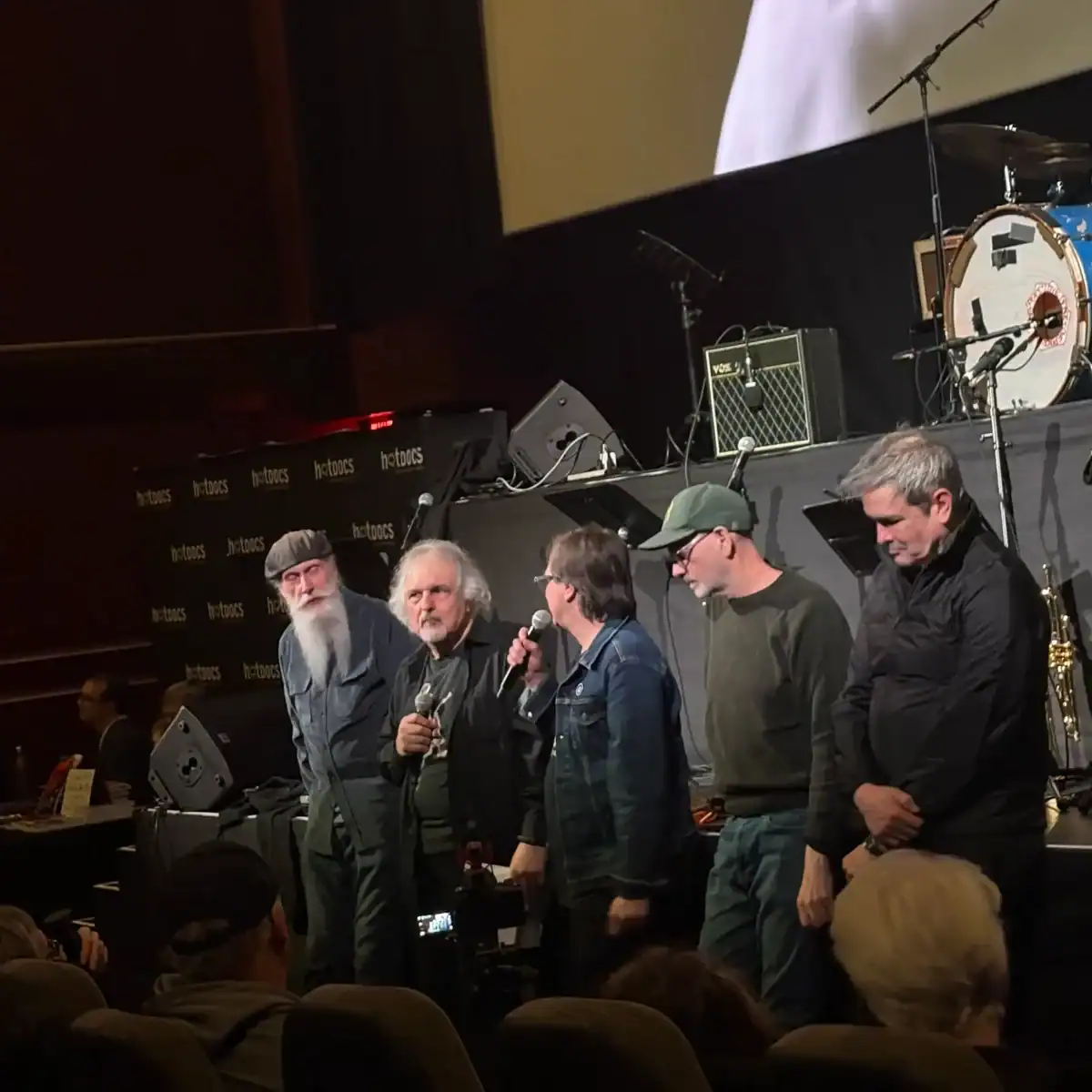
Kowalski, writer/editor Kevan Byrne, and Nash’s visual collaborator Stephen Pollard. (Courtesy: Karen Bliss)
During the post-film Q&A — moderated by Lou Molinaro — Kowalski said, “A lot of these punks and a lot of the crowds that went to these shows were very artistically friendly, and they loved a lot of interesting things. So, Nash must have fit in perfectly just on the art basis, if not the music being a little different as well.”
He says it was something about the “creative anarchy” of what Nash did that appealed to punks.
“He appealed to people who were into prog rock and art rock and classical and all kinds of different styles. So it just goes to show that he was a really versatile player and performer.”
Plewman died alone in May 2014 at the age of 66; his tenant noticed his mail had not been collected.


