“We risk repeating the past if we don’t own our history. We risk missing the present if we don’t pay attention,” director Alisa Palmer wrote in her program notes for Body Politic, recently staged at Buddies in Bad Times Theatre.
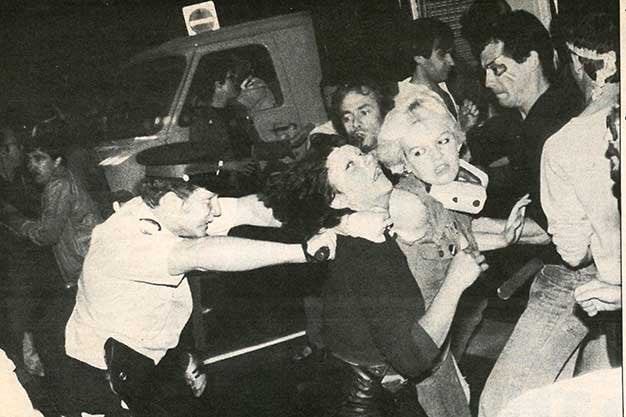
Nick Green’s play concerns the history of the legendary Toronto gay journal, published from the early 70s through the late 80s, and the waves of advocacy it both chronicled and propelled. Its climax is a monologue depicting the rally that followed the Feb. 5, 1981, police raids on four downtown bathhouses.
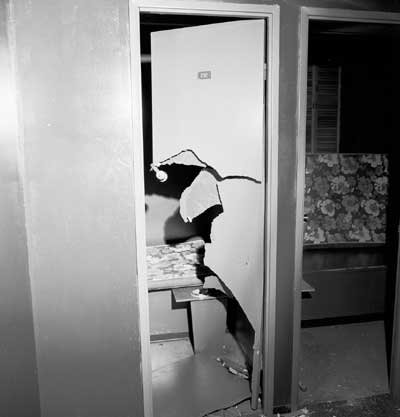
“They [the police] came into our rooms, our showers, our lives,” says the character standing in for real-life lesbian activist Chris Bearchell. “We offered them the keys to our lockers, but they used crowbars instead. They made a mistake.”
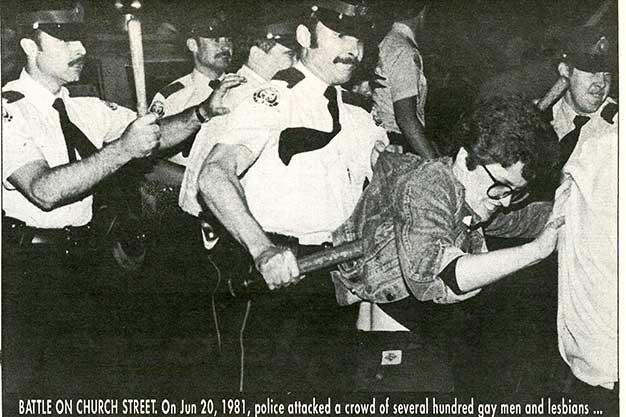
When unjustness crosses into cruelty and even tyranny, those subjected to it – whether directly or indirectly – have almost no choice but to cohere. The bathhouse raids were a seminal moment in this city’s history not just because of the brutal excesses of the state, but because of the responses they provoked. After being trod upon long and hard enough, people will organize to assert their right not to be.
At a Pride Toronto panel at The 519 on June 7, Dennis Findlay, the president of the Canadian Lesbian and Gay Archives, offered an explanation for why events such as the raids and the 2010 G20 summit serve as turning points for activism: the gnawing horror that “except for that one evening [that I happened to be elsewhere], I could have been arrested.”
“Sometimes,” Findlay said, “bad things need to happen before better things can happen.”
Driven by the knowledge that he could just as easily have been among those caught in the raids, Findlay coordinated the Right to Privacy Committee (RTPC) Court Watch program, which provided legal support to the nearly 300 people who were rounded up and charged with bawdy-house offences.
Gerald Hannon
The Pride Month discussion – which featured author Margaret Atwood as the panel’s self-described “token ignorant straight female person” – was meant to reflect on the passage of 35 years since the coordinated raids that police had called Operation Soap. It was Canada’s largest mass arrest since the October Crisis, and the Toronto Police Service is expected to finally deliver an official apology for it on Wednesday afternoon (June 22).
But the conversation also marked six years since the G20 and nearly one year since an unnamed police officer killed Andrew Loku, prompting Black Lives Matter members to occupy the Allen expressway in protest.
Gary Kinsman, a member of the RTPC steering committee who sat on the panel wearing an Ontario Coalition Against Poverty T-shirt, marvelled that the Allen takeover “conjured up the spirit of Stonewall,” the uprising that followed the 1969 police raid on a New York City gay bar.
But while traumatic events often catalyze social movements, the panellists were quick to point out the crucial limitations of such avenues of change.
“We shouldn’t fight oppression because we somehow benefit from [that fight],” said Share newspaper columnist Ajamu Nangwaya. “We should fight against oppression because it’s the right thing to do.”
Why, he wondered, was it not until the 1981 bathhouse raids that the gay establishment realized police violence was taking place against minorities? Or why was it not until after 9/11 that North Americans discovered the prevalence of racial profiling?
Kinsman explained that prior to the bathhouse raids, there had been efforts to build alliances between gay and Black Torontonians, but they failed because white gay men didn’t understand anti-Black racism. And even though the outcry against the raids found support from Black, Asian, feminist and labour movements, the following years saw the gay mainstream accumulate privilege and largely leave other marginalized groups behind. But not entirely.
Gerald Hannon
NOW’s Susan G. Cole spoke about the complicated relationship that the radical lesbian feminist movement had had with the gay community prior to the raids. Whereas it seemed that gay men were obsessed with sex, she said, “that was not my project.” She and her peers were more concerned with issues such as violence against women. The bathhouse raids, however, brought them on to the same side.
And the alliances that were forged, and the organizational capacity that was created, left many of the same activists better prepared to respond to future crises such as AIDS.
A key lesson they learned about political advocacy, said Reverend Brent Hawkes, was that you need to have people negotiating on the inside and demonstrating on the outside – and that those two groups “mustn’t badmouth each other.” It’s a friction seen over and over again in each new movement finding its footing.
After all, things like the bathhouse raids “have a habit of recurring,” said Atwood. And people “have to learn about stuff in the past, because it’s coming their way in the future, in some other form.”
With every new group that emerges, and with every new coalition formed for the long term, the world can inch ever so gradually toward some ideal of justice.
“As they pulled us out, they broke the hinges. They tore off the locks,” the Body Politic monologue concludes. “They pulled us out and threw us in one pile on the ground, and now there is no way, there is no way ever, that we’re going back in.”
jonathang@nowtoronto.com | @goldsbie


