Over the last three months, 22-year-old Syd Patterson and his friends put countless hours into building a skatepark in Toronto’s west end.
On Monday, it took the City of Toronto about six hours to demolish it.
“I’m heartbroken, I was so fulfilled,” Patterson said in an interview Monday afternoon.
The DIY skatepark was situated on a dead-end street in Bloordale Village between a large commercial warehouse, largely used by artists and small businesses, and the Nitta Gelatin factory where last week’s “acid cloud” emanated from.
What started as a small quarter pipe last July became a miniature skatepark during this past summer. The park featured a bowl, ledges, step-ups and multiple quarter pipes.
When Patterson and his friends started building the park they didn’t have wheelbarrows and had to mix the concrete by hand in Home Depot buckets. He estimates it cost between $3000 and $4000, most of which came out-of-pocket.
“It was a response to the force-fed, pre-fab city infrastructure of how they go about building skateparks. It’s kind of like what you get is what you get — we were trying to branch out from that and do something creative, something that skateboarders actually had a hand in themselves,” Patterson said.
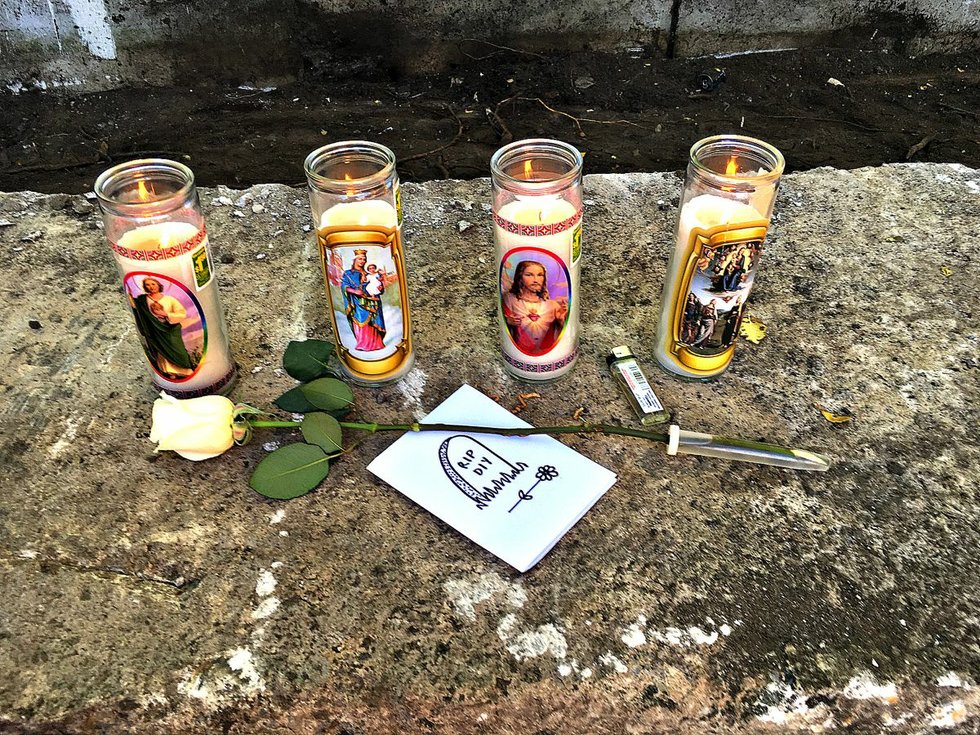
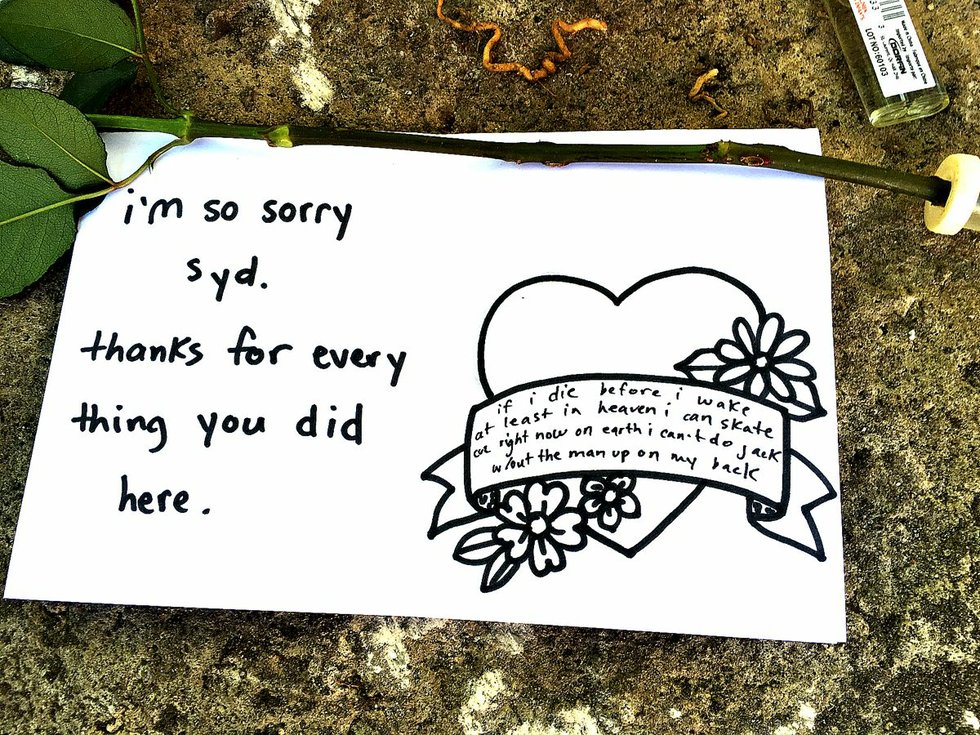
Throughout the day, groups of skateboarders and community members, many of whom had only recently heard of the park, came to the area to offer condolences and show support to Patterson and his friends. A vigil was left on a concrete block that, for the last three months, functioned as the foundation for skatepark.
Jason Wydra, who has been skateboarding for 23 years said its sad that the park had to be destroyed. “That was a tremendous thing they built…it’s guerrilla heroism.”
It was people in the commercial warehouse beside the skatepark that tipped off Patterson last week to the possibility that the city was planning to demolish it on Monday. That’s why, Patterson said, he created a Facebook page, started the petition and put together a video to raise awareness about the park and what it meant to people in the area. At the time of writing, the video has 31,000 views on Facebook with hundreds of comments supporting the park and Bailão responded to the petition.
DIY skateparks are parks that are built by skateboarders themselves. They are often small and illegal. But they are often built in unused or dilapidated areas that most people generally avoid.

Courtesy of Save Toronto’s DIY skatepark via Facebook
The DIY skatepark featured a variety of transitions, which the builder says are lacking in the city.
The area where the park in Bloordale Village was covered in garbage and syringes, Patterson said.
Some DIY skateparks have become famous and been immortalized, like Burnside park in Portland. Vancouver and Montreal both have DIY skateparks that have been legitimized by their cities.
‘He was there the other day sweeping it — like lovingly’
Although he is sad, Patterson said he hopes the spotlight his project is getting will create a dialog on how the city builds its skateboarding infrastructure and something good comes from his efforts.
He might just get his wish too. Coun. Ana Bailão, of Ward 18, contacted Patterson after the park was demolished.
In an interview Monday night, Bailão that she looked forward to working with the skateboard community with other projects in her ward. She also said she only heard about the skatepark last week and was surprised how quickly it was removed. The park had too many issues with it to remain where it was, Bailão said.
One such issue, Bailão said, was that it was too close to train tracks. In 2014 Tyler Bailey was killed by a GO Train near a now-demolished DIY skatepark not far from Patterson’s park.
Other issues were the lack of permits, liability and property rights.
Michael Vickers helps run Akin Collective, an art studio space in the building right beside the demolished park. Vickers said he hopes everyone involved in the DIY park have an opportunity to work with the city to build more.
“I think it was absolutely amazing to see the amount of love and work that [Patterson] put into it. He was there the other day sweeping it — like lovingly,” Vickers said.


Skateboarders will work with Toronto city planners in the development of future skateparks
Many of Toronto’s skateparks are either old, crumbling or seasonal. Dufferin Grove and Dunbat are both popular parks in west Toronto that are located beside hockey rinks and get packed up once the weather gets cold. They are flatland parks with wooden boxes, ramps and rails — completely different than what Patterson and his friends built. There are no permanent skateparks between River Street and Lansdowne Avenue.
Last month, The Skateboard Strategy (TSS) released a 47-page report which emphasizes the need for more and better maintained skateparks, as well as the need to have members of the skateboarding community involved in planning them.

A map of Toronto’s skateparks (Courtesy of Parks, Forestry & Recreation Policy and Strategic Planning via The Skateboard Strategy)
Nick Fulton is a member of Toronto Skateboard Committee (TSC), a skateboarding advocate group that helped the city with the TSS report. While the TSC had no involvement with the demolished park, Fulton said in an interview over Facebook that older parks that were built without skater input were “lacking” and the newer ones were not enough to serve the needs of the skateboarders in the city.
But according to Fulton, they’ve been getting better since the TSC’s inception in 2013. “With support from councillors like Janet Davis we’re pretty hopeful and optimistic about the future,” he said.
‘Beautiful work of art’
Some of the materials used in the construction of the park were donated by members of the community, like the old arches of St. James Cathedral donated by Brian Richer, owner of Castor Design. “I thought it was funny there’s the fabric of Toronto built in the skatepark.”
Richer has been in the area for 12 years and said prior to the skatepark, the space was where he brought his dog to go to the washroom.
The co-owner of Alternative Grounds coffee roasters, Kevin Walters, has been in the warehouse beside the park for 20 years. Walters said the community has improved a lot in the past few decades, but the area corner where the skatepark was remained a “dump” until it was built. He called it a “beautiful work of art.”
It was a good thing for the entire neighbourhood, Vickers said. People felt safer with the skateboarders in the once derelict corner of Patton Street
Toronto has 12 permanent skateparks, most of which are located in Etobicoke, North York and Scarborough.
news@nowtoronto.com | @nowtoronto