What to know
- Hundreds of tenants and supporters occupied a west-end Toronto apartment building after a resident was allegedly wrongfully evicted.
- The tenant claims they received no notice of arrears, hearing, or eviction order before a sheriff changed the locks.
- The Toronto Tenant Union alleges charges connected to other units were incorrectly attributed to the tenant’s account.
- Protesters occupied the building management office for several hours, calling on the landlord to reinstate the tenancy.
- Advocates say the case highlights concerns about Ontario’s eviction system and recent provincial legislation that critics argue makes evictions easier.
- Now Toronto contacted Q Residential multiple times for comment but did not receive a response before publication.
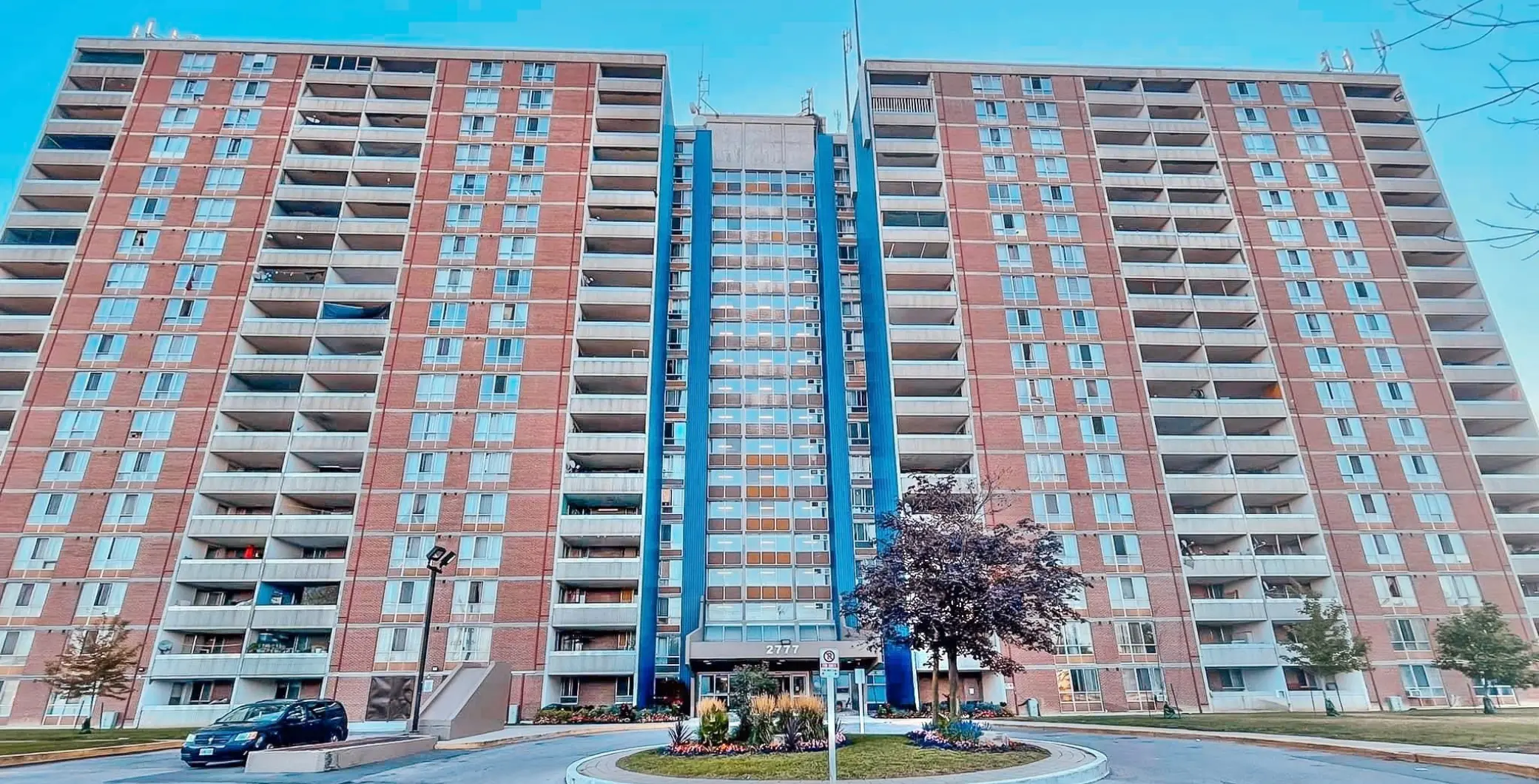
Hundreds of tenants and supporters from a local tenant union occupied a west-end Toronto building on Monday after residents were allegedly wrongfully evicted.
Toronto Tenant Union’s Co-Chair Bruno Dobrusin told Now Toronto that the occupation was organized after a tenant at 2777 Kipling received a visit from a Court Enforcement Office Sheriff, who locked her out of her apartment at 3 p.m. on Monday.
Although the sheriff is the only authority legally allowed to enforce evictions in Ontario, the tenant claims the eviction was wrongfully carried, as she allegedly received no notice from the landlord or the Landlord Tenant Board (LTB).
“They were not notified that there was a hearing, they were not notified that they had arrears, even though the tenant was going to pay the rent every month to the management office,” Dobrusin said.
With Toronto rents remaining high and vacancy turnover allowing landlords to charge new market rates once a unit is emptied, tenant groups have increasingly warned that eviction disputes can carry consequences far beyond a single household.
Eviction rules in Ontario
In Ontario, tenants can only be evicted under specific circumstances, and must receive written notice from their landlord through a Landlord and Tenant Board (LTB) form, which must explain the reason for the eviction.
The landlord also is not allowed to carry the eviction until they have been approved by LTB to do so. Before that happens, they also have the right to appear in front of the board for a hearing, where they can explain why they shouldn’t be evicted.
Tenant union alleges lack of notice
According to the Toronto Tenant Union, in this case, a ledger provided by the landlord at the time of eviction stated that the tenant owed payments to the landlord. However, they say these outstanding charges were associated with other units and wrongfully written down as the tenant’s.
The tenant allegedly tried to bring up the wrongful charges to building management at the time of eviction, but were allegedly shut down.
Supporters occupy management office
After being evicted from the unit, the tenant contacted the Toronto Tenant Union with the issue, and said she planned to stay at the building management’s office to resolve the situation.
The union then mobilized an occupation of the office, attracting about one hundred tenants in the building and supporters across the city to oppose the eviction on Monday evening.
According to Dobrusin, supporters stayed at the building from 8 p.m. until 2 a.m., when they were removed by police.
“A lot of people came out, and the idea with the occupation was to put pressure on the landlord, basically to reinstate her tenancy,” he said. “It was also a moment for everybody to be able to discuss what’s going on in the building, what are the conditions that this landlord is putting them under.”
Union says other tenants reported similar issues
During the occupation, Dobrusin said other current and past residents also revealed previous issues with wrong evictions by the same landlord.
“It’s happening in multiple units. This is the first one that we actually found out right on time. So, as we were in the occupation on Monday night, other tenants shared experiences that were similar from other units. So, there’s clearly a problem of communication from the landlord to the tenants.”
Union suggest landlord might be pushing for higher rent
The 2777 Kipling building is owned and maintained by residential investment company Q Residential.
As more eviction cases appear to be taking place at the unit, Dobrusin said he worries the company might be pushing out tenants in order to increase the rent.
“Their whole model of making profit out of housing relies on flipping over units, [it] relies a lot on displacing tenants that have been in those units for a long time to bring in new tenants,” he said, adding that the lack of vacancy control allows the owner to increase prices without limits for new tenants.
Advocates call out Ford government’s Bill 60
Advocates from the union are also calling out Premier Doug Ford’s government for making it easier for landlords to carry out evictions.
Last year, the province passed Bill 60 – Fighting Delays, Building Faster Act, 2025, which received heavy criticism from housing advocates, who pointed out the legislation would make evictions easier by giving tenants less time to pay rental arrears, reducing the eviction period, among other provisions.
Read More
Now, the Toronto Tenant Union says the 2777 Kipling case reflects the new legislation, and issues previously pointed out by advocates.
“Now, you can [see] the consequences of those laws right in [Ford’s] own backyard, so to speak, where…landlords are taking advantage, and these laws, like Bill 60, have a real impact on people’s lives,” Dobrusin added.
Union, tenant pushing for eviction retraction
According to Dobrusin, despite the occupation, the tenant was unable to renegotiate the eviction with building management on Monday, prompting them to challenge the eviction through the LTB.
“We are calling on the CEO [of Q Residential] to reinstate the unit, and hopefully we’re going to get what is called a review, where the LTB studies the situation, sees the argument we present, and then decides on whether to put a stay on that eviction [to] stop it until there is another hearing to review what happened,” Dobrusin explained.
After filing for an emergency resolve, the tenant is hoping to hear back from the board later on Wednesday with a decision.
Landlord did not respond before publication
Now Toronto reached out to Q Residential for a comment, but did not receive a response by publication.