What to know
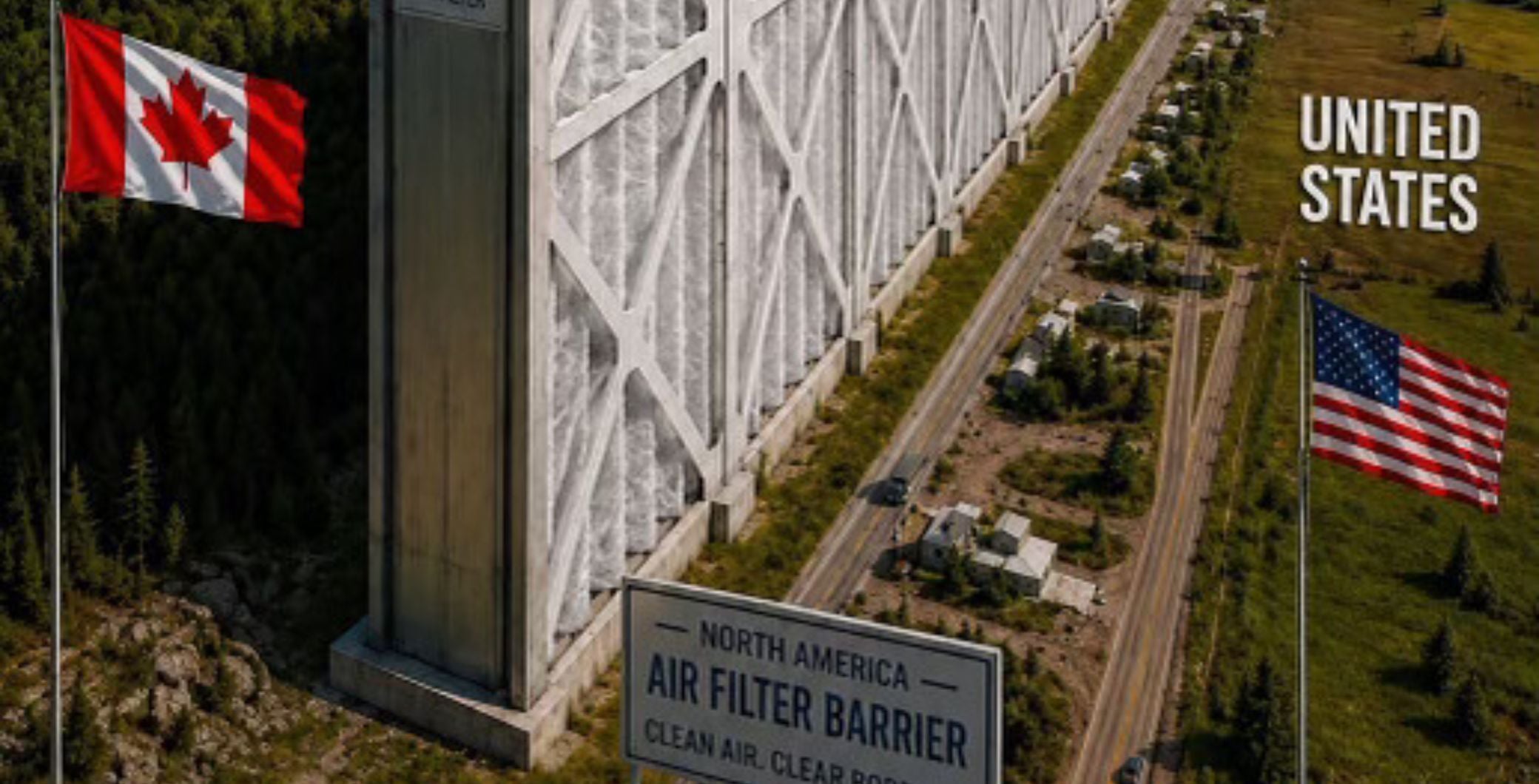
- Trump shared an AI-generated image depicting an air-filter wall along the Canada-U.S. border with the words “Clean air. Clean borders.”
- There is no indication that the image represents an official proposal to construct such a barrier.
- Trump has blamed Canada for wildfire smoke affecting parts of the United States and has suggested the issue could become part of the countries’ broader trade dispute.
- His administration has separately announced 50 per cent tariffs on nearly $20 billion in Canadian products, scheduled to take effect Aug. 19 unless an agreement is reached.
- Prime Minister Mark Carney says Canada is prepared to respond if the tariffs take effect.
U.S. President Donald Trump has escalated his rhetoric against Canada by sharing an AI-generated image of a wall apparently designed to block wildfire smoke from crossing the border.
The image, posted Saturday, depicts a massive air-filtration barrier beneath a sign reading, “Clean air. Clean borders.”
The post comes amid worsening Canada-U.S. tensions over trade and wildfire smoke, but there is no indication that the image represents a formal construction proposal or government policy.
The post followed remarks in which Trump threatened economic action over Canadian wildfire smoke. His administration has separately announced 50 per cent tariffs targeting a range of Canadian products over broader trade grievances.
“We’re going to put a big tariff on Canada because of the smoke,” Trump said Friday. “I’ve told Canada they have to do something about it. We’ve never had this problem. All of a sudden, we have this problem with Canada.”
Reuters reported that the new tariffs were announced July 20 and are expected to apply to nearly $20 billion in Canadian goods, while AP reported an Aug. 19 effective date.
Once the day comes, tariffs will take effect, leaving the Carney government under pressure to secure an agreement with the U.S. or decide how Canada will respond to Trump’s tariffs.
Smoke does not stop at the border
Smoke also travels from U.S. wildfires into Canada. British Columbia recently faced air-quality warnings linked to fires in Washington and Oregon, demonstrating that cross-border smoke moves in both directions.
Wildfire smoke has become an increasingly common cross-border issue in recent summers, with smoke from Canadian and U.S. fires regularly affecting air quality on both sides of the border.
Public health officials in both countries have repeatedly issued air quality advisories as changing weather patterns and more intense wildfire seasons have led to smoke travelling hundreds or even thousands of kilometres.
Trump’s latest comments add a new political dimension to an environmental issue that has largely been treated as a shared challenge between Canada and the United States.
With fresh tariffs expected to take effect on Aug. 19 unless the two countries reach an agreement, his remarks are likely to further strain an already tense relationship between Ottawa and Washington.


