The Lost Dhow: A Discovery From The Maritime Silk Route at the Aga Khan Museum (77 Wynford), to April 26. $20, stu/srs $15. 416-646-4677. Rating: NNNN
The Java Sea near Indonesia’s Belitung Island, site of the recent AirAsia crash, was a dangerous place for travellers 1,200 years ago as well.
Discovered in 1998 off Belitung was the wreck of a ninth-century Arab trading ship containing over 50,000 artifacts. Their restorer and owner, Singapore’s Asian Civilization Museum, has collaborated with the recently opened Aga Khan Museum on this show, which vividly illustrates the Abbasid Caliphate’s flourishing trade with Tang dynasty China at a time when Europe was a backwater.
David Graeber, in Debt: The First 5,000 Years, his fascinating economic history of the world, devotes a chapter to the unique role played by medieval Muslim merchants who sailed the Indian Ocean. Islam’s prohibition against usury fostered a system of exchange based on honour and trust that operated largely independent of governments, creating what Graeber calls the first free market. Merchants served as community leaders and peaceful heroes.
The sunken dhow was probably launched from Basra and carried Chinese ceramics, many – like a large dragon-crested ewer with a splashed orange and green glaze – designed to appeal to the Middle Eastern market. Curator John Vollmer has selected bowls from the tens of thousands found, all iron-glazed with quickly made, modern-looking brush drawings in Chinese floral, bird or cloud patterns. One vitrine displays unusual examples ornamented with poems or a portrait of a curly-haired, bearded Westerner.
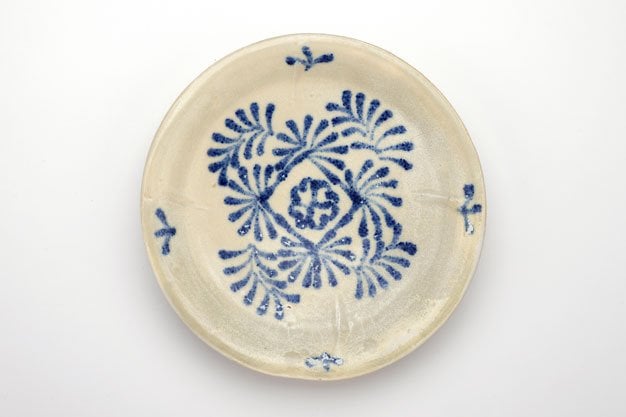
Two dishes bear primitive Chinese experiments with cobalt blue glaze, a substance imported from Iran that would eventually become a trademark of Chinese ceramics. A set of high-fired, elegantly thin white stoneware was destined for the luxury market. Giant barrel-shaped clay jars functioned as shipping containers for nested bowls.
There are precious metal artifacts, plus humble personal items indicating the crew may have included Malaysian, Arab and Chinese sailors.
Beyond the aesthetics of the individual objects, the appeal of the show is its evocation of a faraway time, a little-known era of early cultural exchange.
art@nowtoronto.com