Twenty-five-year-old Chappell Roan is a rising star.
Born Kayleigh Rose Amstutz, the singer based her stage name on her late grandfather’s name, Dennis K. Chappell, and his favourite song, “The Strawberry Roan”. Though she only released her debut album The Rise and Fall of a Midwest Princess, on Sept. 22, Amstutz has been releasing music for years, with tracks like “Piny Pony Club,” and “Red Wine Supernova,” becoming instant classics within queer spaces.
Queer & Now had the chance to speak with the “Midwest Princess” in a virtual interview ahead of her Toronto concert on Oct. 11. She dished about the new album and her rise as a queer icon, before spilling some secrets about a few fan favourite tracks.
“Canada’s always kind of like a mixed bag with what you’re gonna get audience-wise. Just because like, you know, the politeness. Like, obviously, I don’t make very polite music,” she laughed.
And she’s not wrong. With lyrics like “I heard you like magic, I’ve got a wand and a rabbit,” and “Baby do you like this beat? I made it so you’d sleep with me,” her songs are not for the prudish. But they are for the queer community, who savour her work about sapphic love, identity, and heartbreak.
She is just as relatable as she seems online. Her favourite queer anthem? Demi Lovato’s “Cool for the Summer,” and her favourite queer icon has recently recognized her talent himself.
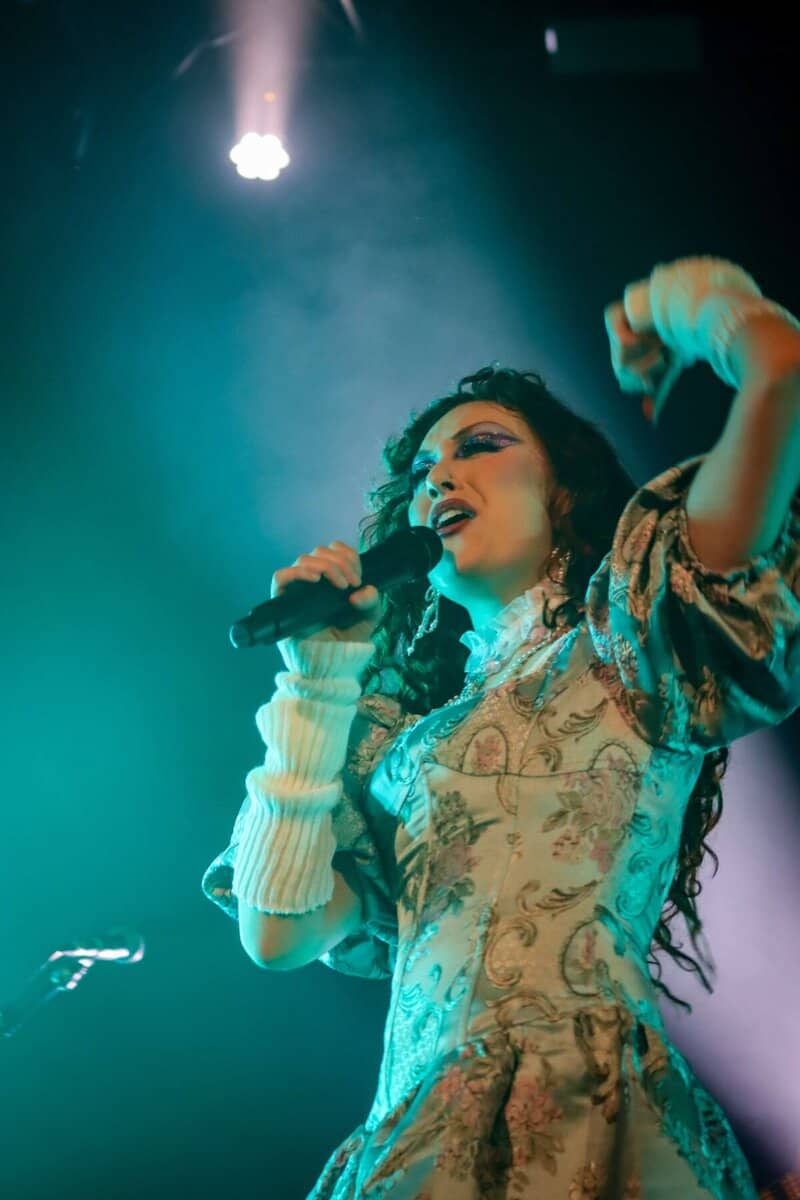
“I talked to Elton John a couple of weeks ago, and that was crazy. He’s such an OG, it was just very inspiring,” Amstutz told Queer & Now. Not long after our conversation, Amstutz’s song “Femininomenon” was featured on John’s Rocket Hour Apple Music radio show.
She also shared an exclusive tidbit of information about some of her most popular songs, and it may be relatable for the queer ladies in the room.
“Well ‘Naked in Manhattan,’ and ‘Red Wine Supernova,’ were written about the same girl, and [she] was the first girl that I ever went on a date with,” she laughed. But wait, it gets better.
“We never even kissed or anything, we just went on a date and that’s what inspired the songs. It was so crazy, it was very, like, inspiring,” she continued, adding that she wrote five songs about the one girl, whom she only saw once or twice.
CHAPPELL ROAN: A QUEER ICON IN THE MAKING
With a voice that at times is reminiscent of Lana Del Ray in its sultry tones, the crowd of hundreds of fans swayed back and forth in the Toronto Opera House during the Chappell Roan concert, as she sang ballads like “California”, “Casual,” and “Coffee.” But they also danced along to her choreography for “HOT TO GO,” a track that shows a side of Amstutz’s voice that is uniquely hers.
While songs like “Naked in Manhattan,” and “Red Wine Supernova,” focus on her experiences as a queer woman, she’s been open about growing up in the thick of the American Bible Belt, living in conservative Willard, Missouri, until she was 17.
“It was just a lot of denial, and the way that I saw queer people back then was very ‘us’ and ‘them,’” Amstutz shared.
“Just very like, ‘They’re living like, a life of sin, but I still love them. I just don’t agree with it.’ Like that vibe was kind of the consensus of queer culture,” she continued, adding that growing up she only knew a few people who were out as queer, and they suffered from a lot of bullying.
Although she came out at 22, Amstutz shared that she first considered she was queer in the seventh grade.
“I was like, ‘No boys like me. So, that must mean I’m a lesbian,’ I don’t know why that was the thing. But that was the little seed that was planted,” she laughed, before sharing that she’d had an experience similar to many young people. She fell in love with her best friend.
“Looking back I was obsessed with one girl, my best friend. I just loved her so much [and] just wanted to be with her all the time. I didn’t ever really feel that way about anyone else, like boys.”
But she repressed this part of her identity, laughing it off and making light of her feelings. It wasn’t until she was 22 and living in Los Angeles that Amstutz was able to come out as queer.
“Just like wearing a t-shirt that said queer on it was like a big thing,” she explained, saying that coming out was a gradual process.
“I think L.A. and West Hollywood allowed me to explore that [part of my identity] because there were just so many queer people around me that were very expressive with their clothing and their hair, and they’re openly holding hands,” she continued, adding that she had finally found a safe place for her to be open about her identity.
THE MIDWEST PRINCESS AND HER QUEENS
Amstutz is on tour during a contentious time for 2SLGBTQ+ rights in the United States, as legislation putting restrictions on drag performances is being rolled out in some places. For instance, laws in Tennessee, where Amstutz spoke to us from, prohibit drag performances in public, or in spaces where they can be viewed by people under 18.
“The laws make no sense, and that is [done] on purpose. Like, it’s very vague and what it really is, is an attack on trans people,” she said.
“It’s just like if you were born male, you need to dress male or else you’re gonna get fined. Or it varies by like consequence,” she continued, explaining that for example, in Tennessee, she had to restrict her shows to 18+ audience members.
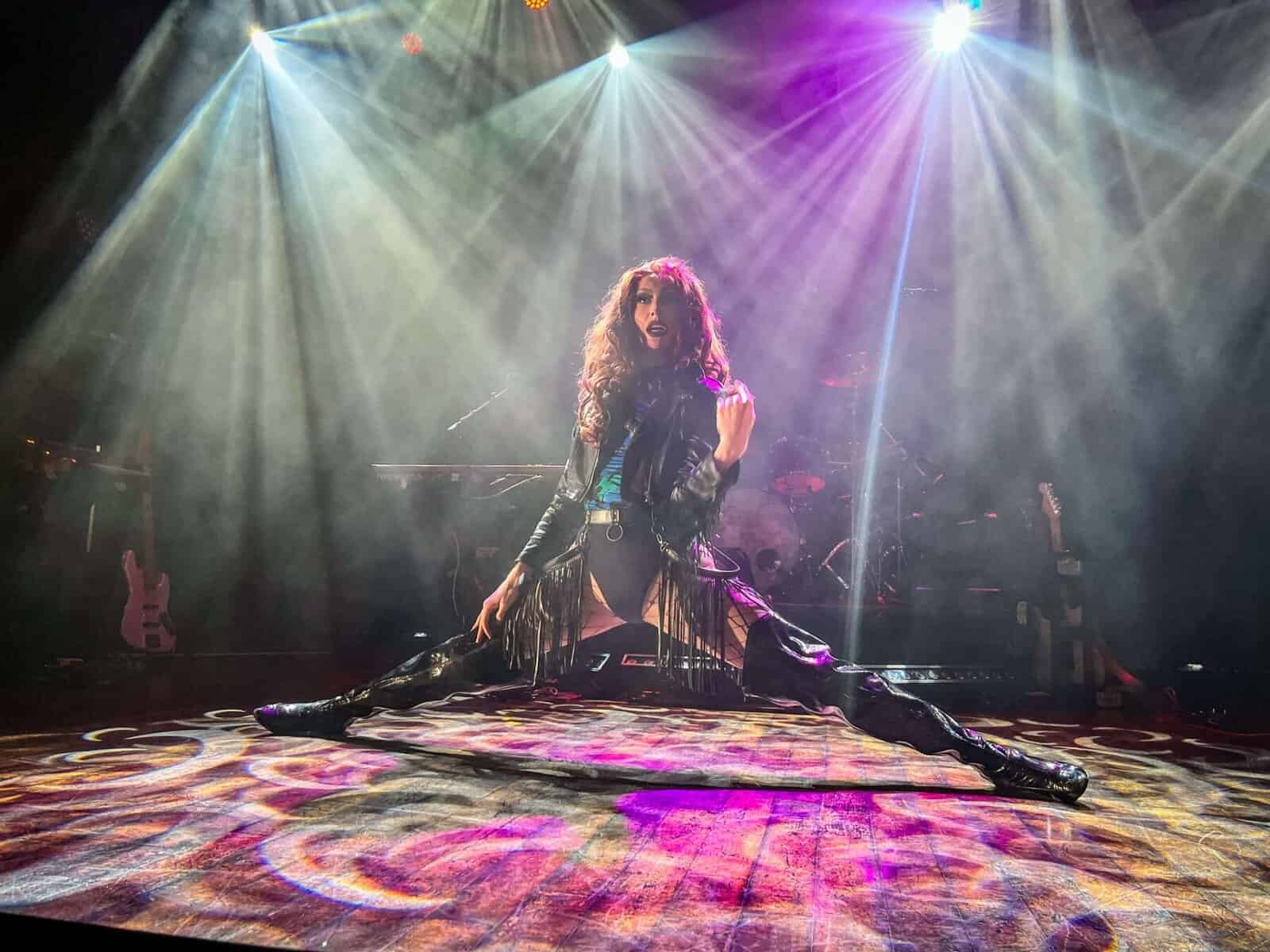
Amstutz’s shows are opened by local drag queens, whom she hires in each city she performs in. Outside of her shows, the American artist supports the community by donating a portion of ticket sales to For The Gworls, a Black, trans-led collective that fundraises to help Black transgender people pay for expenses like rent, gender-affirming surgeries, co-pays for medications and appointments, and travel.
“I literally have a show tomorrow night with drag queens opening and it just has to be 18+, because of the narrative that drag queens are over sexualizing and like grooming children, which doesn’t make sense,” Amstutz continued.
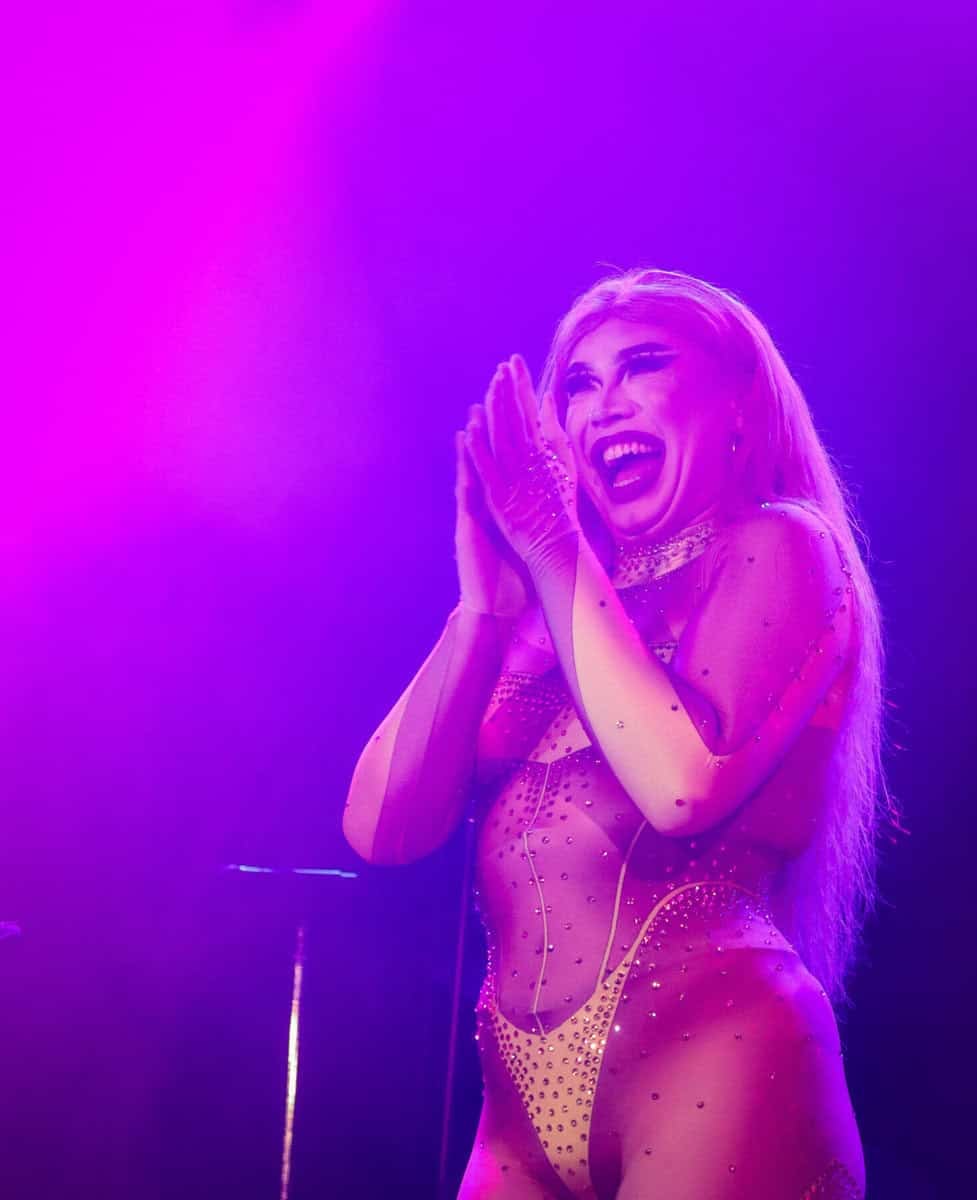
“What’s so sad is I think drag is the funnest, most beautiful thing I’ve ever seen. It just breaks my heart that young people are not able to see it. But yeah, I still have queens open for me. I don’t give a f**k.”
Restrictions like these are particularly hard for artists like Amstutz, who are known for curating spaces for members of the queer community to be themselves. Her shows are full of empowering songs about queer experiences and moments where addresses the crowd and delivers affirming speeches. She also hosts ticket scholarships, so those who can’t afford to attend her shows can still access these queer spaces.
“It sucks because there’s like a lot of people who are under 18 that are fans and really need this queer safe space that can’t be here.”
While in many states queer youth are unable to attend her shows before they turn 18, Amstutz shared a message for anyone at a transitional point in their life, whether they’re coming out, transitioning, or whatever that looks like.
“Just be gentle with yourself, this isn’t like a straight line, no pun intended. But literally it’s not. It doesn’t look like everyone else’s necessarily. I kind of came out to myself in waves, and it took many years to get there and have like an unwinding of all of the homophobic thoughts,” Amstutz said.
“It’s not all going to make sense right now, but it will one day.”