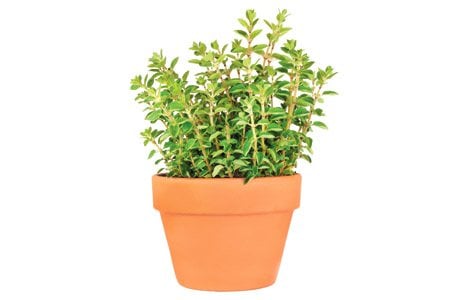
Q: Is wild oregano sustainably harvested?
[rssbreak]
A: If my Greek grandmother were alive to see oregano flying off the shelves as a popular cure-all, she’d be one proud yaya (that’s nana to you).
Over the last five to 10 years, oregano oil has become one of the hottest cold and flu remedies in the country. I should get a cut of sales, since I’ve forced droppers of the potent stuff down the throats of many a sniffly colleague and friend.
But one thing that’s always bugged me about the concentrated antiviral/antibacterial/antifungal/antiparasitic kid wonder is that pretty much all its producers claim to use wild versions of the Mediterranean herb.
Sure, there’s a hell of a lot of oregano growing wild in that region, but what happens when the Western world decides it wants a lot of it that particularly potent variety. (Proponents say the wild kind is hardier and thereby more powerful, though farmed oregano users say theirs is more consistent.)
The vast majority of oregano oil manufacturers source it from the mountains of Turkey. It doesn’t take much sniffing around to discover that Turkey has a bit of an overharvesting problem. One 2009 report by the United Nations University on medicinal plant harvesting in a Turkish national park concluded, “There is an urgent need for regulating and/or controlling the wild collection of the [oregano] species traded at the international level.”
It noted that one popular species, Origanum minutiflorum, is one of the top 50 most threatened medicinal and aromatic plants in Turkey thanks to the intensity of collection.
Another report, from Anadolu University in Turkey, noted that poorly educated collectors looking to earn some cash are ravaging wild perennial stocks by harvesting by hand (rather than using sharp tools) and as a result are damaging or yanking out the roots unnecessarily.
An even bigger problem is harvesting wild oregano when it’s too young. Buying an oregano oil with a high guaranteed carvacrol content (one of the important medicinal components in oregano oil) should seriously minimize this problem, since young plants don’t produce as much carvacrol.
Not that all harvesting is problematic. There is sustainable wild-crafting going on, too, and some mountain villages have been policing their own practices by starting oregano co-ops.
The question is, does your brand of choice have a sustainability policy in place to safeguard wild meadows? After speaking to several companies, it’s clear many are fuzzy on how the herbs are harvested in Turkey and can offer few details or green assurances.
Oregano oil’s pioneering blue-labelled brand, North American Herb and Spice (marketed as Oreganol P73), says it actually owns land in Turkey and has conservation programs in place mandating how much villagers can pick. “We pay them more to pick less,” say company reps.
Pure-Le goes against the grain and chooses not to get its oregano from the wild and instead cultivates it in fields without pesticides or herbicides.
Hedd Wyn and Joy of the Mountains both use certified organic wild oregano and organic olive oil. Now, “wild” and “certified organic” don’t often go hand in hand, but Ecocert, the certifier in Turkey, makes sure all wild-crafting practices are sustainable, say both brands.
All peachy green. The only little problemo is that Joy of the Mountains’ line is considered weaker by health store insiders.
This leads us to another area of public confusion. How do you know how strong a product is? You’ve probably noted carvacrol percentages listed on many brands. Some put this front and centre (e.g., 75 per cent carvacrol), but that doesn’t mean your bottle contains 75 per cent of the stuff. (That would burn like hell.) In Joy of the Mountains’ case, the bottle is actually 75 per cent organic olive oil and 25 per cent wild oregano oil with a minimum potency of 75 per cent carvacrol.
That oregano-to-olive-oil proportion is often expressed as a ratio (many labels tell you the product is 1:3 olive oil, or as high as 1:1 on some St. Francis bottles), but companies don’t always tell you how high the carvacrol content is. Holy confusing!
Pure-Le considers this misleading advertising and is a little more direct. Its bottles contain a grand total of 20 per cent (or in the case of their super-strength 40 per cent) of the active ingredient.
Top dog Oreganol P73 doesn’t disclose its proportions but says its oregano’s 62 to 83 per cent carvacrol is only part of a blend of natural phenols that makes its oil effective.
What I can say with absolute certainty is that decoding this issue is enough to congest any cold- or flu-clouded brain.
Got a question?
Send your green queries to ecoholic@nowtoronto.com