What to know
- New York City plans to invest $70 million in five municipal grocery stores offering a core basket of essential foods at prices 30 per cent below typical retail levels.
- Toronto City Council approved a framework for four municipally operated, not-for-profit grocery stores, with one proposed for each Community Council district.
- Toronto’s plan does not yet include confirmed locations, funding, prices or opening dates, and staff are expected to return with a strategy in the second quarter of 2027.
- Food researcher Sylvain Charlebois says the stores could help the neighbourhoods they serve but would have a minimal effect on affordability across Toronto without reliable subsidies and a broader strategy.
New York City has kicked off with a price discount target and opening date on its municipal grocery-store plan. And while Toronto has approved a similar pilot, residents may have to wait until 2027 to learn how it would work, how much it would cost and when the stores could open.
New York City Mayor Zohran Mamdani announced Monday that the city will invest $70 million in five municipal grocery stores, with one planned for each borough.
Under the proposal, a core basket containing all fresh produce, meat and seafood, along with roughly 20 categories of pantry, dairy and refrigerated products, would be priced 30 per cent below typical retail prices. The discount would be available to all shoppers, regardless of income.
New York projects the plan could lower shoppers’ overall grocery bills by an average of 15 per cent, amounting to approximately $90 in monthly savings or $1,000 per year.
The first store is expected to open in Hunts Point in the Bronx by the end of 2027, with all five planned to open by 2029. Although the city will establish the stores’ affordability and operating standards, experienced private companies will be selected to manage their daily operations.
Meanwhile, Toronto has already placed its own municipal grocery-store plan on the table.
What has Toronto approved?
In March, Toronto City Council approved a pilot framework to establish four municipally operated, not-for-profit grocery stores, with one proposed for each Community Council district.
The pilot would prioritize lower-income neighbourhoods with limited access to full-service grocery stores. The City could also provide financial support through potential waivers of property taxes, development charges and other fees.
Toronto is considering pooling purchases across municipal food programs—including school food programs, seniors’ residences and other City services—to secure lower prices. The framework also prioritizes buying from local and regional food producers.
However, the adopted motion does not specify potential locations, a budget, target prices or opening dates.
City staff have been directed to return to council in the second quarter of 2027 with a strategy for establishing the stores and addressing food security. That work will examine different operating models led by the City or in partnership with nonprofit organizations, along with potential financial support from the provincial and federal governments.
The original motion, introduced by Coun. Anthony Perruzza and seconded by Coun. Mike Colle, requested an implementation report by April 22, 2026. Mayor Olivia Chow successfully moved to replace that deadline with the broader 2027 strategy.
Read More
- ‘Too many Torontonians are turning to food banks,’ This councillor is proposing city-run grocery stores to tackle food insecurity
- ‘Food should not be a privilege,’ Community centre backs Toronto’s city-run grocery stores plan
- ‘Craziest idea I’ve ever heard,’ Doug Ford slams Toronto’s city-run grocery store plan
In a statement to Now Toronto, a spokesperson for Mayor Olivia Chow’s office cautioned against drawing a direct comparison between the two cities.
“I want to start by making it clear that the NYC government operates very differently from the City of Toronto’s municipal government. They have different structures and mechanisms available to them that we do not have,” the spokesperson said.
The mayor’s office said Toronto’s direction remains focused on developing a broader vision and strategy for municipally operated grocery stores and other food-affordability measures.
Staff will also examine different operating models, including a City-run not-for-profit model and partnerships with nonprofit organizations. The review will consider purchasing strategies to reduce costs, opportunities to support local and regional producers and potential assistance from other levels of government.
Staff are expected to report back to council in the second quarter of 2027. The original motion requested an implementation report in April 2026, but an amendment from Chow replaced that deadline with the broader 2027 strategy.
Could the stores meaningfully lower prices?
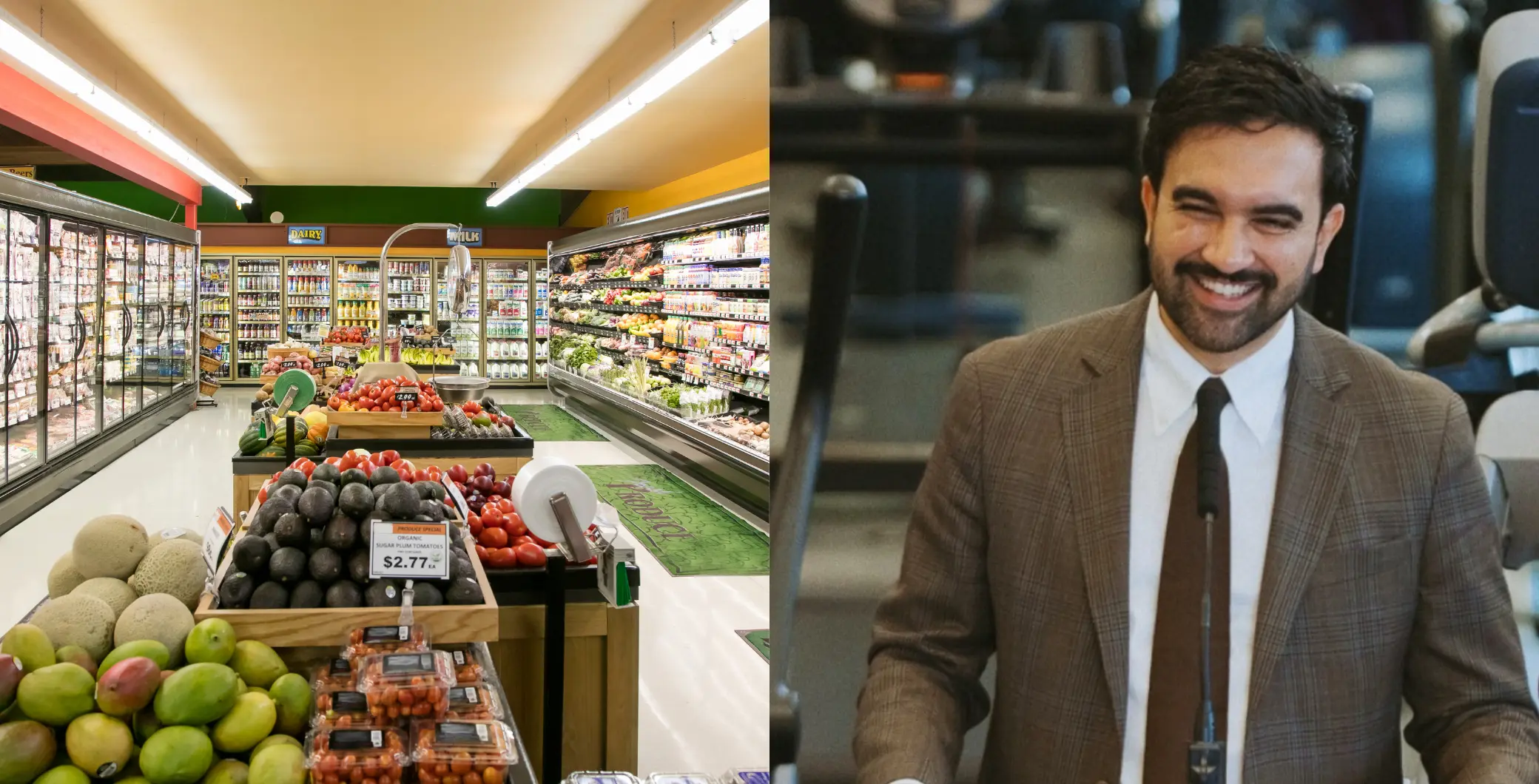
Sylvain Charlebois, a professor and director of the Agri-Food Analytics Lab at Dalhousie University, says municipal grocery stores could improve local food access, but cautions against treating them as a citywide solution.
“My initial reaction was cautious skepticism: municipal grocery stores may improve access in underserved neighbourhoods, but they are unlikely to solve food affordability at scale,” Charlebois told Now Toronto.
He says New York could price a limited group of essentials 30 per cent below market rates through subsidies, bulk purchasing and loss-leader pricing, but the stores would likely be unable to maintain those prices without continued support.
“Sustaining $90 in monthly savings would require reliable public funding, efficient procurement, sufficient sales volume and tight control over labour, logistics and food waste,” he explained.
Charlebois believes Toronto should move forward cautiously and be transparent about the actual public cost of running each location.
“Toronto should proceed only with a carefully measured pilot that discloses the full taxpayer cost per customer and does not pretend that four stores constitute a citywide affordability strategy,” he said.
Property-tax and development-charge waivers would reduce some overhead costs, he added, while combining purchases across City programs could make greater savings if the overall order volume is large enough.
Still, four stores would face significant disadvantages in distribution, technology, inventory management, supplier relationships and purchasing power when compared with Canada’s established grocery chains.
“Four stores could make a difference in the neighbourhoods they serve, but their direct effect on grocery affordability across Toronto would be minimal,” Charlebois said.
There could also be consequences for smaller retailers. Publicly subsidized stores may unintentionally take customers away from independent grocers and community food co-operatives unless the City includes them as partners.
Charlebois believes the 2027 reporting timeline is reasonable if Toronto uses that time to determine the required subsidies, governance structure, locations, procurement model and performance measurements. The City should also establish clear conditions for expanding, or ending, the pilot.
Even if Toronto proceeds, he says municipal stores should not be treated as the only response to food insecurity.
“Toronto could achieve broader results through targeted income supports, better transit access, incentives for independent grocers, expanded food-benefit programs and measures that encourage greater retail competition,” he said.