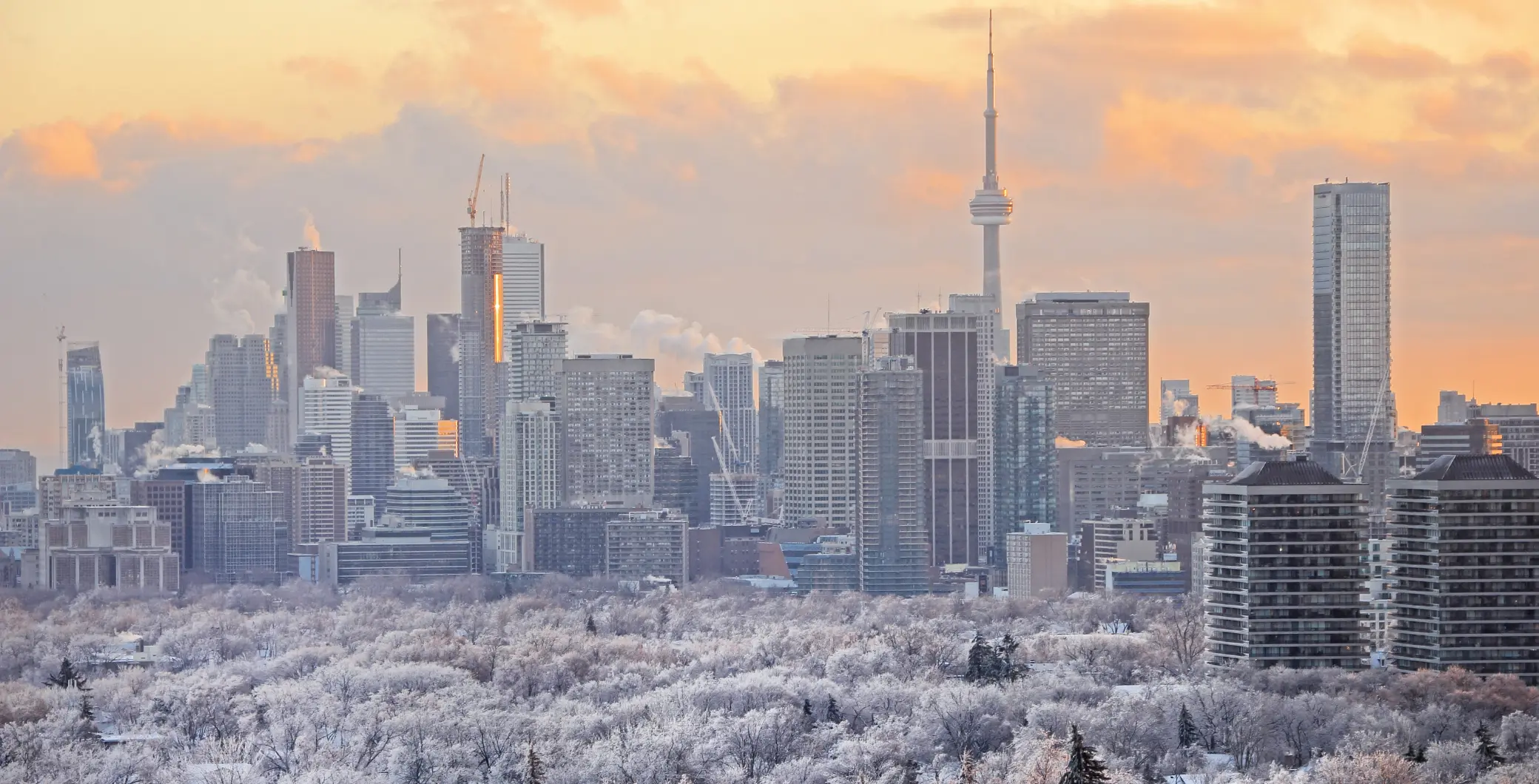
Following a historic winter marked by heavy snowfall and extreme cold events in Toronto, Environment and Climate Change Canada is forecasting a potentially record-breaking El Nino this year with warm temperatures and drier conditions.
Marko Markovic, a physical scientist with Environment and Climate Change Canada, tells Now Toronto there is a high probability of a very strong El Nino developing this fall and continuing into spring 2027.
El Nino is a natural climate phenomenon that occurs when unusually warm water accumulates in the central and eastern Pacific Ocean, according to Markovic. It typically occurs every three to five years and can influence weather patterns around the world.
Markovic said the current forecast is calling for sea surface temperatures in the central Pacific to reach more than three degrees above the long-term average. If that happens, it would be an exceptionally strong event.
“We never had a three-degree El Niño,” Markovic said, explaining why the term “super El Nino” is being used to describe the potential event.
However, he stressed that the forecast is still based on probabilities because it is looking several months into the future.
What could it mean for Toronto?
While the strongest effects of El Nino are generally seen in Western Canada during the summer and fall, Central and Eastern Canada, including Toronto, tend to see more of its influence during the winter and spring according to Markovic.
Historically, El Nino has been associated with warmer and drier conditions in the Toronto region. Environment Canada’s current seasonal forecast is already calling for above-normal temperatures across southern Ontario for September, October and November.
If the strong El Nino forecast holds, Toronto could also see less snow during the winter, including a shorter snow season and more precipitation falling as rain rather than snow.
“Normally, we do have a shorter snowing season. The season starts later, it finishes earlier,” Markvovic said.
He also said warmer conditions can lead to more rain falling on existing snow.
Should Canadians be concerned?
Despite the “super El Nino” label making the rounds online, Markovic said there is no reason for widespread concern at this point.
He noted that it is still too early to know whether the event will contribute to extreme weather in Canada. Environment Canada’s forecasts this far into the future focus on broader seasonal patterns rather than individual extreme weather events, meaning specific storms and other extremes cannot be reliably predicted months in advance.
For now, the main expectation for Toronto is a potentially warmer and drier winter and spring, with the possibility of less snow and a shorter snow season if the strong El Nino forecast develops as expected.