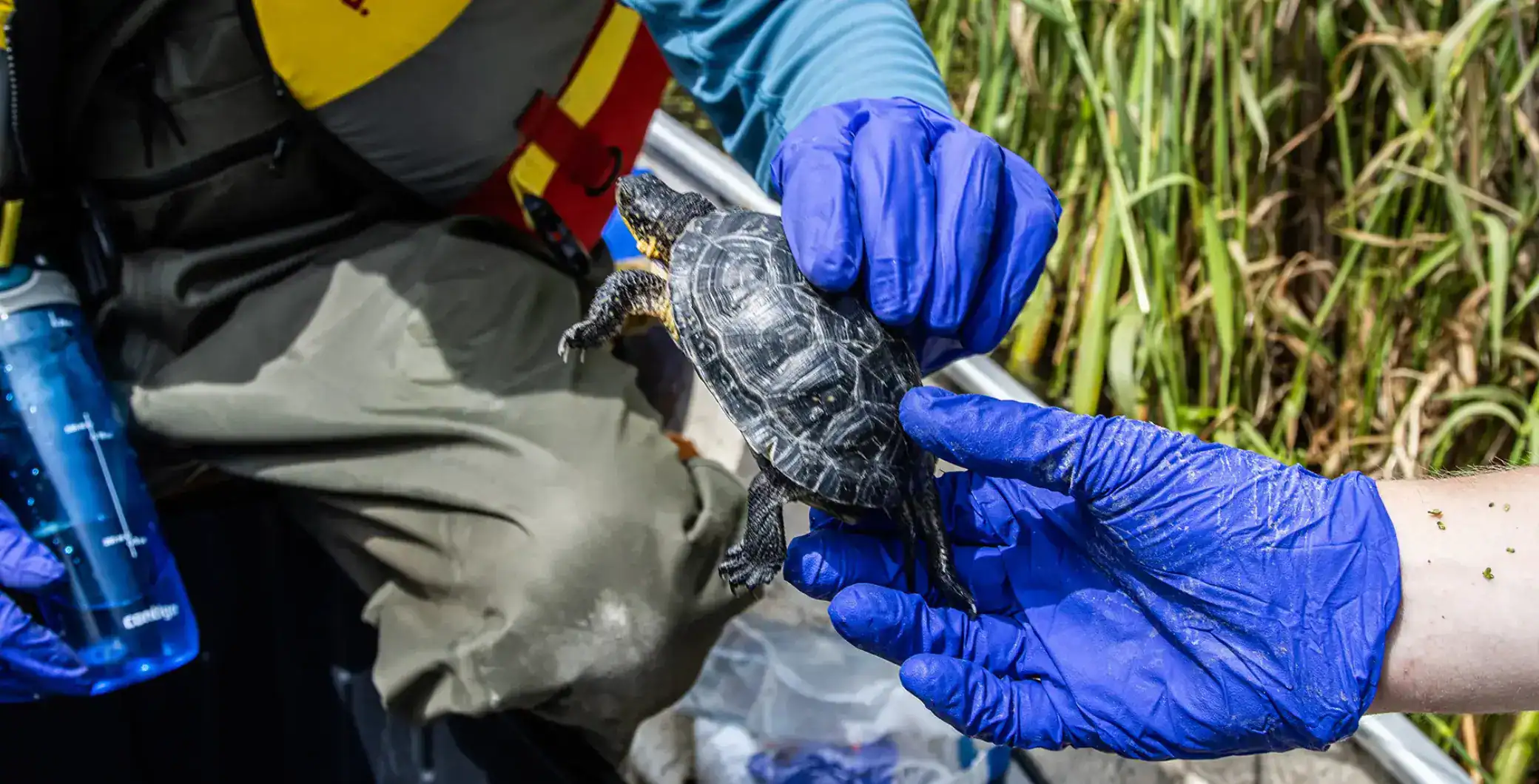
The Toronto Zoo has released 52 Blanding’s turtles into the Rouge National Urban Park, as part of a program that aims to conserve endangered species in the Greater Toronto Area.
On Thursday, the zoo announced it had released the turtles over the week, reaching a total of 800 turtles being released into the park over the last 12 years.
The initiative is part of the Blanding’s Turtle Headstarting and Reintroduction Program led by Toronto Zoo’s Adopt-a-Pond Wetland Conservation Program along with Parks Canada to help Ontario species that are under threat of extinction or habitat loss to recover and survive, according to a statement.
@nowtoronto @thetorontozoo has released 52 Blanding’s turtles into the #RougeNationalUrbanPark, as part of a program that aims to help #Ontario species that are under threat of extinction or habitat loss to recover and survive. 🐢 #nature ♬ original sound – Now Toronto
“We’ve done the research, we’ve done the homework, we’ve developed the systems and protocols to now have released over 800 individuals in the Rouge. And you know, we’ve got more work to do, but really excited about the prospect of re-establishing this population so it’s thriving right here in Toronto,” Toronto Zoo CEO Dolf DeJong told Now Toronto.
Forty-one of the 52 released turtles have also been made available for adoption and naming under the zoo’s Wildlife Conservancy’s Adopt an Animal program.
When adopting an animal under the program, rather than taking them home, adopters can name their chosen animal and make a donation from $50 – $250 to the zoo and receive adorable gifts of appreciation that vary depending on the donation level.
Donations are used for purchasing equipment for the program and supporting efforts to protect endangered species.
“[Adopters] get to name that individual who’s going to live potentially up to 80 or 100 years, and then they are released, and they receive a certificate of adoption. So, folks who make that donation, take that step, have actually helped us re-establish this wild population of the Rouge, and it’s an incredible gesture,” DeJong added.
This year, two turtles have been named after two Canadian athletes, including Olympic swimming champion Summer McIntosh and NBA’s 2024-2025 Most Valuable Player Shai Gilgeous-Alexander.
Blanding’s turtles are medium-sized animals that can reach 27 centimetres long. They typically have a black to brown shell with yellow flecks and streaks and bright yellow throats and chins. Blanding’s usually have wider, flatter shells than other turtles in the region, resembling army helmets.
These turtles have long-lived in the Rouge River watershed area, which has suffered drastic changes over the last 200 years. Due to changes in their environment, they have been declared federally endangered species, with less than 10 adult turtles being found in the area, now known as Rouge National Urban Park, since the 1990s.
The program works to eventually restore a regular turtle population in the habitat, without needing the zoo’s interference. The zoo says it will likely take a minimum of another eight years to get to that point, with this year marking its 12th anniversary.
HOW DOES IT WORK?
To protect the species, the Blanding’s Turtle Headstarting and Reintroduction Program collects eggs from the Ontario turtle populations every June and incubates them for two months to keep them safe from predators.
After being born, the tiny turtles spend a year at the Americas Pavilion, where guests can visit them. The turtles are then moved to the Wildlife Health and Science Centre after their first birthday to swim and catch some UV lights.
Upon reaching two years old, the turtles move to outdoor spaces where they can get used to sounds, weather changes, sights, preparing for their release back into the wild. After that, they are released into different locations, which are kept secret to reduce risks of poaching.
With the goal of obtaining information about the species’ survival, growth rates and other environmental factors, scientists also attach small radio transmitters into some of the turtles’ shells.
By monitoring them, scientists are able to help land managers restore the environment so that aquatic animals can better survive.