What to know
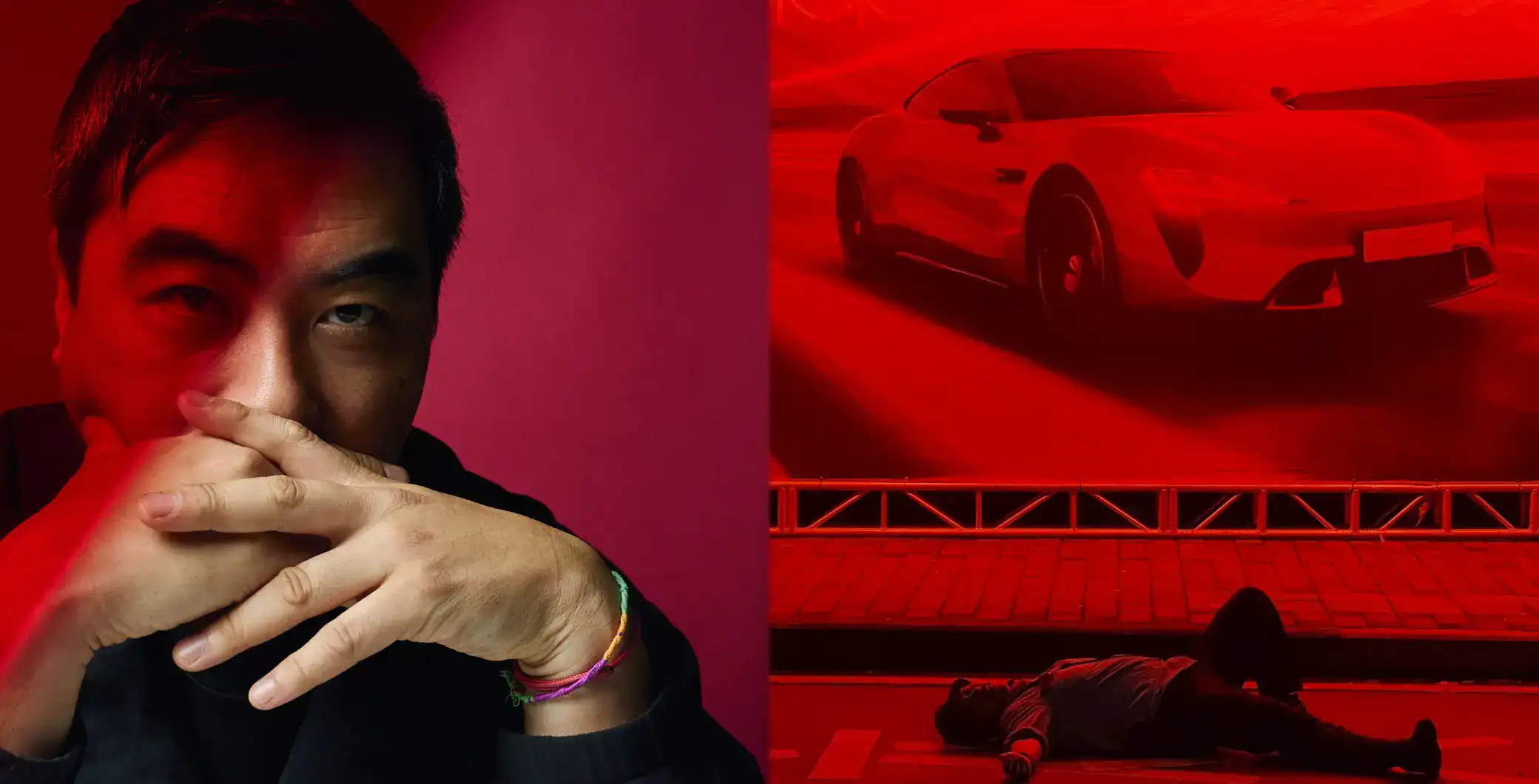
- Award-winning filmmaker Yung Chang will premiere his first narrative film, The Highway, at TIFF on Sept. 10 as part of the Short Cuts Programme 01.
- The 15-minute psychological horror follows a businesswoman who encounters a hit-and-run victim on a highway in Chongqing, China, an experience inspired by Chang’s own encounter with a dead body on the same region in 2012.
- Chang, whose renowned documentaries include Up the Yangtze and Wuhan Wuhan, said the film allowed him to explore the subconscious impact of the disturbing experience and themes of responsibility and unanswered questions.
- The Chinese-Canadian filmmaker said breaking into the Canadian film industry as a person of colour was challenging, particularly when he began his career in the 2000s.
- The Highway is Chang’s third film to screen at TIFF and his first narrative film at the festival, which he described as a significant moment for him as a filmmaker.
Known for his internationally-acclaimed documentaries, awarded filmmaker Yung Chang will premiere his very first narrative film at the Toronto International Film Festival (TIFF) next week, and it promises to be a real-life fever dream.
Psychological horror The Highway is part of TIFF’s Short Cuts Programme 01 premiering on Sept. 10, which includes a lineup of other incredible short-form titles for all tastes, from animation to documentary.
The 15-minute movie follows the story of successful businesswoman Boss Li (played by Lu Huang) who encounters the body of a hit-and-run victim while travelling through Chongqing, China, and becomes haunted by the experience, embarking on a journey to answer questions about the incident.
A real-life fever dream
The narrative story reflects a real-life moment lived by Chang back in 2012, when he encountered a dead body while travelling on that same region.
“The taxi driver told me that this was a common occurrence, that it was a farmer trying to get to the other side of their farmland that’s been divided by this new highway,” he told Now Toronto.
“[That] was a shocking incident that passed quickly as I had to catch my flight, and since then, it’s always been sort of in my subconscious, and I’ve been thinking about it quite a lot.”
More than using the unexpected experience as inspiration, Chang said making the film was also an opportunity to process the subconscious trauma of the encounter which had been living in his mind since then.
The movie is meant to feel like a fever dream or a nightmare that keeps lingering on the audience’s mind, while also exploring deeper themes including responsibility for other’s suffering and the tackling of unanswered questions.
Chang’s first narrative film
The Highway is Chang’s first narrative film, but the filmmaker has been in the industry for almost 30 years.
Growing up in a Chinese-Canadian family, Chang said he has dealt with the pressure to follow a more traditional career path. However, he knew that he wanted to pursue arts from a very young age.
“As a young kid, [my father] would show us movies, old movies, black-and-white movies, his favourite movies… and they really influenced me in a way,” he said.
“Growing up in the ’80s in [Whitby, Ont.] was pretty traumatic for me. I think film was an escape, and I realized there was something that it was doing to me emotionally that I couldn’t find outside in my real life.”
Hoping to reflect his own lived experiences and personal stories through art, Chang graduated in film at Montreal’s Concordia University in 1999. Since then, he has been making impactful films, most of which are documentaries. His works include Up the Yangtze, China Heavyweight, The Fruit Hunters, This Is Not a Movie and Emmy-nominated Wuhan Wuhan.
Although documentaries might seem like his preferred way to tell stories, the filmmaker said he usually lets the story itself dictate what kind of medium would be best to tell it. This time around, he has decided that a short-form narrative story would best convey this psychological horror feeling.
“If the story needs to be told through a documentary, then that’s what I will do. If it needs to be told through scripted storytelling, then that’s what I would do, but I did gravitate towards documentary in the beginning of my career,” he said.
“The actual construction of a short film I love because you get to kind of tell a story where it kind of leaves the climax always kind of leaves you at that moment or that’s the end of the film where you’re hanging on that climax in my opinion, and I love that.”
‘It does require stamina’
Despite being a part in the industry for decades, Chang shared that breaking into film as a person of colour was not always an easy task and came with its unique challenges.
“I graduated in film in 1999, and so at that time I would say things were a lot different. There wasn’t this embrace of being so called ‘hyphenated,’like Chinese-Canadian, that was not really a thing, or pursuing themes related around identity, or being non-white in Canada or America,” he said.
“I couldn’t tell the stories I always wanted to tell…but now I see that younger filmmakers can push through and tell the stories they want to tell.”
Although Chang recognized that exploring such themes in today’s industry has become more common, it still takes a lot of resilience from creators to find and stay true to their voices through their art.
“It’s hard to make it anywhere as an artist. It takes time and perseverance… I think just kind of fighting to create a voice that is unique, trying to find your voice, and being allowed to find that voice, being allowed to fail, being allowed to make mistakes, and that means finding the right people to work with,” he said.
Having graduated in Montreal but experienced working in Los Angeles and taking a theatre course in New York, Chang acknowledged that the U.S. industry remains a hegemony when it comes to film making.
However, the Canadian government offers several supports to help artists break through and help advance the Canadian film industry.
“I think the American film industry… is a hegemony, and we need to fight against that, and we do that through our support system in Canada,” he said.
“We’re very lucky here because there is a large support of the arts. My film was funded by the Canada Council for the Arts, by Ontario Arts Council, by Toronto Arts Council. It was an arts-funded, public-funded film. You cannot do that in America.”
‘Such a big deal’
The Highway is Chang’s second film to appear on TIFF, after documentaries This Is Not a Movie played at the festival in 2019. However, this is the first time the filmmaker will present a narrative story.
“To be able to present it to a local audience, to my family, and to a city that I feel close to, it just means a lot. It means a lot all around. It’s also one of the best film festivals in the world,” he said. “It’s a big deal for me as a filmmaker.”
The psychological horror short will premier on Sept. 10 at the film festival.