The TTC is considering a major change to how riders pay for transit by replacing monthly passes with a fare capping system that automatically cuts off charges after a set number of trips.
If approved, the move would mean that once a customer hits a monthly ride threshold, every additional trip that month would be free.
It’s part of the TTC’s 2026–2028 Ridership Growth Strategy report, which is aimed at getting more people back onto public transit in the coming years.
WHY FARE CAPPING?
Staff say fare capping offers the same predictability as a monthly pass, but without the up-front cost that can be a financial barrier.
“Fare capping provides customers the same price certainty as a monthly pass without the often-substantial barrier of an up-front cost (currently $156 for an adult monthly pass),” the report states.
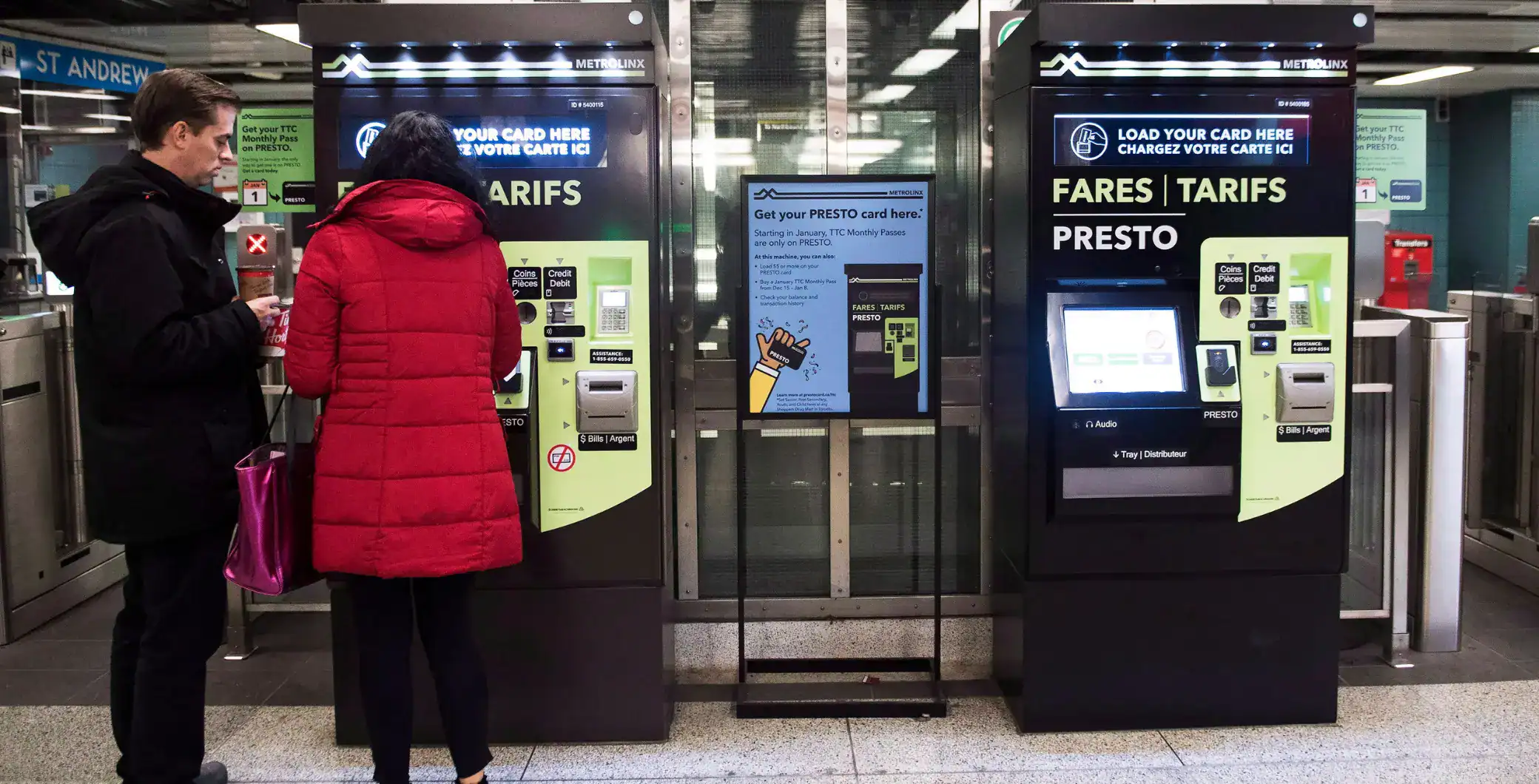
Instead, fares are paid per trip using the same PRESTO card or fare type as before.
“From a rider’s perspective, fare capping is simple to use. Fares are paid using the same fare media as before, and the total amount paid per month is calculated automatically, based on the selected trip rate,” the report explains.
In practice, that means no risk of wasting money on a monthly pass during a light-travel month, and riders are always guaranteed the lowest fare.
“Customers will always receive the best price and will no longer need to worry about overpaying and not using a monthly pass to its full value,” the report continues.
Unlike monthly passes, fare capping would also work with the One Fare Program, which gives free TTC rides when transferring from GO Transit or neighbouring transit agencies.
Read More
“Customers travelling across the Toronto boundary will also be able to take advantage of the One Fare Program … whereas monthly pass users do not currently benefit from One Fare when returning into Toronto or using GO Transit,” the report notes.
WHAT THE NUMBERS LOOK LIKE
The TTC is considering three different caps.
Setting the limit at 47 rides per month would cost the system about $10 million in lost revenue but is expected to boost ridership by 3.6 million trips.
A slightly lower cap of 44 rides is projected to result in a $19-million revenue drop while adding just over seven million rides.
While capping fares at 40 rides would cost the TTC an estimated $35 million in revenue, yet, it is expected to boost ridership by 16.8 million trips — the largest increase of the options on the table.
TTC REACTIONS
The proposal has sparked conversation online, with many riders weighing in on how fare capping could change their commuting habits.
“GO Transit, Guelph Transit, and YRT already have this system and it works great. I love how I can just pay my way to a monthly pass without having to sink $130+ at once into a pass that I may or may not use to its full potential,” a user on Reddit commented.
“Monthly and Day capping have been proposed for a long time, and it’s a superior move since anyone who rides enough is guaranteed to pay the cost of a monthly pass, and anyone who used to buy the monthly pass but didn’t realistically use it enough will save some money,” a user commented.
“I don’t think this will still solve for the lack of people paying. But at least for those who do pay, this could help out,” another person noted.
“This’d be a huge help for people who travel by TTC 3+ times a day and not much help for others, but it’s still appreciated,” a user added.
ADVOCACY WIN
The proposal is also being celebrated by TTCriders, the membership-based advocacy group that has been pushing for fare capping.
In a press release, the organization called the move “a big win for riders.”
“We hear constantly from transit users that they find a monthly pass prohibitively expensive. Oftentimes, people choose not to purchase a pass on the first of the month because they need to pay their rent instead. Fare capping is a big win for riders, but now the Strategic Planning Committee, TTC Board must move quickly from words to action and vote in favour of fare capping with an affordable cap for transit users,” Andrew Pulsifer, executive director,, said in the press release.
TTCriders highlighted the equity benefits of fare capping, particularly for low-income and Fair Pass users, who on average take just nine rides a month yet must pay $123.25 for a pass to break even.
WHAT’S NEXT?
The proposal is still at the staff recommendation stage and will go before the TTC’s Strategic Planning Committee on Sept. 4.
If adopted, it would replace unlimited-ride monthly passes starting with the 2026 budget.