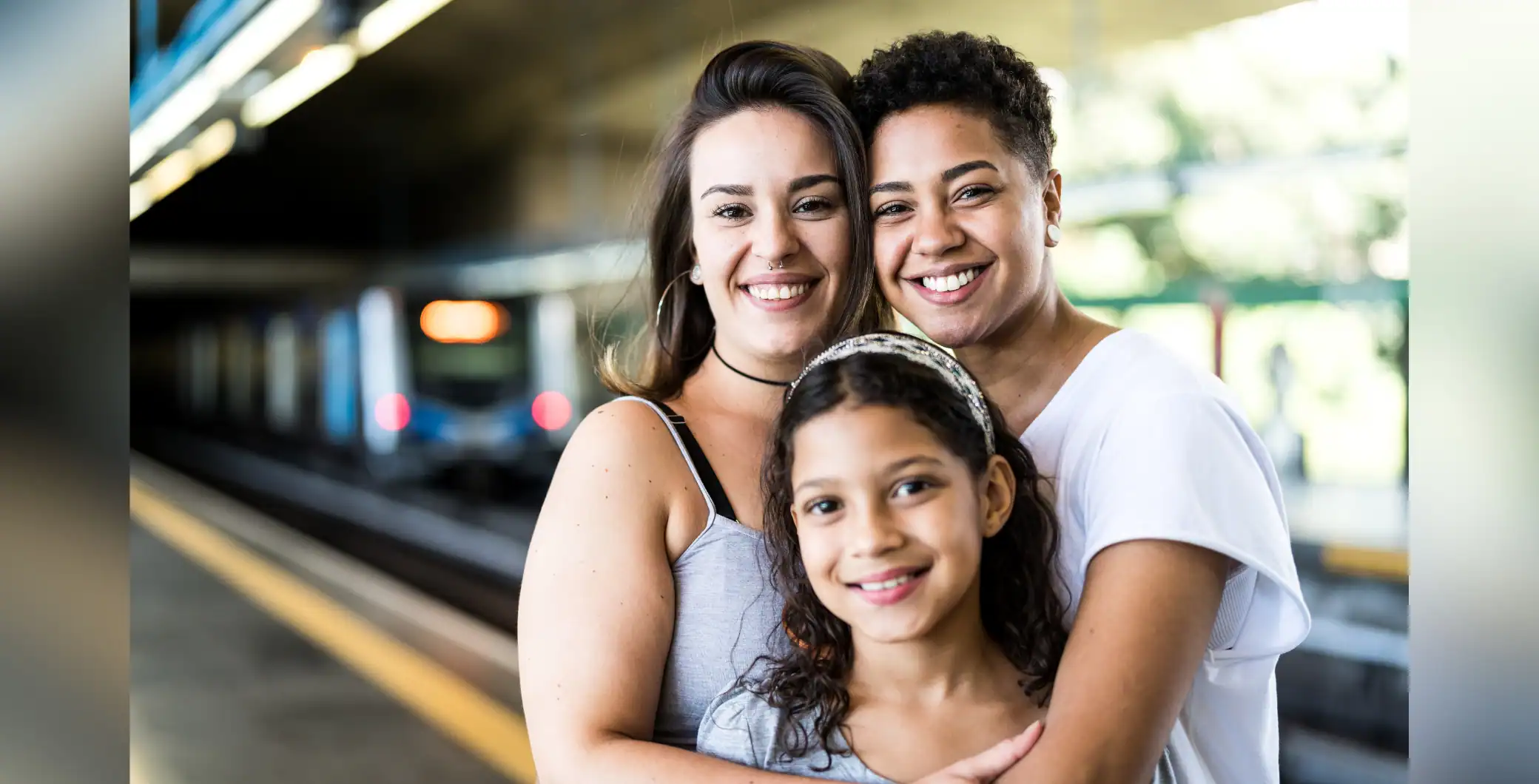
Queer parents in Canada face systemic barriers that don’t affect their non-2SLGBTQ+ counterparts, but there are resources in Toronto to help families overcome them.
Data shows that 1.3 million Canadians are members of the 2SLGBTQ+ community. Nationwide, between 2019 and 2021, there were around 124,700 2SLGBTQ+ parents living with at least one child under 18, Statistics Canada told Queer & Now. That represents about 16 per cent of Canada’s 2SLGBTQ+ population, meanwhile 34 per cent of non-2SLGBTQ+ people in the same age group were living with at least one child.
While it may not always be as straightforward of a process for queer people as it is for their heterosexual counterparts, there are many ways for 2SLGBTQ+ couples to grow their families, including adoption.
In 1995, Ontario became the first Canadian province to allow same-sex couples to adopt a child and by 2011 it had become legal across the nation.
Read More
But it’s not all sunshine and rainbows (pardon the pun) for our community. In 2023, a Canadian survey found that 39 per cent of 2SLGBTQ+ respondents have experienced violence due to homophobia, transphobia, biphobia or other forms of discrimination directed at their sexual orientation, gender identity and/or gender expression in the last five years.
And let’s be honest, the discrimination that 2SLGBTQ+ people face doesn’t magically stop once they become parents. Queer parents face unique, nuanced issues including discrimination due to their identity and a lack of community resources in their journey to parenthood.
However, one Toronto father says he believes things are looking up.
THE MACLEOD FAMILY
Cameron MacLeod and his husband, Vincent, started the process of getting ready to become parents in 2011. The couple joined a program called “Daddies and Papas 2B,” which at the time operated out of The 519 community centre in Toronto and included a series of seminars designed for queer men looking to become parents.
“Back then [most groups] were very focused around those identifying as women becoming parents,” MacLeod told Queer & Now.

The program presented them with information about the different ways to grow their family, including surrogacy and adoption.
“It was really fun to be in a group of other like-minded men who were also interested in this. You know, in any community, but especially in the queer community, we all have different needs and different goals,” the father explained, adding that at the time many of their close friends were not on a path to parenthood.
Read More
They eventually began working with the Children’s Aid Society of Toronto,
“One of the things that we always tell friends when they ask about this is that in working with the Children’s Aid Society, it’s almost like they do try to drive you away because they have to know that you’re going to stick with it,” MacLeod explained. “They want to ensure that adoptive parents will put in the work and will stick around so, you know, they’re not interested in making it easy for you.”
But stick with it they did, and their son Jacob was placed with them in 2016.
“We found out he existed, and then just 12 days later he stayed overnight. Like it was a really rapid process that we went through,” MacLeod explained, adding that they went on to adopt Jacob in 2017.
The family found working with the Children’s Aid Society to be a welcoming experience. Describing the organization as open and progressive, MacLeod says it approaches adoption in a very neutral way, regardless of gender, sexuality and family structure.
“What they really stressed is that for some people, adoption doesn’t click. You know, some people, they want biological children,” MacLeod shared. “And Children’s Aid Society was also very neutral about that. They said, ‘If you want biological children, we can’t help you. But we understand that that can be a goal for some people, and that’s OK,’”
Dr. Laine Zisman, a fertility support practitioner, family building educator, and adjunct assistant professor at the University of Victoria, says adoption is not a one-size-fits-all solution for growing your family.
“Adoption is a great option for many families, but there are barriers that exist and sometimes unexpected challenges for 2SLGBTQ+ people. The cost of adoption can be prohibitively high, the process can be lengthy and emotionally taxing, biases in agency practices sometimes create obstacles, and there is a lack of supports and resources for system navigation,” she explained.
“Ultimately, systemic and financial barriers, alongside a lack of accessible and transparent information can make the process challenging.”
BARRIERS FOR QUEER PARENTS
MacLeod explained that while adoption worked well for them, there were barriers they ran into as a two-dad family, including finding support and community that they could relate to. He explained that most support groups and social activities targeted mothers and babies.
“We were trying to, for example, join Facebook groups of other parents and look for activities, and the most active and useful Facebook group was one that used to actually have mothers in the name… the East Toronto Young Mothers.”
He would also often face questions about where Jacob’s mother was.
“So, a lot of having to come out over and over again,” he explained.
MacLeod says that now, over a decade since his family planning journey began, he is seeing more available support for queer parents and more visibility for queer families.
“It’s much more common to see queer parents. It’s much more common to see gay dads and their kids,” he shared, adding that there are also more programs catered to queer families.
However, he says labels are still a big obstacle that same-sex couples face.
“There’s no reason to make reference to, you know, the gender or the sexuality of the parents when you’re talking about an activity for a toddler,” he explained.
2SLGBTQ+ FAMILY RESOURCES IN TORONTO
The experiences of every queer couple are different, which is why it’s important to have a variety of services available to support their unique needs.
As part of her work providing 2SLGBTQ+ families with resources, Zisman recently published Conceivable, a guide that extends the conversation about family planning to queer communities. The book examines the unique politics, challenges, choices and opportunities involved in 2SLGBTQ+ fertility and family building in Canada.
Additionally, Zisman says in Toronto, there are a plethora of tailored services for 2SLGBTQ+ families. She recommends parents look online for different services in their area.
One available program is called Birthmark, a free monthly fertility support group for 2SLGBTQ+ people which is open to everyone, no matter where they are in their family planning journey.
“We run programming throughout the year, in addition to the support group, and I do one-on-one meetings with folks,” she explained.
In January, Toronto will be home to a free symposium for queer parents and parents-to-be.
“It’s part of our new initiative called Family Building Canada, which is run by community members,” she shared. “It’s an advocacy organization working to improve 2SLGBTQ family building.”
Zisman is also involved with the 2SLGBTQ Family Resources program at Sherbourne Health.
The program offers resources tailored to families in the community, and those trying to grow their families. It does this through a variety of workshops and informational sessions focused on adoption, pregnancy, health, and more. Its goal is to make programs and services more readily available to all members of the 2SLGBTQ+ community.
Nadjib Alamyar is the senior program manager for community programs and capacity-building initiatives at Sherbourne Health. He explained that programs like this are crucial for helping 2SLGBTQ+ families navigate the complex barriers they face pursuing parenthood.
“These [barriers] include legal challenges, provincial and territorial laws regarding parent’s rights, various discrimination in adoption and fertility services, high cost of assisted reproductive technologies like surrogacy and sperm or egg donations,” he explained.
“This can be limiting for people to pursue expanding their family, and affirming healthcare is really considered life-saving. We’re making sure that supports are available to not further complicate the process of family building.”
Read More
Alamyar explained that queer couples also have to navigate the social stigma and heteronormativity biases, which can be discouraging for people looking to expand their families. The programming at Sherbourne Health offers community building and support to ensure 2SLGBTQ+ people have equal opportunities to pursue their dreams of parenthood.
“I can’t emphasize enough the importance of culturally appropriate care,” he said. “It acknowledges and respects the diverse identities, mitigating the stigma and discrimination that often deters 2SLGBTQ individuals from seeking care. I think affirming practices, such as using the correct pronouns, understanding unique health needs, promoting dignity and inclusion…can address some of the systemic barriers like heteronormativity and intersectional discrimination 2SLGBTQ individuals experience.”