A Toronto artist says she was removed from the Canadian National Exhibition’s rotating mural program after beginning a piece dedicated to Palestine.
The artist, who wishes to be identified as Pegah due to safety concerns, arrived at the CNE last week, ready to turn a canvas into something bold and meaningful. The mural would only be up for 24 hours — the length of the CNE’s rotating mural program – but her plan was clear: to dedicate a mural to Palestine and give all her earnings to a mutual aid, The Sameer Project.
But partway through, she says she was told her design was too political and was asked to stop. After the experience, Pegah took to Instagram to share what happened.
She explained that she was invited to participate in the rotating mural project and given a contract which outlined only three restrictions: keep the work family-friendly, avoid violence, and ensure it was suitable for a general audience.
“There was no requirement to submit my design for approval beforehand,” she noted.
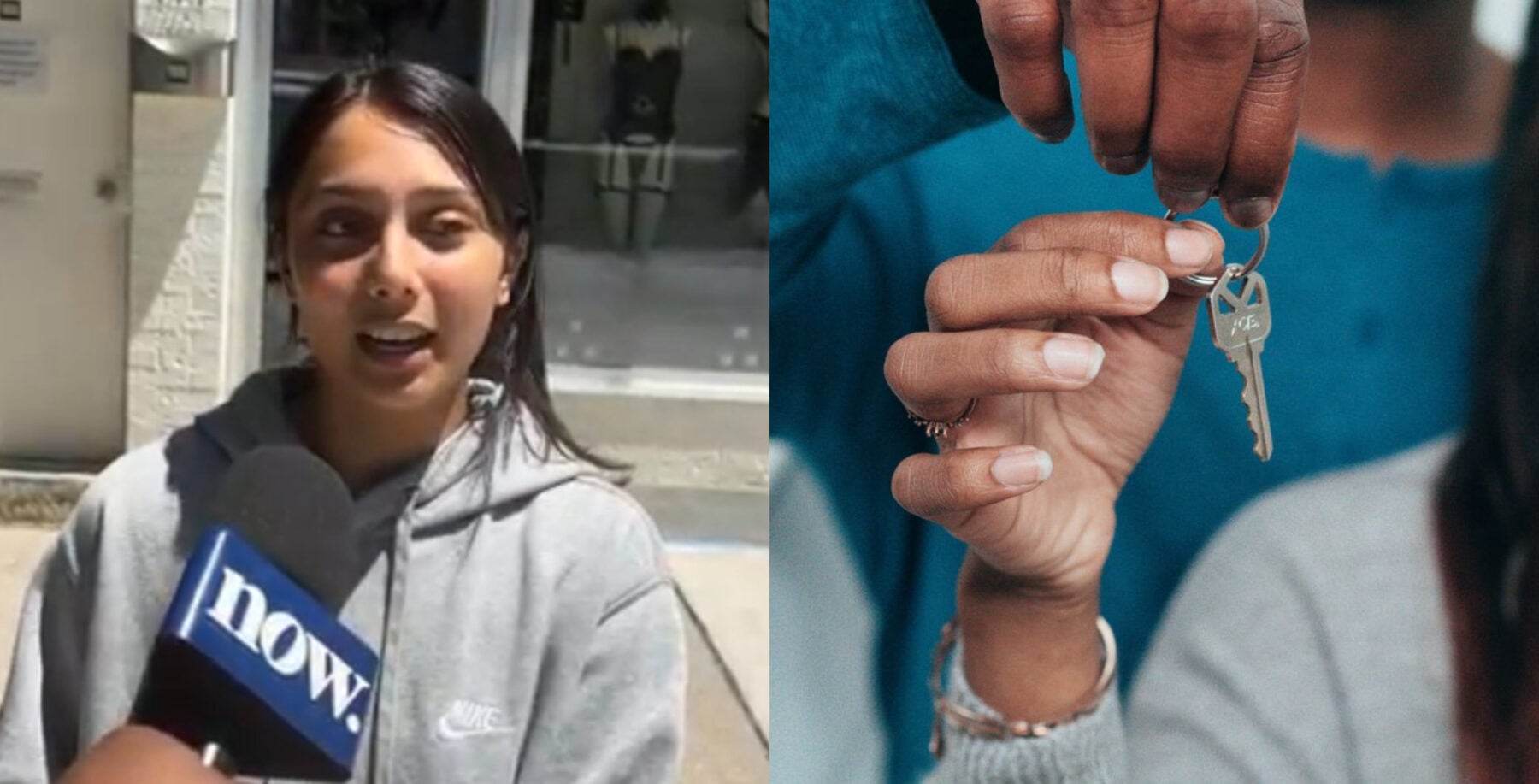
In an interview with Now Toronto on Friday, Pegah reflected on why she chose to take that risk in such a public space.
“I grew up in the city. I’m from North York, I’m of Iranian descent, and I am an artist. I do installations, I do murals, I do digital, and I kind of dabble in a bunch of things. Surviving in the city as an artist is really, really difficult, so most of us have multiple jobs,” she explained.
The opportunity to paint at the CNE felt like a chance to reach people outside of her usual circles.
“I thought a lot about what the CNE was and how many people kind of stepped foot in there, and I thought that it was a great opportunity to reach a lot of people at once,” Pegah said.
“Sometimes it’s good to wear our hearts on our sleeves, and sometimes it’s good to be bold and to be really big.”
She also knew the mural would only last a day before being painted over by the next artist in rotation. That gave her a sense of freedom.
“I felt a lot of solace and comfort knowing that it was only going to be up for 24 hours. If I could do a mural for one day, I’m going to do it. It’s not going to be there forever. I’ll make the impact that it’s going to make for that one day,” Pegah said.
‘IS THIS WHAT THIS IS ABOUT?’
When arriving at CNE grounds the day she was assigned to create the mural, Pegah began working quickly, filling in the base of her design: the red semi-circle of a watermelon, a widely-recognized Palestinian symbol of freedom.
Soon, she noticed eyes on her.
“There’s like, a group of police officers hanging out with [another artist], and they’re just, like, talking… Then there was a police officer, like, biking around me,” she recalled.
She explained that she decided to take a break, as it had begun to rain and she needed her paint to settle. It was then that she says the program coordinator approached her, showing her the watermelon symbol often used to symbolize Palestinian freedom, and asked her if that was what she was painting.
The exchange, she said, was a turning point.
“He verbally told me that the police officer reported me and showed him what I was doing, and in the back of my head, I was like, I told you I was painting a watermelon three hours ago, and you had no clue what that meant… you’re listening to a cop… and then you approach me.”
She was told the CNE was “apolitical” and that international business partners, including Israeli and American stakeholders, were among the reasons.
“Just the fact that I’m being approached by this and being told to stop and change my design, I needed to stand my ground. And this is kind of like the moment. And I just said, ‘No, absolutely not. I’m not going to change my design,’” Pegah said.
She packed up her materials and left.
“I also mentioned the contract, I was like, ‘Well, maybe next year you guys should have, like, a stronger contract, because there is nowhere in that contract that said I should be apolitical. And frankly, I don’t think I would take this job if in the contract, it said apolitical. Like, what kind of art is apolitical?’ It’s so vapid,” she said.
‘WE NEED TO BE A LITTLE UNCOMFORTABLE’
For the artist, the removal wasn’t just about one mural — it was about what institutions allow artists to express.
“I think specifically it’s a form of censorship to sort of dehumanize sort of the Palestinian life. And I think as an artist, a lot of artists face this censorship and have these guidelines in terms of what we’re allowed to express,” Pegah explained.
“It was a harmless mural. There were no words, there were no weapons, it was a watermelon with a bird and some patterns on it. And if we can’t even paint watermelons and birds, and if it really comes down to the colours of green, red, white and black, it just kind of tells you a lot.”
Despite the experience, Pegah said she’s been moved and inspired by the support she’s received since going public with her story.
“I hope people take away the beauty of community. I’ve been really, really moved by this entire thing,” she said. “Palestinian voices… are being suppressed and they’re being diminished. And I think it’s like we need to be a little bit uncomfortable. And I really urge people to, you know, see this experience and be like, I’m going to be OK if I speak out.”
“It’s not as scary as it feels or looks, and it’s really important to do. And I hope that we can all sort of be brave together,” she said.
CNE’S RESPONSE
In an email statement to Now Toronto, a CNE spokesperson acknowledged the incident but emphasized that the mural program was designed to be lighthearted and non-political.
Organizers said artists were expected to focus on “universal themes” suitable for a family-friendly fair, and noted that Pegah was offered the chance to continue if she changed her design.
“The CNE is an inclusive event, and the Mural program was created with the intention of celebrating family fun at the fair,” a spokesperson told Now Toronto.
“Participating artists were asked that their content express universal themes without associating with any political or religious viewpoints. As so, the artist was provided an opportunity to remain as part of the program by adjusting their design, but declined. We thank the artist for their contributions to the program and provided full payment and compensation for their time.”