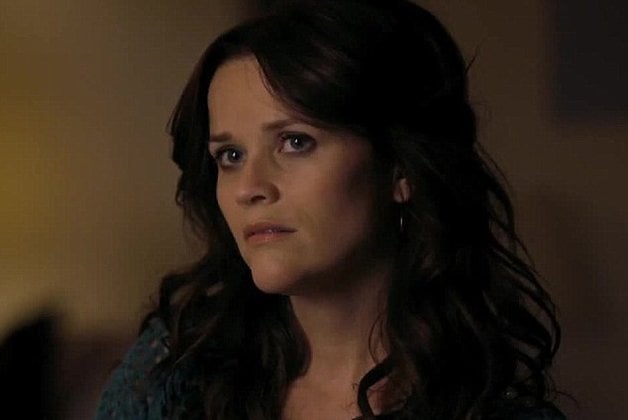
Reese Witherspoon is on the poster for The Good Lie, but it’s not a Reese Witherspoon movie. The Oscar winner plays a key role in Philippe Falardeau’s drama about Sudanese refugees airlifted to America in 2001, but Margaret Nagle’s script focuses on the refugees themselves. Those characters are played by Arnold Oceng, Ger Duany, Emmanuel Jal and Kuoth Wiel, four relative newcomers cast both for their acting skills and for their connection to the events dramatized in the film.
Hours before The Good Lie’s premiere at TIFF last month, the quartet sat down for their first interviews with Toronto journalists.
Q: The Good Lie ends with text screens for each of you outlining your own relationship to Sudan and the civil war. Can you each tell us a little about that history, and how it relates – or doesn’t relate – to the character you play in the film?
KUOTH WIEL I was born in Ethiopia. My parents are from Sudan they were aid workers for the UN, and that’s why I was born where I was. I took the film because of the story – I wanted to tell the story of my country through my eyes and see how I saw it. It was nerve-wracking, but also a learning experience because I got to go into depth and learn more about myself and what my country went through. It brought back a lot of dark memories – in the sense that I went back to reliving those experiences and just trying to overcome them. But it was a great experience overall.
ARNOLD OCENG I think Ger says it best when he says that this film may not affect you personally, but – what was it? How did you say it, Ger?
GER DUANY It affects you directly or indirectly.
OCENG That’s it. Indirectly or directly. He says it best, I can’t say it [laughs]. But personally for me, doing this film – basically, it brought me home. I’m from London, and I was born in Uganda to a Ugandan mother, but my father is Sudanese. My father tragically died when I was very young, so I never grew up knowing my Sudanese side. Doing this film was like a total blessing for me I learned about my father’s side of my culture, and it brought me closer to my Sudanese family. I learned everything from these guys every day on set. I was like a sponge, just soaking up all the knowledge they were giving me.
EMMANUEL JAL I feel like it’s my story being told on the big screen. I was born at the time my country was going to war, and I saw how the war reached the core of my family – reliving it, you know. The war in south Sudan took away the soul of my community. All my aunties died during the war, and my mom was killed in the war. [A key character] in the movie becomes a child soldier by the age of seven I was a child soldier too. So the story in the movie is my story, it’s Ger’s story we’re all in different places. I know Ger he was a child soldier too. Reading the script for this, that’s when everything sank into me. I didn’t want to read it again. But the thing that excited me more to be part of this movie is the global conscience awakening that it’s going to create. Most of the lost boys who got opportunities and were taken in by families are really, really successful. I was taken in by a British aid worker she gave me the opportunities that made me able to get here. So that’s a big part of this movie: it’s helping an entire country.
DUANY Everything has been said already by these guys [laughs]. I came to the United States in 1994, and in 2013, when they started doing the casting for this movie, I read the script in my little room in Harlem and I collapsed. I put it away and went to the bathroom and cried. See, I’m not ashamed to say that I’m a crybaby, yeah [laughs]? I cried and I thought about it and thought about it, and I came back and tried to finish the script again. I would just walk away from it, because in my time I never thought that this story would be told.
Q: How close is it to your story?
DUANY Emmanuel and I used to carry AK-47s just to live, before we even knew how to read and write. Kuoth was born in a refugee camp. Her mom was affected directly, and she was affected indirectly. The same goes for Arnold Arnold’s father was from the same area as me, and the reason he went to Uganda was because civil war in south Sudan had just taken place and everybody had scattered everywhere. So he went to Uganda, spent time there, found a beautiful woman who brought this son here. They were happy. And from there, his father died and he went to London. I want to speak to you guys about this movie because it means so much to others. We wanted to tell this story because it happened a long time ago – but another story’s coming, because the current civil war is taking place. I just came from a refugee camp, like, three days ago, so that’s the story of the lost boys. Hopefully there’s no more coming.
Q: So the movie works both as a drama and a direct message to a Western audience.
DUANY I think the awareness that the film is going to bring to the world is the most important thing. Look at the story now – it’s a national story. It’s not just only the lost boys’ story, it’s all our story here who sit at this table. It has something in there for everybody. Whoever wouldn’t want to see it, that’s their fault. Maybe they don’t want their humanity today [laughs].
WIEL I think it will give them a better understanding, too. I grew up in a small town, and I don’t think 90 per cent of them know the story of Sudan. So they’ll see that and understand why these people are here. It’s going to be educational, I think.
Q: The movie’s being sold as a Reese Witherspoon vehicle, but it’s really about your characters. How do you feel about that?
JAL If you look at actors, they’re emotional leaders, so you have somebody like Reese Witherspoon in this and you can imagine yourself in the story, to get the attention of the mainstream. It’s gonna get her [fans] to come and immerse themselves and realize that this is not just about the lost boys – this is about humanity. The transformation of a person who doesn’t care about anything all of a sudden changing her mind and becoming this mother figure to the lost boys? It’s not only Reese’s character who did that there are so many Americans whose lives have been transformed, so many people in Britain the same. Someone like Angelina Jolie creating a United Nations in her house, getting kids from all over, that has a tremendous effect. Other people are feeling the same. So this movie is gonna have an impact. Every person who has eyes and ears will be affected.
Q: Was there anything in the film that spoke specifically to your experience of coming to America? Did you add things from your own life?
DUANY Well, we have a lot of stories – they’re just, like, in a big bag [laughs]. When I first came here, this world was over my head I was totally lost. But with the help of others I got guidance. When I first came here, I didn’t speak English – I had to learn everything from scratch. Switching lights off and on, because we were in refugee camps where there’s no lights. We were in refugee camps where there’s no running water. So everything was new when you come here, and that’s what happens. So those experiences, those were the ones that helped us to learn.
OCENG I found it very surreal when we were filming, because I didn’t have the same experiences growing up. But reading those scenes, like the light switch, being taught how to turn on the oven – which to people in the Western world is pretty straightforward, it’s a no-brainer. But this is their reality.
JAL I think for me it’s much easier because we actually lived it. Like, when I first came to a Western country – I’m just gonna be honest about it – I thought white people were aliens. Or probably fallen angels. I was fascinated by all the bridges, the tall buildings, the way everything is. “How did human beings advance to this thing?” My head couldn’t even figure it out the first time I ever saw a flush toilet.
WIEL I immigrated to Minnesota when I was eight years old, but as a child you don’t really see things as being so different. For me and my brother, it was just fun: it’s a new world, you’re having fun, you’re learning to ride a bicycle. But for my parents, who came at a significantly older age, it was very, very difficult to assimilate to the culture. Most of the time we had to guide them: as their children, we had to translate for them, we had to do a lot of things that made us grow up really, really fast. But I think we were fortunate to have a lot of outside guidance from our community leaders and the churches and stuff like that. Even just experiencing snow was a total shock.